Hanoi emerges as Vietnam’s real estate hotspot
Hanoi’s real estate market in 2025 has seen a recovery in buyer interest as asking prices increased by 13%.
THE HANOI TIMES — Hanoi’s property market led the country in the 2021-2025 period with a 112% surge, followed by Haiphong (71%), Danang (53%) and Ho Chi Minh City (42%), according to data from Batdongsan.com.vn.
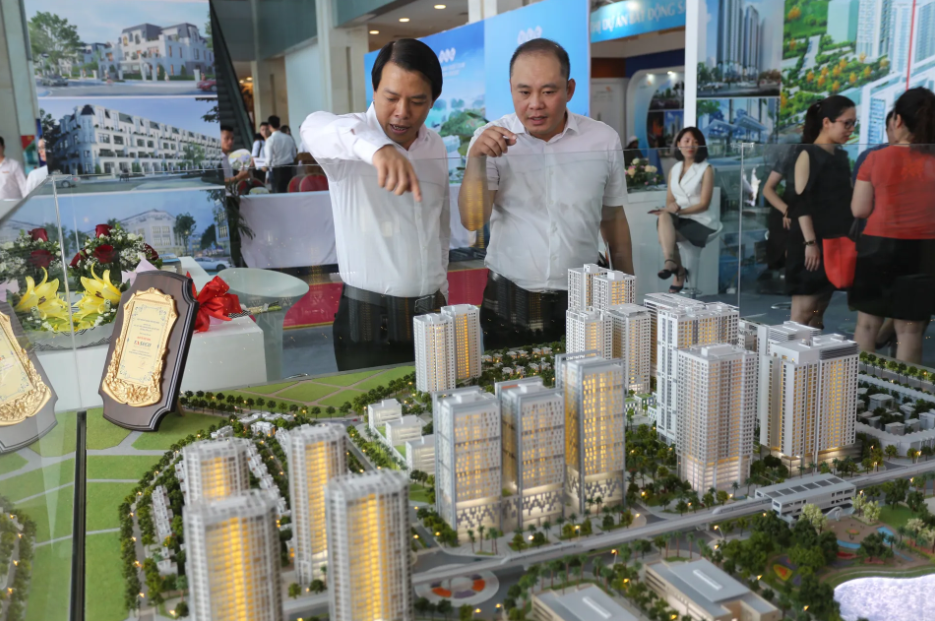
Investors review real estate projects in Hanoi. Photo: Pham Hung/The Hanoi Times
A report from the real estate data platform shows that Vietnam’s property market is demonstrating strong resilience and adaptability amid macroeconomic fluctuations, with major urban centers standing out as key drivers of growth.
Hanoi, Ho Chi Minh City, Haiphong and Danang continue to demonstrate solid appeal, recording notable price growth during the 2021–2025 cycle.
So far this year, Hanoi has seen a recovery in buyer interest, while sale prices continue to rise at a slower pace. Asking prices in 2025 increased by 13%, moderating from the sharp 39% rise recorded in 2024.
During Q3 2025, apartments remained the focal point, with prices surging 95% compared to Q1 2023, especially in premium segments across Tay Ho and Ba Dinh, where prices typically range from VND130 million to VND210 million (US$5,200–$8,400) per square meter.
As a result, 56% of surveyed respondents considered apartments currently “hard to afford.”
Conversely, the affordable–mid-range segment, or below VND55 million ($2,200) per square meter, saw the strongest price gains, rising 57%–71% compared to Q1 2024, while also maintaining the highest rental yields. Supply and demand are increasingly shifting toward Dong Anh, Gia Lam and Long Bien.
Private houses also recorded a 63% price increase over Q1 2023, supported by their perceived investment safety and the strong homeownership sentiment among Hanoians.
Land plots saw a 50% rise in prices, particularly in areas near the city center and suburban zones. However, interest in this segment has not yet recovered due to its sensitivity to macroeconomic fluctuations and speculative nature.
“At the Hanoi market, selling prices continue to climb, but demand has cooled. Capital remains concentrated in high-end apartments near the city center, which continue to lead market activity,” said Dinh Minh Tuan, Southern Regional Director of Batdongsan.com.vn.
According to the platform’s Q3 data, the market is showing clear divergence between the buy–sell and rental segments.
Interest in property purchases quickly rebounded after macro fluctuations in Q2, led by the apartment sector. Townhouses and private homes also showed signs of improvement, with some areas recording 11%–22% growth in search interest compared to early 2025.
In contrast, the rental market declined following the “ghost month,” with search interest in September 2025 dropping 8–24% month-on-month depending on property type.
Nevertheless, Batdongsan.com.vn’s Q3 2025 broker survey indicated that absorption of new supply remained positive: nearly 90% of respondents rated absorption as average to good, with 4% saying “very good,” 25% “good,” and only 12% describing it as “weak.”
Looking ahead to Q4 2025, about 60% of brokers believe the market will continue to grow, including 17% expecting strong growth. Around one-third predict stability, while only 6% express concern over a possible downturn.
The apartment segment is viewed as having the strongest growth potential over the next six months (36% of responses), followed by private houses (29%) and land plots (24%).
Other property types, such as townhouses, resorts and villas, accounted for smaller shares, reflecting a concentration of capital toward assets with real housing demand and higher liquidity.