Log in
Hanoi

About 30,000 real estate units eligible for sale in Hanoi during Jan-Sep

Hanoi’s housing market grows with strong apartment supply, but soaring prices highlight rising demand for premium and luxury segments.

THE HANOI TIMES — Hanoi's real estate sector saw new homes legible for sale reach more than 30,300 units in Jaunary-September, according to the city Department of Construction.
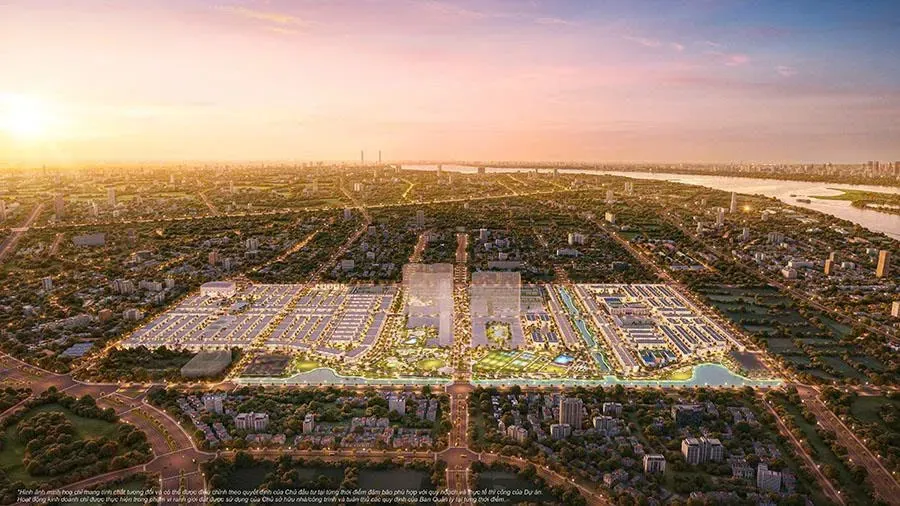
The computer-generated images of the Vinhomes Dan Phuong urban area in Hanoi. Photo courtesy of the company.

Of the total figure, 80% were apartments, equivalent to some 24,500 units. The remaining 5,800 units were low-rise houses.

After three quarters, Hanoi’s new apartment supply accounted for 80% of the total in 2024. Last year, some 30,900 apartments were added to the market.

Vinhomes mega-urban projects in Tu Liem Ward and the communes of Dong Anh and Gia Lam offered nearly 18,200 units for sale.

The largest volume was provided by Vinhomes Ocean Park 1 project with more than 3,100 apartments.

Despite the recovery in supply, home prices continued to climb in the past nine months.

Data service company Savills reported that by the end of Q2, the average primary asking price soared 40% year on year to VND91 million (US$3,500) per square meter. 

Homes priced above VND4 billion ($157,000) accounted for two-thirds of the market, while apartments under VND2 billion ($78,500) were almost absent. 

Savills forecasts that Hanoi will have an addition of around 70,000 homes from 2026 onward. The supplies will come from 91 new projects, most of which are located in the outskirt areas of Dong Anh and Hoai Duc communes and Hoang Mai Ward.
Reactions:
Share:
Trending
Most Viewed
Related news
Hanoi gears up for a vibrant 2026 Countdown

Hanoi gears up for a vibrant 2026 Countdown

With the energy of thousands gathering in Hanoi downtown, the Countdown 2026 promises to be an unforgettable way for people to welcome the New Year.

Hanoi launches AI-powered traffic control center for traffic violations

Hanoi launches AI-powered traffic control center for traffic violations

The system automatically detects common violations, significantly reducing the need for traffic police to be deployed directly on the streets while improving accuracy and transparency in traffic management.

Hanoi plans 10,000-hectare urban megacity with world-class stadium

Hanoi plans 10,000-hectare urban megacity with world-class stadium

The stadium’s design draws inspiration from Dong Son bronze drums and the Lac bird motif, symbolizing Vietnam’s aspiration to rise.

Hanoi greenlights Olympic sports city and Red River boulevard to drive next growth phase

Hanoi greenlights Olympic sports city and Red River boulevard to drive next growth phase

The approval of two landmark projects underscores Hanoi’s push to unlock new growth engines, reshape its urban structure and accelerate its ambition to become a green, smart and globally connected capital.

Hanoi targets 1,200 supporting industry firms by 2030

Hanoi targets 1,200 supporting industry firms by 2030

The city aims to enhance the competitiveness of the capital’s industrial sector by tightening cooperation with Vietnamese enterprises and multinational corporations operating in Vietnam.

Red River Boulevards shape Hanoi’s new growth axis

Red River Boulevards shape Hanoi’s new growth axis

The creation of a landscape boulevard can help Hanoi reconnect with its historic identity shaped by water and restore the river-based character that defined the city for centuries.

Hanoi moves to strengthen urban order and civility

Hanoi moves to strengthen urban order and civility

These include expanding public communication efforts, reorganizing and upgrading streets and sidewalks, maintaining a clean and orderly urban environment and carrying out strict inspections to address violations.

Hanoi honors 87 entities and buildings for using green energy

Hanoi honors 87 entities and buildings for using green energy

Enterprises adopted highly automated technologies in line with Industry 4.0 standards and all businesses in industrial parks, clusters, rural industries and craft villages will keep applying energy-efficient measures.