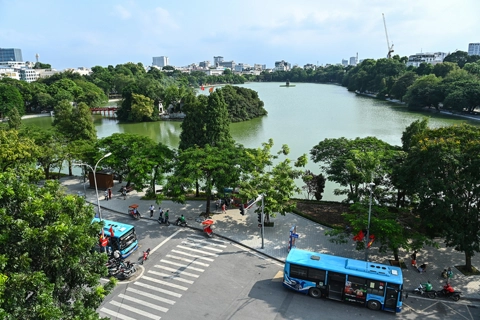
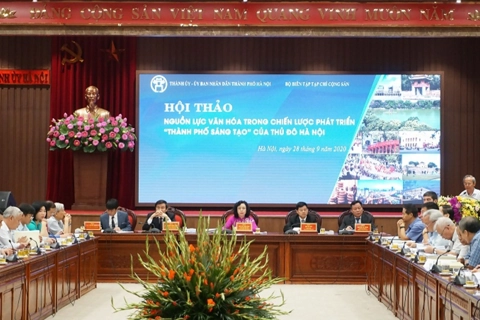
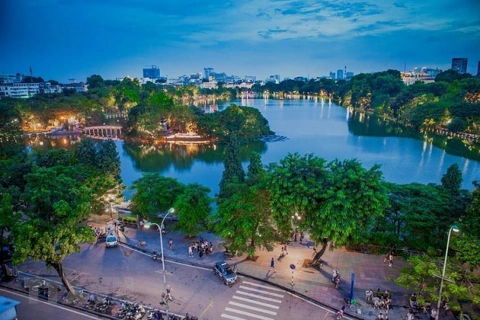
Hanoi expected to become creative hub of Southeast Asia
Hanoi wants to position itself as an innovation and technology-based destination for investors.
Hanoi, the first city of Vietnam receiving designation by UNESCO as a Creative City in 2019, is committed to placing culture and creativity at the core of its sustainable development with a wider vision to become a leading creative hub of Southeast Asia, under an ambitious plan shared by the city’s leaders.
| Le Hong Son, Deputy Chairman of the Hanoi People’s Committee, at the conference on Dec 13. Photo: The Hanoi Times |
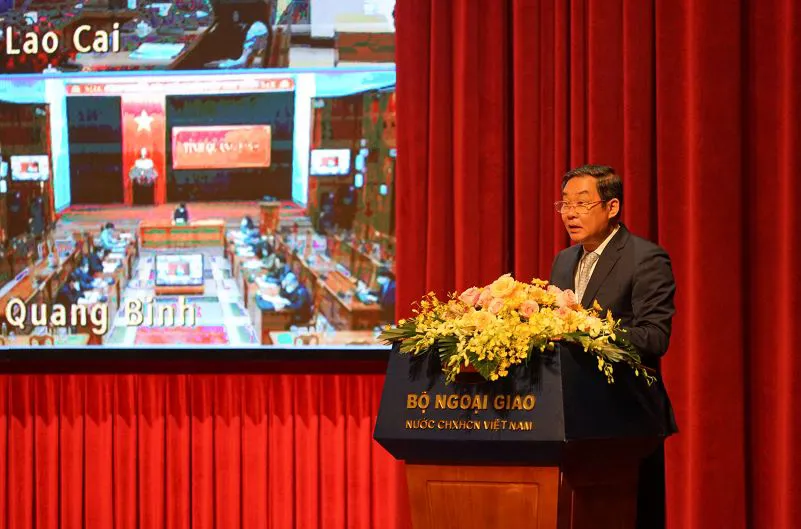
“Hanoi’s big goal in the near future is to become a creative capital of Southeast Asia, partly making it one of the cultural centers in the region and the world,” Le Hong Son, Deputy Chairman of the Hanoi People’s Committee, said at the national conference on foreign affairs held on December 13.
Son said being a member of the 246-member UNESCO Creative Cities Network (UCCN), Hanoi grasps opportunities to promote its strengths mobilized from politics, economics, education, and culture to make it a destination of sustainable development. In this regard, it’s better for Hanoi to draw investments and boost cooperation in innovation.
Hanoi will implement its new strategic vision of a Creative City, harnessing its cultural assets and youth participation as key agents for innovation, creativity, and social change.
To make the goal attainable, Hanoi will focus on building itself into a center of intelligentsia and creativeness. With more than 5,000 cultural relics, including world-recognized ones, Hanoi is given chances to promote its cultural values and uniqueness.
In addition, the city is able to position itself as a destination of innovation and technology-based growth models. Therefore, it will get more inflows into the economic and tourism sectors.
The last but not least, Hanoi has enough strengths and tools to promote cultural values and art performances nationwide as well as abroad.
| Part of Hanoi, Nhat Tan Bridge. Photo: UNESCO |
.jpg)
In October 2019, Hanoi became the first city of Vietnam to receive UNESCO’s official designation, an event that coincided with the 20th anniversary of the “City for Peace” that was labeled by UNESCO.
As the cultural and political capital of Vietnam, Hanoi has played a central role in the country’s political history while nurturing creative talents. Following two decades of profound expansion, Hanoi now seeks to situate itself at the forefront of the rapid socio-economic transformation of Vietnam through its cultural legacy to define a new model of economic activity based on creativity and strong youth empowerment.
Created in 2004, the UCCN is aimed to promote cooperation with and among cities that have identified creativity as a strategic factor for sustainable urban development. The 246 cities, which currently make up this network work together towards a common objective: placing creativity and cultural industries at the heart of their development plans at the local level and cooperating actively at the international level.
The network covers seven creative fields: Crafts and Folk Arts, Media Arts, Film, Design, Gastronomy, Literature, and Music.
In its 2021-2025 development strategy and direction to 2030, the Hanoi’s Party Committee has put science, technology, and innovation as one of the 10 pillars. Under which, it will focus on digital transformation, smart city, supporting startups on digitalization and innovation, hi-tech agriculture, and making full use of the intellectual for the common drive.