Hanoi eyes 11% growth rate within reach on administrative reforms, digital push
Hanoi’s leadership has drawn a clear line for 2026, committing to double-digit growth through tougher governance, faster execution and an uncompromising reform agenda.
THE HANOI TIMES — Hanoi is determined to achieve GRDP growth of more than 11% in 2026, a challenging but achievable target, said Vu Dai Thang, Chairman of the Hanoi People’s Committee.
Speaking at the citywide year-end review conference on December 29, Thang said the goal remains within reach if the city sustains the decisive, action-oriented approach demonstrated in recent months.
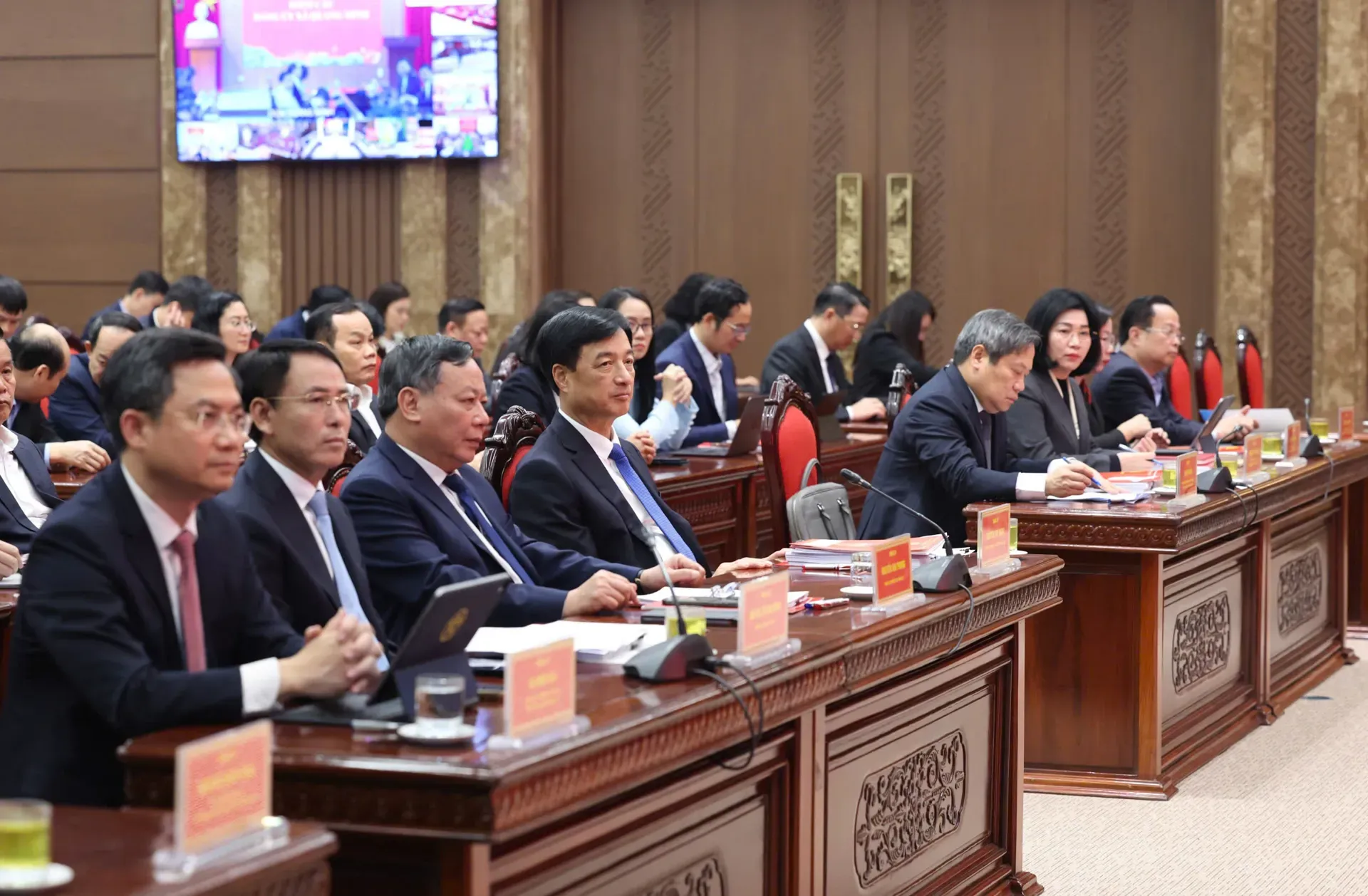
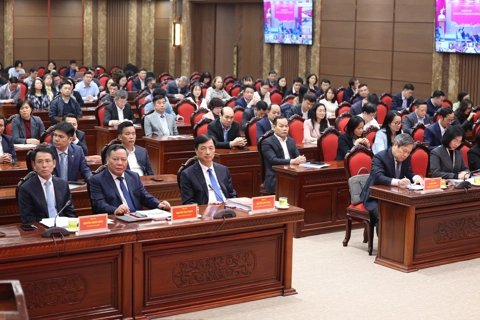
Hanoi Party Secretary Nguyen Duy Ngoc (front row, fourth from the left) and other delegates attend the city's year-end review conference on December 29. Photo: Thanh Hai/The Hanoi Times
The chairman instructed all sectors and agencies to immediately resolve pending proposals and bottlenecks, finalize work programs and complete concrete action plans for 2026.
“All plans must translate the Politburo’s strategic resolutions into practical results and directly address the five identified bottlenecks: urban order, traffic congestion, environmental pollution, flooding and food safety,” Thang said.
He stressed the need to raise the quality of capital governance, identifying science, technology and digital transformation as core breakthroughs under the Politburo’s Resolution 57 on fostering sciences, technologies and innovation.
According to Thang, agencies under the Hanoi People’s Committee will oversee 168 of the city’s 230 assigned tasks, elevate the iHanoi application into a real-time channel for citizen feedback and ensure substantive operation of the shared data system and the Intelligent Operations Center.
The city will refine its strategic framework, unlock development resources and focus on completing 82 priority tasks under the action program implementing the Hanoi Party Committee’s resolution.
At the same time, Hanoi will accelerate ring road projects, remove transport bottlenecks at major gateways, apply special policy mechanisms more effectively and finalize long-term urban planning to attract strategic investors in high technology, semiconductors and the digital economy.
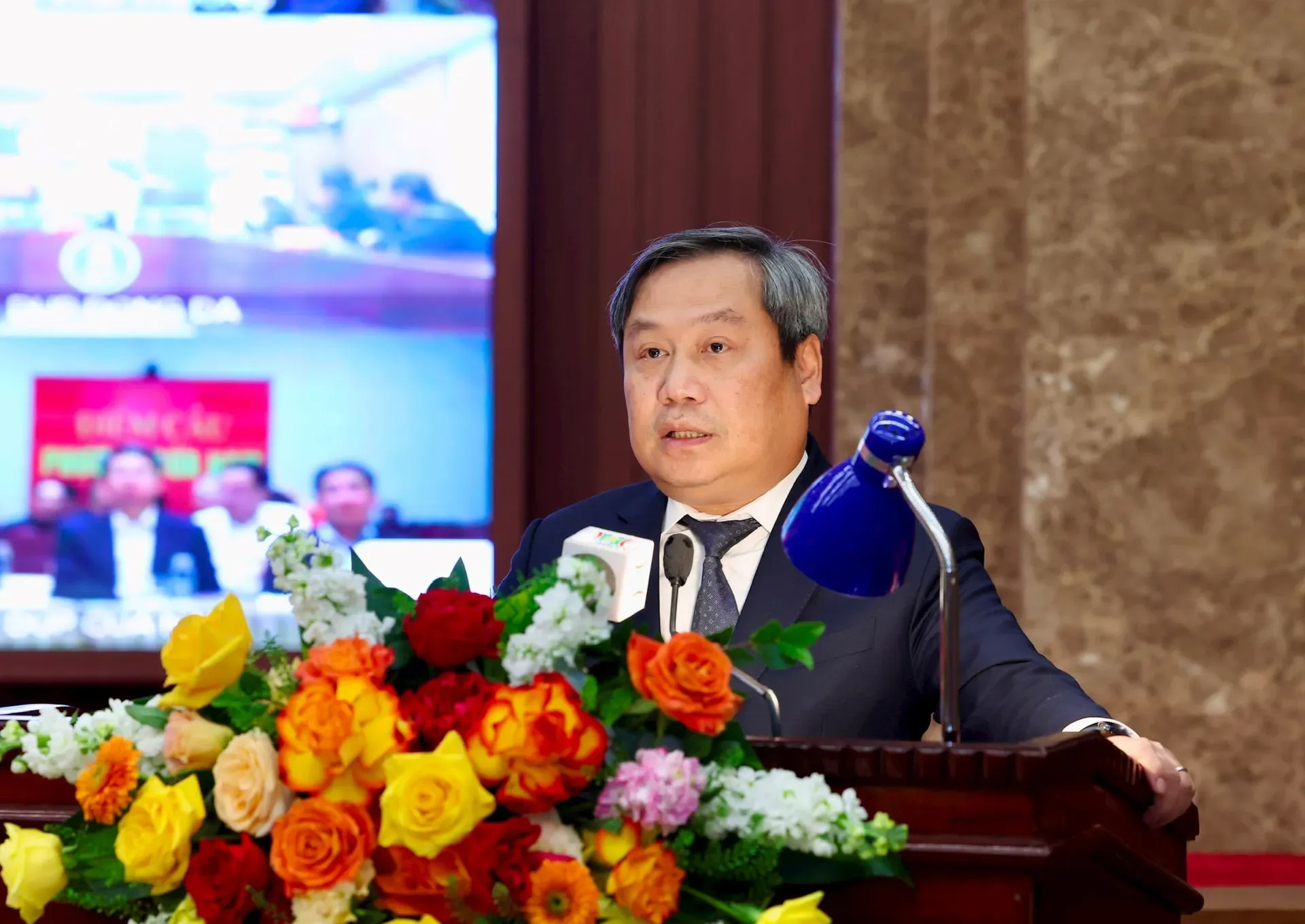
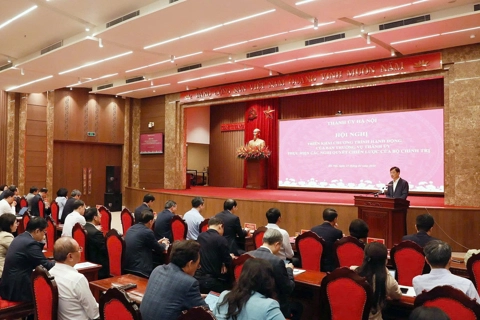
Chairman of the Hanoi People's Committee Vu Dai Thang delivers his speech at the conference. Photo: Thanh Hai/The Hanoi Times
Hanoi will fast-track key projects, especially those launched on August 19 and December 19, with priority given to the Red River Landscape Boulevard and the Olympic Sports Urban Area. The city will expand digital and data infrastructure linked to the innovation ecosystem and speed up development of the Hoa Lac Hi-Tech Park.
Local authorities will continue building a professional and accountable civil service guided by the principle of integrity and competence, encouraging initiative, responsibility and action.
Thang also pledged to push decentralization alongside stronger inspection and supervision, while decisively replacing officials who avoid responsibility or obstruct the city’s progress.
He called for continued support from central agencies and urged the Vietnam Fatherland Front of Hanoi to strengthen social oversight and mobilize national unity.
Nguyen Xuan Sang, Deputy Director of the Hanoi Department of Finance, said tighter discipline in public investment management remains a key lever for meeting the 11% growth target.
From the start of the year, the city must treat public investment disbursement as a leading driver that attracts private capital and as a core political task, targeting full disbursement of the VND126 trillion (US$4.8 billion) capital plan before September 30, 2026.
Hanoi also aims to reach at least 28 operating enterprises per 1,000 residents in 2026, moving toward 32 enterprises per 1,000 residents by 2030.
According to Nguyen Xuan Dai, Director of the Hanoi Department of Agriculture and Environment, the city is implementing more than 1,500 projects covering nearly 14,500 hectares, with close to 6,000 hectares still awaiting site clearance due to persistent obstacles.
He highlighted successful clearance efforts that offer replicable lessons, including Ring Road 4 of the Capital Region, Ring Road 1 (Hoang Cau–Voi Phuc section) and projects to build seven bridges across the Red River.

Shoppers browse and prepare for the year-end holiday at Go! Thang Long supermarket in Hanoi. Photo: Hoai Nam/The Hanoi Times
“Site clearance succeeds only when ward and commune authorities treat it as a continuous and critical political task, supported by close coordination from specialized agencies,” Dai said.
Strengthening grassroots governance
Ha Minh Hai, Head of the Organization Commission of the Hanoi Party Committee, said completing and effectively operating the two-tier local government model ranks among the city’s most important tasks in 2026.
He said Party-building work will undergo strong reform in personnel management, clearer job positioning and more substantive recruitment and performance evaluation.
Hai also highlighted digital transformation and administrative reform, development of a shared data platform, gradual formation of a Digital Twin Hanoi and application of AI and data analytics to support governance and decision-making.
Phung Thi Hong Ha, Chairwoman of the Hanoi People’s Council, said ward- and commune-level councils in 2026 must thoroughly implement five core priorities.
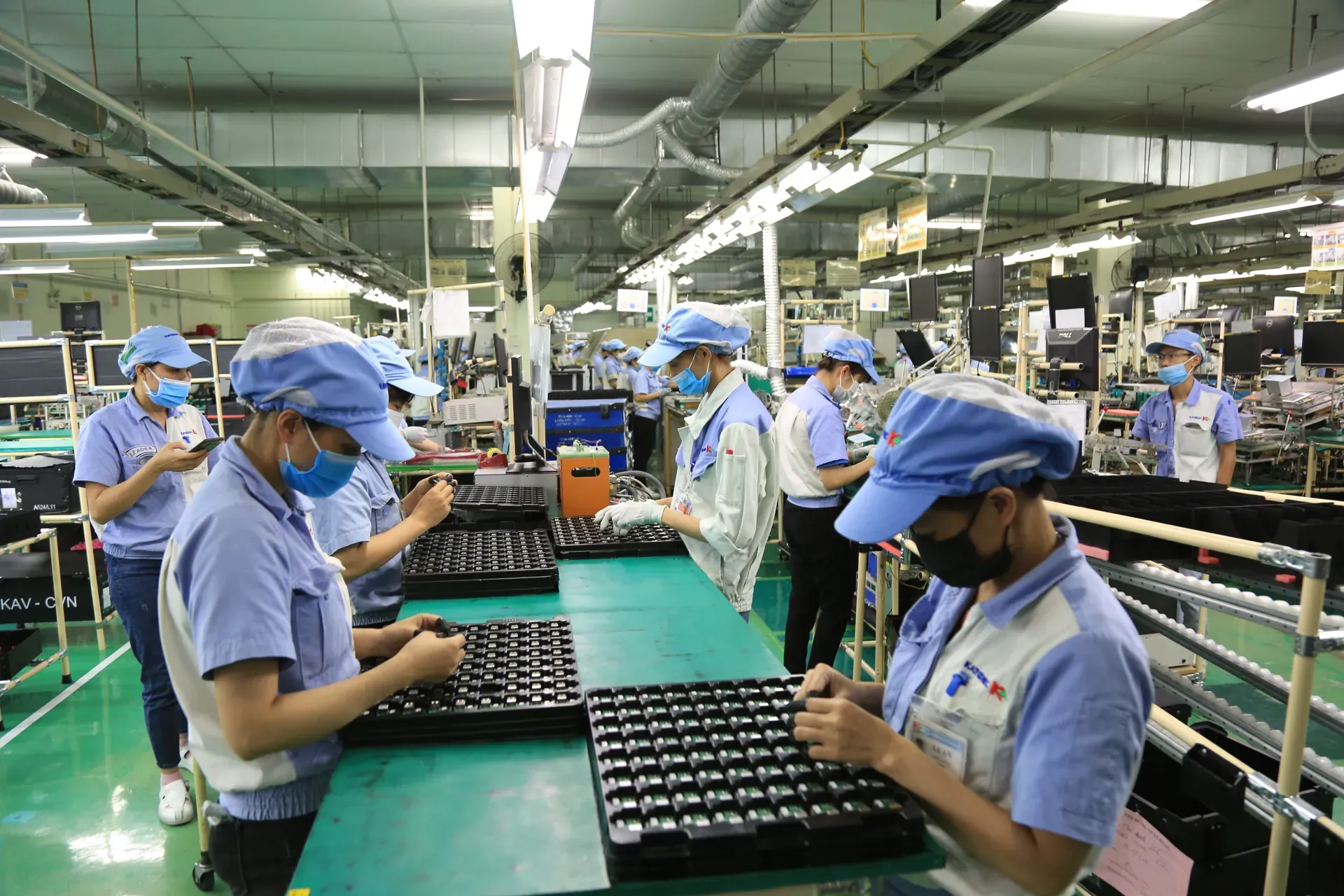
An electronic production line at Quang Minh Industrial Park in Hanoi's Me Linh Commune. Photo: Pham Hung/The Hanoi Times
She stressed that grassroots councils must function as the closest state authority to citizens, with all activities rooted in legitimate public interests, accurately reflecting public aspirations and safeguarding grassroots democracy.
Each council resolution must clearly define responsibilities, outcomes and feasibility, aligned with local conditions and available resources, she said.
“Each councilor must stay close to the people, remain accountable and follow through on citizen petitions without shifting responsibility upward,” Ha emphasized.
Bui Huyen Mai, Chairwoman of the Vietnam Fatherland Front of Hanoi, said the body will continue renewing patriotic movements in a practical and results-oriented manner aligned with the city’s priorities.
She said the organization will coordinate with member bodies, leverage respected community figures, strengthen grassroots self-governance and consolidate national unity to support political objectives.
The body will also deliver timely relief and social assistance, manage mobilized resources transparently and comply strictly with regulations.
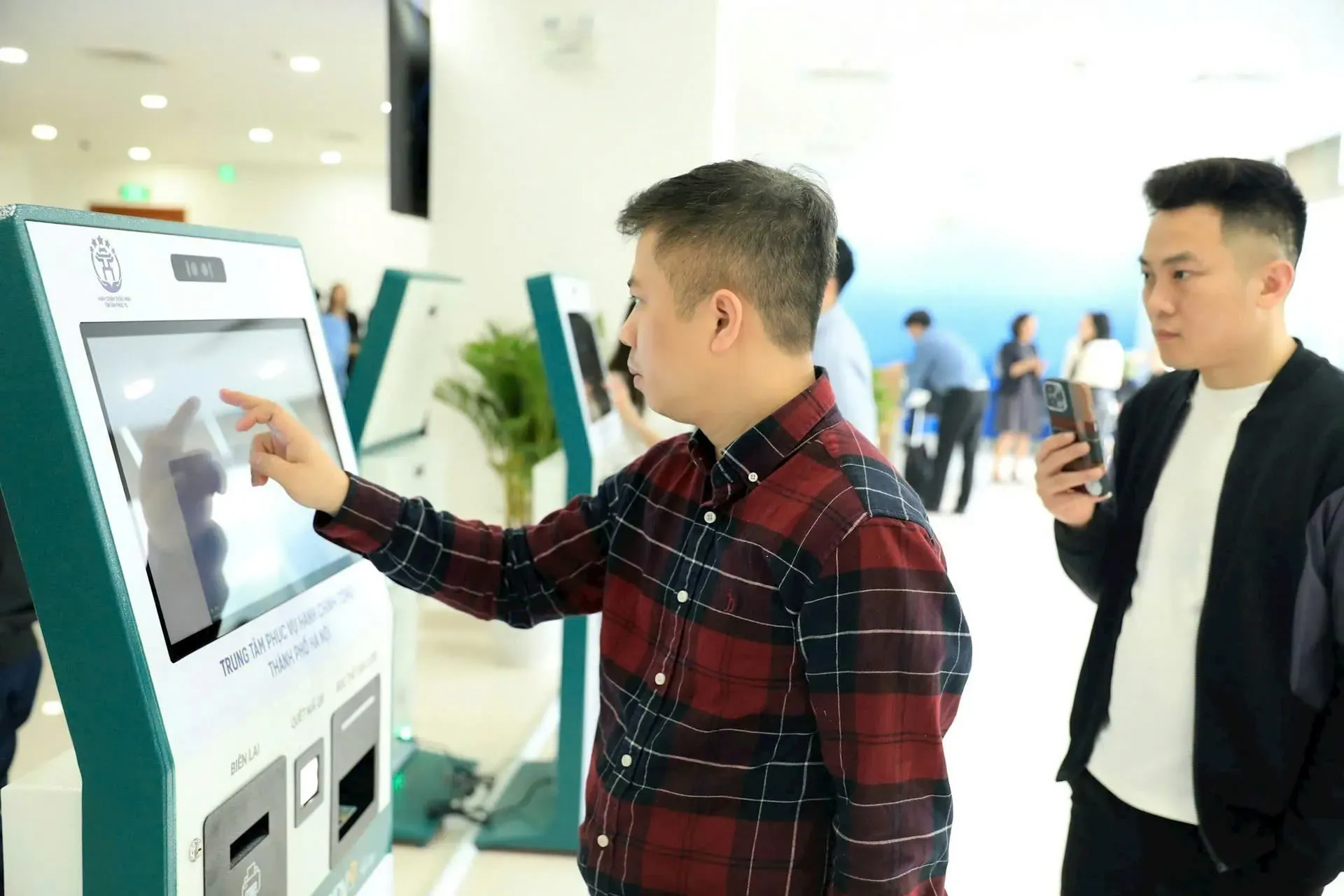
Citizens perform e-government system. Photo: Thanh Hai/The Hanoi Times
According to Cu Ngoc Trang, Director of the Hanoi Public Administrative Service Center, since the operation of the two-tier local government model on July 1, 456 administrative procedures have been delegated.
In December 2025, the center proposed further decentralization of 243 additional procedures for 2026 and beyond.
“2026 marks the phase when this model must deliver real depth and proximity to citizens,” Trang said, proposing that by December 2026 the city retain no more than 20% of administrative procedures, with the remainder handled at the grassroots level alongside adequate resources.
Reports at the conference showed that Hanoi completed 10 major tasks in 2025. Among those were the successful operation of the two-tier local government model, the implementation of the directions made by the Politburo and General Secretary To Lam, the successful 80th anniversary of the August Revolution and National Day, an 8% GRDP growth rate and, for the first time, State budget exceeding VND600 trillion ($22.8 billion).
The conference gathered nearly 12,000 participating delegates from all 126 wards and communes across Hanoi.