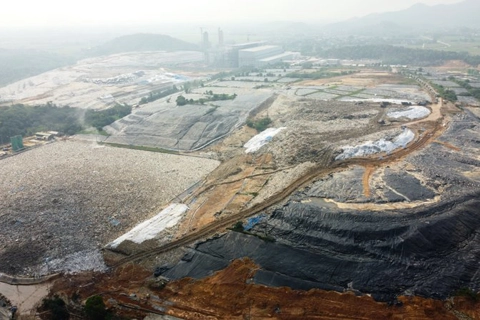
Hanoi gradually eliminates landfill concerns
The Soc Son waste-to-energy plant in Hanoi has realized the dream of turning waste into a resource, creating a premise to promote the circular economy.
The largest Soc Son waste-to-energy plant in Vietnam has officially operated and plugged into the national grid, gradually removing the city’s concern about landfills for many years.
Sharing with The Hanoi Times, Nguyen Thi Hong Van, general director of market development in Southeast Asia for Thien Y Environmental Energy Joint Stock Company, the project’s prominent investor, said: “The first generator of the Soc Son plant has an output of 15MW. It has a combustion capacity of around 1,000 tons of waste, roughly one-seventh of the amount of trash produced in the capital daily, to generate electricity.”
An overview of the Soc Son waste-to-energy plant. Photo: Bao Minh |
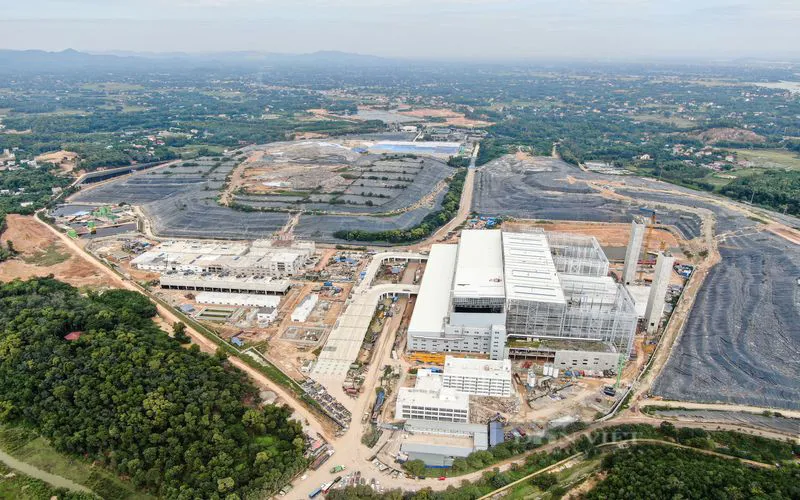
“The whole plant is expected to generate up to 75MW of electricity per hour. About 20MW of the electricity generated during the combustion process will be used to feed the plant operation while about 50MW will be supplied to the national grid,” Van said.
She added that her company is finalizing procedures to complete the second and third phases of four incinerators by late October. All five incinerators are expected to be put into operation in the remainder of 2022, raising the total capacity to 5,000 tons of waste per day (treating 60-70% of Hanoi’s total waste).
According to environmental experts, in addition to ending the landfill problem in Hanoi, the operation of the Soc Son waste-to-energy plant has realized the dream of turning waste into a resource, creating a premise for promoting the circular economy.
A step towards a green environment
According to Dr. Bui Thi An, director of the Institute of Natural Resources, Environment and Community Development, Hanoi currently dumps between 6,500 and 7,000 tons a day, mainly processed in two waste treatment complexes in Soc Son district and Son Tay town. Until now, it was mostly buried or composted, and a small part was burned to produce electricity.
"The Soc Son waste-to-energy project is expected to help manage waste treatment in the capital, long considered a very frustrating problem for residents living around the Nam Son waste treatment complex," An told The Hanoi Times.
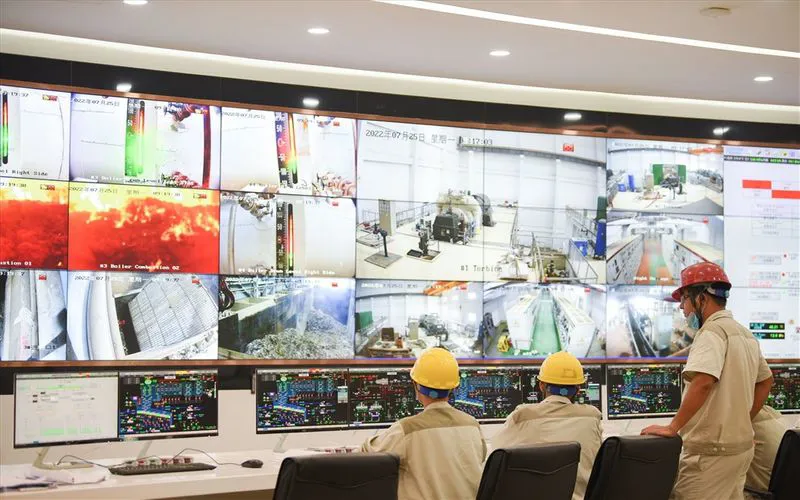
Engineers monitor and operate the waste treatment process after the plant is connected to the national power grid. Photo: Pham Dong |
“However, Hanoi still needs to speed up the progress of the Sepharin waste-to-energy project at Xuan Son Waste Treatment Plant, or the Nui Thoong waste-to-energy project in the outskirt district of Chuong My ensure sustainable efficiency of environmental protection,” An added.
Prof. Dr. Hoang Xuan Co, former director of the Center for Environmental Research, Monitoring and Modeling, stressed that the construction of waste-to-energy plants is an inevitable task for Hanoi. The advanced technology of plants will reduce the harmful effects of waste on the environment, creating a circular energy source.
"In addition, the city should approve additional processing volumes for each plant to take full advantage of the operational capacity," Co shared with The Hanoi Times.