Hanoi GRDP growth to hit over 6.5% in 2024
The city is committed to fostering innovation, dynamism, and decisive action to achieve comprehensive progress.
The capital's economy in 2024 is projected to surpass 6.5% compared to 6.27% last year, said Vice Chairman of the Hanoi People’s Committee Ha Minh Hai at the 20th conference of the 15th Municipal Party Committee held today [December 4].
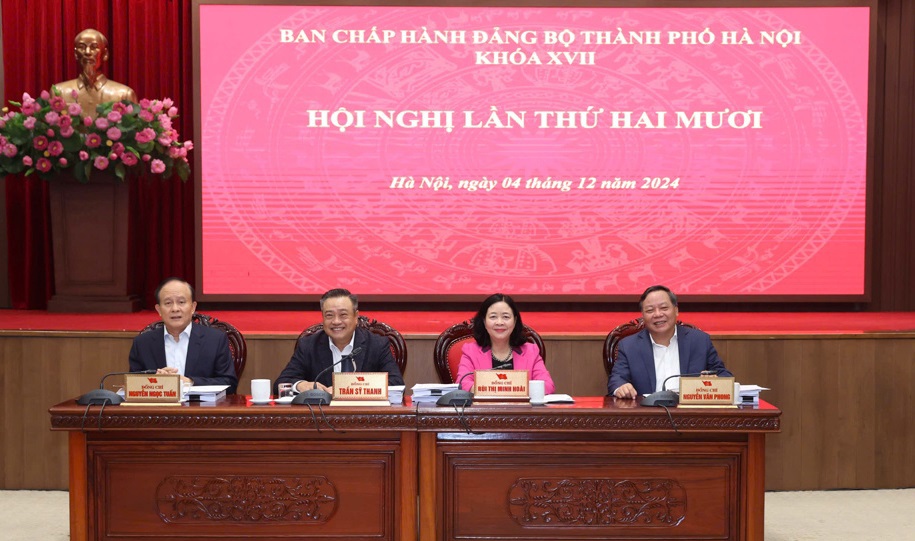
| Hanoi leaders at the meeting. Photos: Thanh Hai/The Hanoi Times |
According to Hai, Hanoi ensures a balanced state budget with sufficient funds allocated for development and investment. Total state budget revenue reached approximately US$20.3 billion, achieving 120.5% of the target and marking a 19.6% increase compared to 2023.
Hai noted that Hanoi effectively implemented financial and credit policies to meet the capital needs of businesses.
In this regard, the city's 2024 socio-economic development plan is largely on track, with 23 out of 24 key targets expected to be met. The sole challenge remains the public transport passenger ratio target.
Social welfare initiatives have been robust, with Hanoi leading the nation in ensuring citizens' well-being, particularly for policy beneficiaries, veterans, and vulnerable groups. Social policies were implemented timely.
The city created over 196,000 jobs, achieving 118.9% of the annual target. More than $82 million was allocated to support war veterans and their families. Additionally, nearly $410 million was provided through the Social Policy Bank to benefit over 96,000 disadvantaged households and policy beneficiaries, further solidifying Hanoi's leadership in this area.
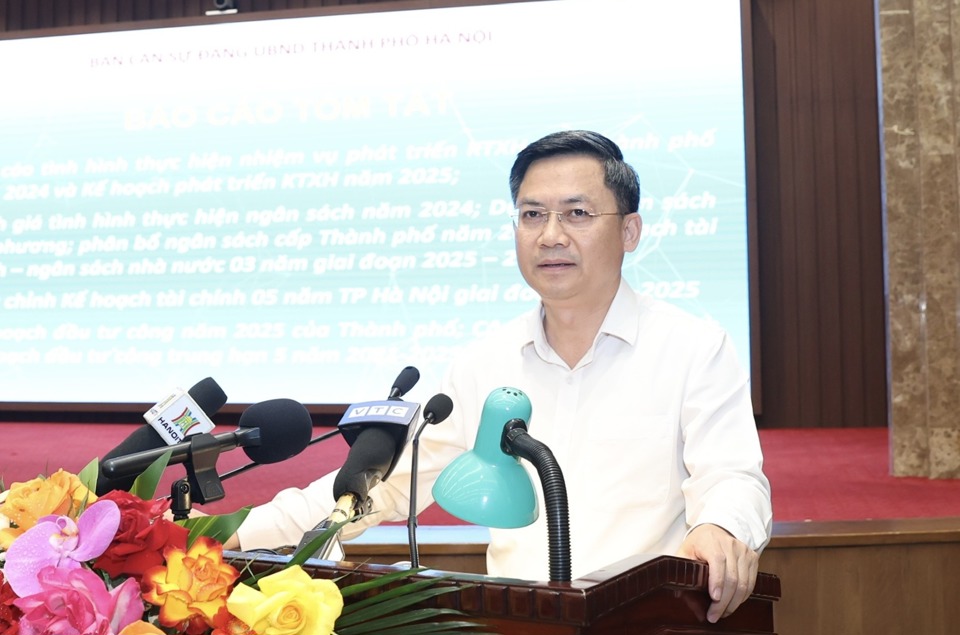
| Vice Chairman of the Hanoi People's Committee Ha Minh Hai. |
Housing projects for 714 low-income households were completed, and the city supported provinces like Tuyen Quang and Phu Tho in eliminating substandard housing with a total contribution of $10.9 million.
Efforts to combat inefficiency and waste were intensified. The city reviewed and addressed 712 stalled projects that caused resource wastage and social discontent. Notably, Hanoi became the first locality nationwide to establish a Steering Committee on Waste Prevention (on November 20, 2024).
Administrative reforms and digital transformation were prioritized, linked to Scheme 06 on leveraging citizen data and digital identification for the national digital transformation agenda (2022–2025, vision 2030). Comprehensive and practical measures were implemented, benefiting both citizens and businesses.
The city also focused on resolving challenges faced by businesses, expediting land allocation and leasing processes for projects to ensure efficient land use. These efforts prevented delays and wastage while generating significant revenues for the state.
Hai stated that despite notable achievements, some challenges persist. Public investment disbursement in 2024 is projected to reach 88.4% of the target (below the planned 95%). Additionally, Hanoi's Provincial Competitiveness Index (PCI) and Provincial Governance and Public Administration Performance Index (PAPI) rankings have declined, attributed to cumbersome administrative procedures and barriers in market entry and land access.
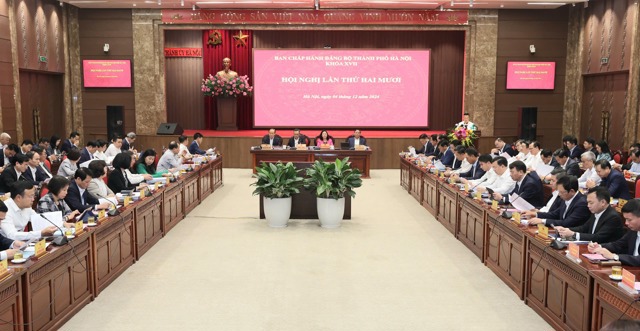
| Overview of the meeting. |
Emphasizing the strategic vision articulated by General Secretary To Lam on Vietnam's "New Era of National Growth," Hanoi aims to fully realize its unique potential and pivotal role in the country's development. With this in mind, the city is committed to fostering innovation, dynamism, and decisive action to achieve comprehensive progress, aligning with its status as the capital of a nation entering a transformative era, said Hai.
To achieve these objectives, Hai said Hanoi has outlined 10 key tasks and solutions, including prioritizing economic development to maximize growth potential while controlling inflation and maintaining macroeconomic stability and continuously reviewing investment projects, addressing challenges for businesses, and actively attracting investment to the capital.