Hanoi's digital economy well implemented: Expert
In Vietnam, the government aims for the digital economy to account for 20% of GDP by 2025 and more than 30% by 2030.
Hanoi’s digital economy is being implemented effectively, said the Head of the Department of Digital Economy and Society under the Ministry of Information and Communications (MIC) Tran Minh Tuan, citing the ministry’s recent report.
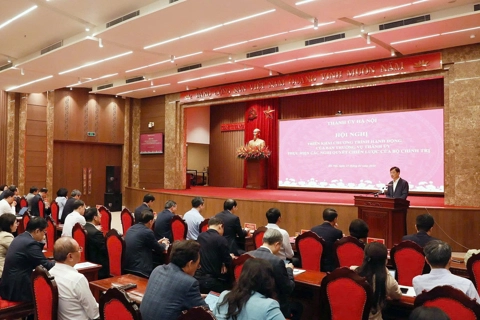
| Overview of the seminar. Photos: Pham Hung/The Hanoi Times |
Hanoi has the best digital economy development index (17.5%) and core digital economy index (11.9%) in Vietnam, followed by Ho Chi Minh City (8.6%), according to MIC's 2023 Digital Economy Report.
“Digital transformation and the digital economy are new endeavors, requiring leaders at all levels to have a deep understanding of digital transformation. They must actively lead and be proficient in using digital tools to drive the transformation,” Tuan said at a seminar on digital solutions and infrastructure as a foundation to promote the digital economy held today [December 2] as part of the Vietnam Asia Smart City Summit.
The results of digital transformation and the development of the digital economy should be used as the basis for evaluating officials and leaders, he said.
According to Tuan, the digital economy’s development, based on four pillars—ICT digital economy, sectoral digital economy, digital governance, and digital data—will play a crucial role in driving rapid, green, and sustainable socio-economic growth.
However, Deputy Head of the IT Department at the Institute of IT and Digital Economy (National Economics University) Pham Minh Hoan noted that several challenges remain in promoting the digital economy and ensuring sustainable development in Hanoi.
These challenges include uneven infrastructure across government and business, increasingly complex cybersecurity issues, insufficient public awareness of the importance of the digital economy and sustainable development, and a large population made up largely of migrant workers, making it challenging to implement digital transformation.
In Vietnam, the government aims for the digital economy to account for 20% of GDP by 2025 and more than 30% by 2030. To achieve this goal, priorities must include developing IT infrastructure, training high-quality human resources, and refining the regulatory framework to support businesses in this sector.
With the view that digital economy development is both inevitable and vital, the Director of the Department of Information and Communications in Bac Ninh Nguyen Trung Hien emphasized that the province's digital economy development is not just a future strategy but also an urgent necessity to enhance competitiveness in the face of globalization and global digital transformation.
Through initiatives in line with government goals, Bac Ninh strives to develop a robust and sustainable digital economy, contributing to the country's overall progress, Hien said.
During the seminar, participants also discussed and shared insights on modern data storage technologies—paving the way for Smart Cities and the digital economy, building trust in the digital space (Digital Trust)—a foundation for boosting business growth in the digital environment, and promoting e-commerce to boost local products.
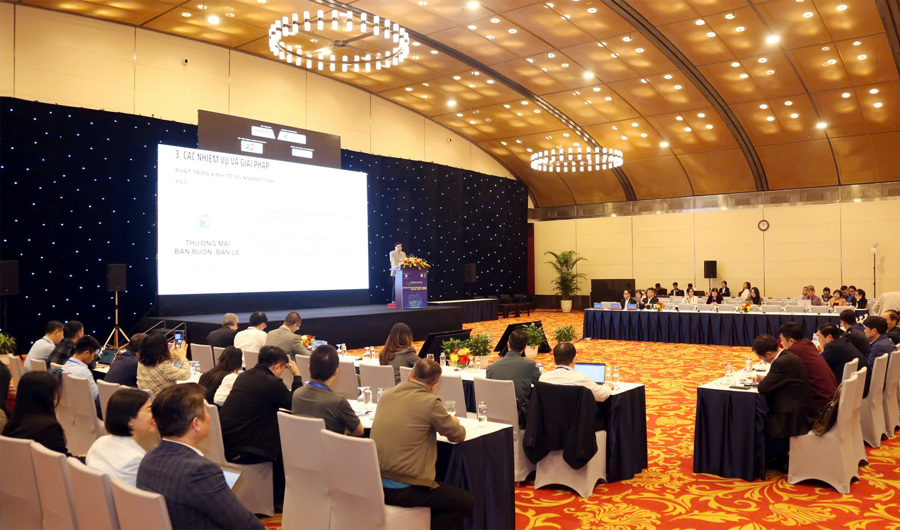
| Delegates at the seminar. |

The panel discussion on “Technology Applications in the Development of Key Economic Areas and Local Digital Economies” at the seminar also addressed various issues related to digital infrastructure solutions—key platforms for advancing the digital economy and sustainable development.
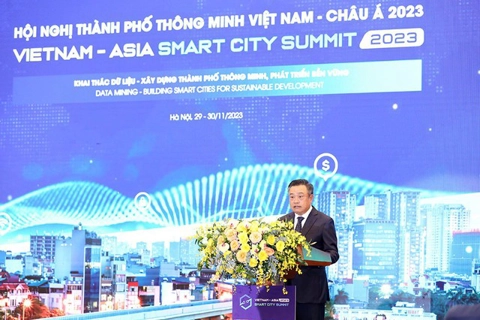
The "Vietnam-Asia Smart City Summit 2024" is not only a key event in the series of activities to celebrate the National Digital Transformation Day 2024, but also a major platform for Hanoi and other regions in Vietnam and abroad to discuss, exchange experiences, share digital transformation solutions, and strengthen cooperation in technology, aiming for a future of smart, modern, and sustainable urban development.
With the overarching theme of "Smart Cities - Digital Economy - Sustainable Development," this summit is aligned with three strategic goals and reflects the key pillars of the strategic vision for Hanoi and the region, focusing on a "new global vision and thinking" in development.
With over 2,000 delegates, the summit provides an opportunity for leaders, experts, and leading digital technology enterprises to collaborate on breakthrough solutions in areas such as semiconductors, artificial intelligence, smart transportation, clean energy, and sustainable environments.
The experiences and practical lessons shared at the summit will be crucial for Hanoi and other regions to seize opportunities, overcome challenges, and achieve the goal of building green, smart cities with sustainable development.