Hanoi improves access to clean water amid summer heat
Plans are put in place to ensure residents have a stable supply of clean water this summer.
THE HANOI TIMES — With forecasts predicting more intense heat waves in the summer of 2025, when temperatures are expected to rise 0.5 to 1°C higher than in previous years, local authorities and water suppliers have activated contingency plans to meet the growing demand for clean water.
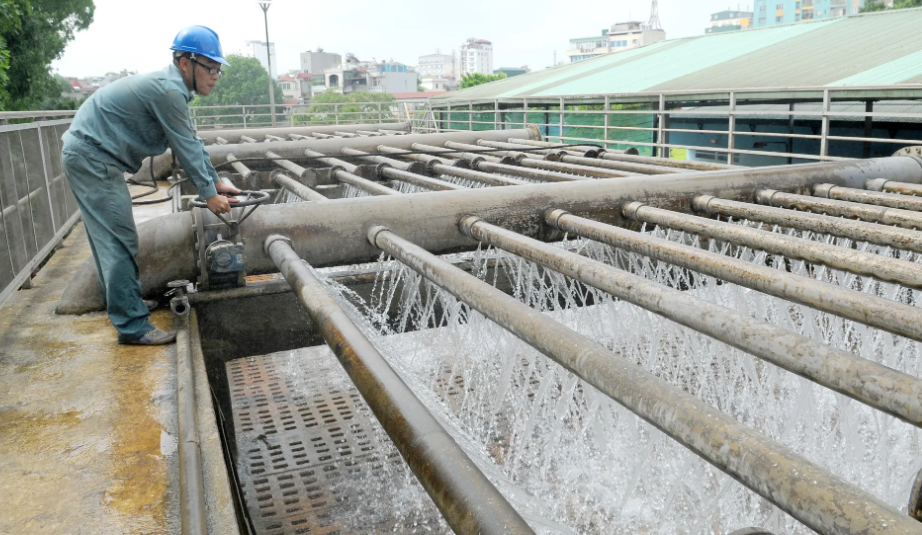
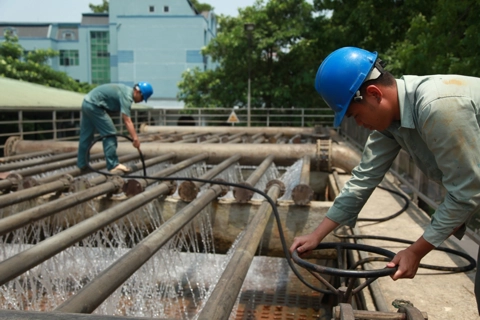
Workers inspect the water filtration system at Yen Phu Water Plant in Hanoi. Photo: Thanh Hai/The Hanoi Times
Growing demand
According to Le Van Du, Head of the Water Supply and Drainage Infrastructure Management Division under the Hanoi Department of Construction, the total design capacity of centralized water plants in Hanoi is approximately 1.69 million cubic meters per day. Meanwhile, the city’s average daily water demand in 2025 is projected to be about 1.42 million cubic meters, up 7% on year.
During peak summer periods, demand could soar to over 1.54 million cubic meters per day (up 16% from the 2024 average).
"A sharp rise in water demand may lead to localized shortages in areas at the end of the supply network. In rural areas, 67 communes are still under construction for new water supply networks, which are expected to be completed by 2025," said Du.
The Hanoi Clean Water Company operates the city’s primary water supply system, supplying water to around 4 million people in 16 urban and suburban districts.
Dang Ngoc Hai, General Director of Hanoi Clean Water Company, expects water demand across the firm's service area to increase by 2%–3% this summer, reaching around 760,000–765,000 cubic meters per day. On peak hot days, this could rise by 6%–8% to approximately 805,000 cubic meters per day.
“The positive news is that the company’s current average water output reaches about 766,400 cubic meters per day and can peak at 807,000 cubic meters per day, meeting the summer 2025 demand,” said Hai.
In the event of pipe bursts, pressure drops, or supply shortages from other plants, the company is prepared to activate backup sources and redistribute water to support other suppliers at interconnection points.
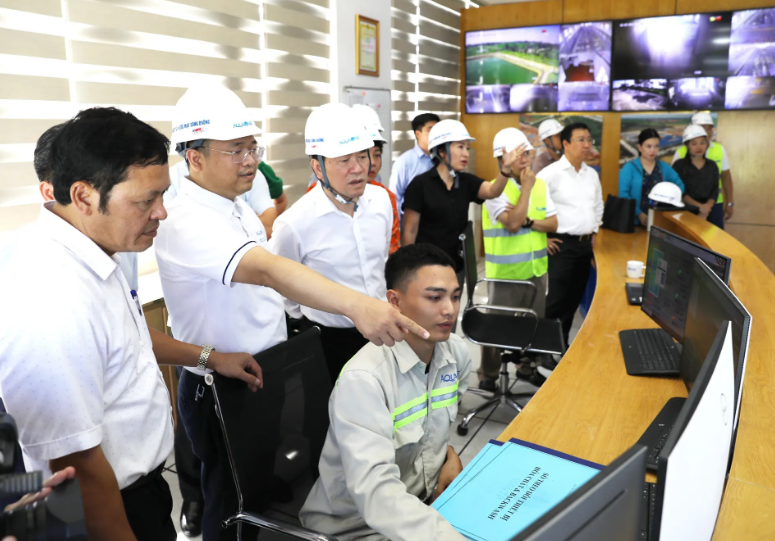
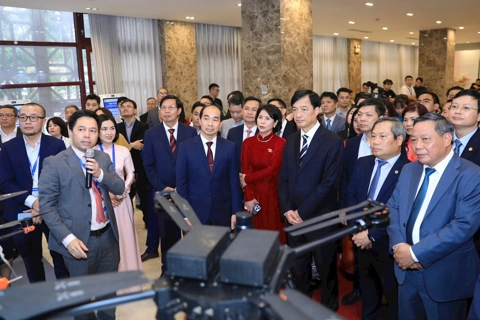
The Hanoi People's Council inspection team conducts a field survey at Duong River Surface Water Plant. Photo: Thinh An/The Hanoi Times
Contingency plans in place
To ensure a stable and safe water supply during potential disruptions, the Hanoi Department of Construction issued a summer 2025 water supply assurance plan. It prioritizes operating water plants and pumping stations at full capacity to meet the maximum demand for 100% of households in urban districts and several suburban areas with centralized supply systems.
Specifically, the department has allocated water resources based on demand levels and accessibility to prioritize areas that rely on a single source to prevent prolonged outages.
Among other measures, Hanoi Clean Water Company will maintain production at 552,500–580,500 cubic meters per day and deploy contingency supply plans using backup groundwater sources (100,000–110,000 cubic meters per day). The company will also supplement with surface water from the Bac Thang Long Water Plant, which has a capacity of 150,000–160,000 cubic meters per day and can be expanded to 180,000.
"Any incident will be resolved within 12 hours," noted Hai from Hanoi Clean Water Company.
Meanwhile, Song Da Clean Water Investment JSC is upgrading key infrastructure to ensure a safe water supply system, which currently averages 316,198 cubic meters per day. During summer peaks, the plant will supply 356,198 cubic meters per day. Priority will be given to areas that depend solely on water from the Song Da Water Plant, including customers along Thang Long Boulevard.
Meanwhile, the Duong River Water Plant is expected to maximize its output to 300,000 cubic meters per day to serve its project coverage area, especially the southern Red River region. The company will also coordinate with the Hanoi Clean Water Company to increase supply to districts such as Ha Dong, Hoang Mai, and Thanh Xuan.
"Water tankers will be deployed to areas affected by outages, particularly those at the end of the pipeline, high-rise apartment complexes, and elevated locations. Recovery measures will be implemented promptly in case of incidents such as pipeline damage or reduced pressure due to maintenance at the Song Da or Duong River plants," Du affirmed.
On the investment side, the city has urged project developers to accelerate construction. Red River Surface Water JSC is working to partially commission its 300,000 cubic meter-per-day plant in 2025, with full completion expected by 2026. Meanwhile, Phase II of the Song Da Water Plant will increase capacity to 600,000 cubic meters per day by the fourth quarter of 2025.
Local authorities said that with coordinated efforts and responsive water suppliers, residents of the capital can rest assured that water will be sufficient this summer.