Hanoi makes strides in traffic management
Cashless parking payment is a key step in managing static traffic, solving parking issues, and serving as the underlying technology for a smart digital map of parking spaces throughout the city.
Hanoi's cashless parking pilot program has expanded hundreds of contactless, queue-free parking spots with digital receipts since the launch on April 15, 2024, with initial seven locations, benefiting residents, businesses, and government agencies.
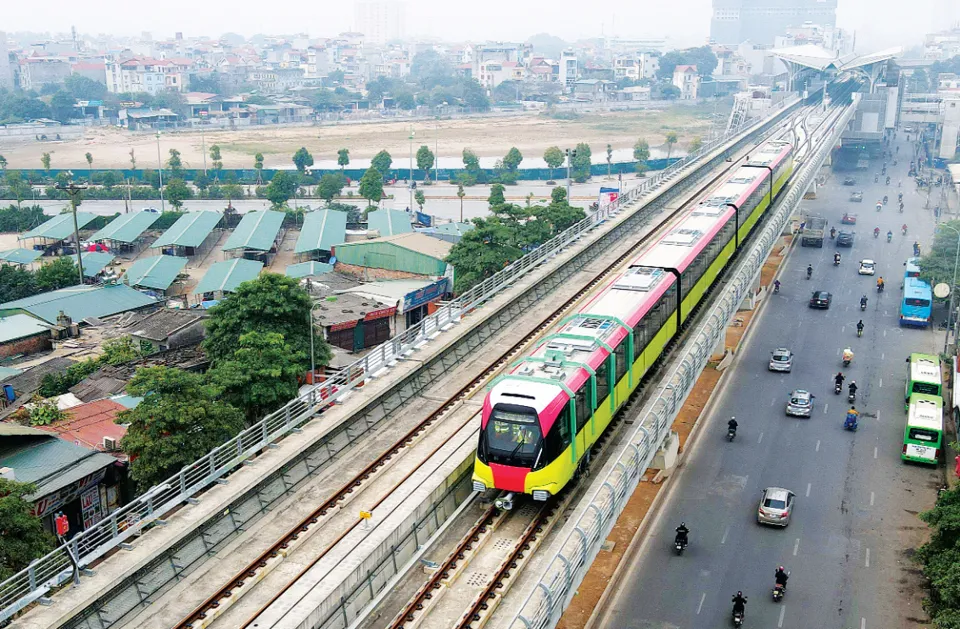
| The Nhon - Hanoi Station metro line. Photos: Pham Hung/The Hanoi Times |
Breakthrough solutions
The application of technology in parking management is considered a significant advancement in Hanoi’s static traffic management. It helps improve traffic thanks to a digital parking map and creates an associated transportation account to optimize smart mobility for residents in the future.
Hanoi currently has about seven million motorbikes and over one million cars, putting significant pressure on infrastructure and parking facilities. The severe shortage of parking spaces has led to the illegal occupation of sidewalks, streets, and parks for parking, and excessive fees being charged.
In line with the government’s National Digital Transformation Project (Project 06) and Resolution 18 of the Hanoi Party Committee on digital transformation and smart city development by 2025, with a vision toward 2030, Hanoi has collaborated with relevant entities to implement cashless parking payments. This is a key step in building a modern and civilized urban traffic system.
The pilot program began in Tay Ho District in February 2024 before expanding to other districts. Since April 15, 2024, cashless payment of parking fees has enhanced management and increased transparency in service pricing. The system automatically records vehicle entry and exit times using fixed readers or handheld devices. Motorbike users can pay via QR codes using banking or e-wallet applications. The initiative has proven to be highly effective, gaining public support and promoting cashless transactions in transportation.
Nguyen Thu Tra from Ba Dinh District said that cashless parking has made it more convenient by eliminating the need for small changes while ensuring transparent pricing.
“Flexibility of digital payments is a plus point, which saves time by reducing waiting times,” Tra said.
Pham Tuan Dat from Cau Giay District noted that in the era of digital transformation, transportation is keeping up with the trend by enabling contactless payments, which provide convenience and reduce congestion at parking lots. The management software also ensures clear pricing and prevents overcharging.
A representative from Hanoi Parking Lot Management Company stated that the pilot program has yielded positive results. Challenges encountered have been addressed in coordination with technology providers and city authorities. With growing public acceptance, the expansion of cashless parking is expected to increase transparency and efficiency in parking management.
As a technology provider, VETC Automatic Toll Collection Company Limited has proposed solutions to facilitate the implementation of cashless payments. The payment system is now running smoothly, with initial difficulties largely overcome. Many parking businesses have reached out to technology providers to integrate cashless payment solutions into their operations.
Solid foundation
Deputy Chairman of the Hanoi People's Committee, Ha Minh Hai, has ordered the removal of many obstacles to ensure the smooth application of technology in parking management. In September 2024, the Hanoi People's Committee issued a temporary regulation on implementing technological solutions for finding and paying parking fees without using cash throughout the city.
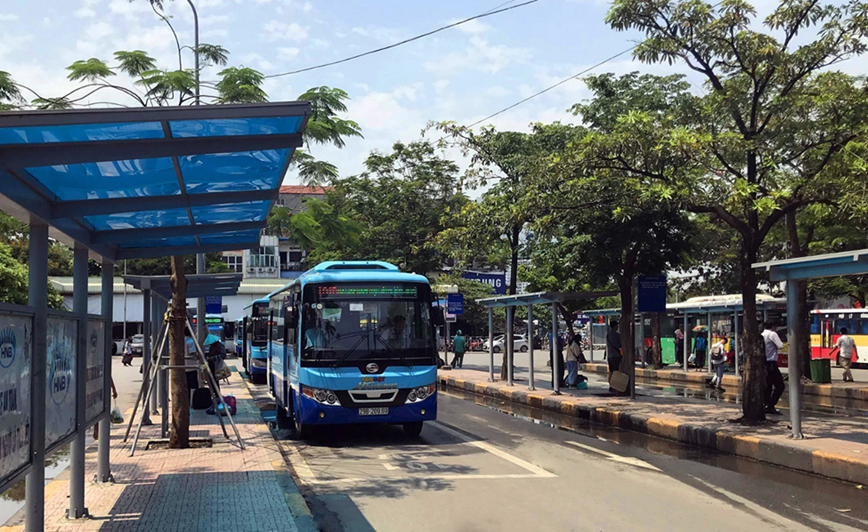
| Hanoi bus station. |
The regulation states that the competent authorities will consider not renewing the permits to operate parking facilities for organizations and individuals who do not apply technological solutions for finding and paying parking fees, to reduce and eventually eliminate cash transactions, ensuring the criteria of "2 no's, 1 yes" (no cash, no stopping, yes receipt, and electronic invoices connected to cash registers and tax authorities).
Notably, the temporary regulation requires that the technological solutions must operate smoothly, quickly, accurately, and conveniently, without causing traffic congestion and ensuring comfort for citizens. Localities are urged to immediately take advantage of features on the iHanoi platform’s parking location, vacancy, and available parking features.
According to Hai, Hanoi has tasked the Department of Transport to actively coordinate with localities and the police to review parking areas throughout the city. Those who meet the conditions for a license and implement cashless parking fee technology should be allowed to operate immediately.
Illegal parking areas that do not meet the conditions must be strictly penalized, with local leaders held accountable for violations, and an increased focus on monitoring violations through surveillance cameras. Additionally, policies are being explored to support citizens and businesses participating in the digital transformation of parking management.
Tran Huu Bao, Deputy Director of the Hanoi Department of Transport, said that the department has been responsible for sharing data for the Busmap application, integrating data from parking areas and sites incorporating data from parking lots and locations that charge parking fees using cashless technology. So far, the system has been implemented in 322 parking locations across 17 out of 30 districts and towns. The department also works to integrate and share data to the iHanoi application to help citizens access and search for parking information.
Currently, cashless payment parking areas are generally operating smoothly, with public support due to better service quality, reduced negativity, transparency, and its role in Hanoi's gradual transformation into a smart city. This has contributed to enhanced parking management, ensuring order, and urban aesthetics, and reducing traffic congestion.
Experts view cashless payment of parking fees as a significant step in managing static traffic, addressing the issues of vehicle parking in the city, and as one of the foundational technologies for creating a smart digital map of parking spaces across the city. This will allow drivers to easily find parking spaces in the shortest possible time. In the future, this system will evolve into a seamless payment system that integrates various services into a single transportation account, including parking, fuel purchase, and public transportation. These developments are aimed at promoting smart transportation and a smart city in the new era.