Hanoi nurtures happy schools through safe, respectful and student-centered learning
Hanoi promotes the “Happy School” initiative to create safe, friendly and student-centered classrooms that foster happiness, empathy and positive learning experiences.
THE HANOI TIMES — Hanoi has worked to create a happy learning environment that offers the best conditions for study and friendship between 2.3 million students and 133,000 teachers across the city.
Experts define a “Happy School” as an educational model that provides a safe, loving and respectful environment where students learn, grow in character and develop emotional and life skills. It is a place where learning feels joyful, students are free from pressure and they are encouraged to develop their strengths.

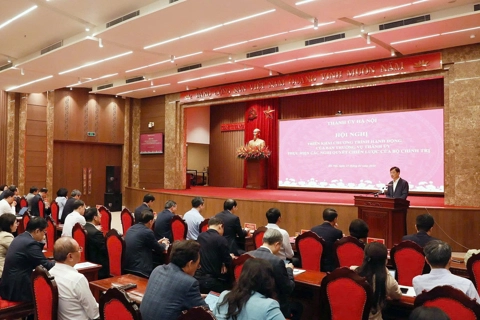
Representatives and leaders of participating units pressed the button to launch the emulation movement for building “Happy Schools” in the 2025–2030 period. Photos: Kinh te & Do thi Newspaper
Nguyen Ha Chi, an eighth-grade student at Tran Duy Hung Secondary School in Yen Hoa Ward, said that a happy school is where students feel joy every day.
“There, we can fully engage in our lessons and activities, share happy moments with friends and teachers,” she said at a recent event about happy schools.
“I also enjoy participating in art and sports activities that help me stay healthy both physically and mentally,” Chi added. “At school, I always feel safe, respected and free to be myself.”
For Bui Nguyen Gia Bao, a sixth-grade student at Tay Mo 3 Secondary School, a happy school depends on many factors.
He believes such a school must be free from bullying, where teachers respect, inspire and love their students while showing true passion for teaching.
Bao said students should embrace five core values: curiosity, proactiveness, integrity, care and respect.
He added that a happy school also needs a clean, green, beautiful campus with modern facilities.
Nguyen Thi Mai Linh from Nguyen Binh Khiem Secondary and High School shared: “I feel happy when joining school activities. These lessons and experiences help me grow and relax after stressful study hours.”

Hanoi students share their stories and ideas about developing a happy school.
For teachers, a happy school reflects their own personal growth and fulfillment in their profession.
Nguyen Ngoc An, Chairman of the Vietnam Education Trade Union, said that teachers become more positive and capable of overcoming challenges when they get happy.
“Happy teachers create happy students, which can be seen through their creativity,” he said.
He emphasized that happy schools help teachers manage emotions, improve their work and maintain positive energy to face difficulties.
Nguyen Thu Ha, Principal of My Dinh High School, said: “Happiness does not come from one person’s effort. When teachers, students and parents work together, a happy school becomes part of daily life.”
“Changing teachers’ mindset is a long journey, but we stayed committed and have seen real results,” said educator Nguyen Van Hoa, Chairman of the Board at Nguyen Binh Khiem Secondary and High School.
“Our teachers now show more love, empathy and understanding toward students. This connection makes students feel happier and learn better,” he said.
The ‘Happy School’ movement in Hanoi
Over the past year, Hanoi’s “Happy School” movement has created a friendlier and safer educational environment.
Launched in October 2024, the initiative aims to build a safe, inclusive and happy learning atmosphere where students are respected, heard and supported to develop fully.
According to Tran The Cuong, Director of the Hanoi Department of Education and Training, all schools have developed and implemented their own “Happy School” plans based on the city’s guidelines.
School environments and teacher-student interactions have improved significantly. Teachers are adopting more student-centered teaching and assessment methods.
Partnerships between families, schools and communities have grown stronger, while cultural, artistic and sports activities have become more creative and practical.
“I want every student to feel joy, safety and respect at school; every teacher to be supported in fulfilling their mission with passion; and every parent to feel at ease knowing their child learns in a loving environment,” Cuong said.
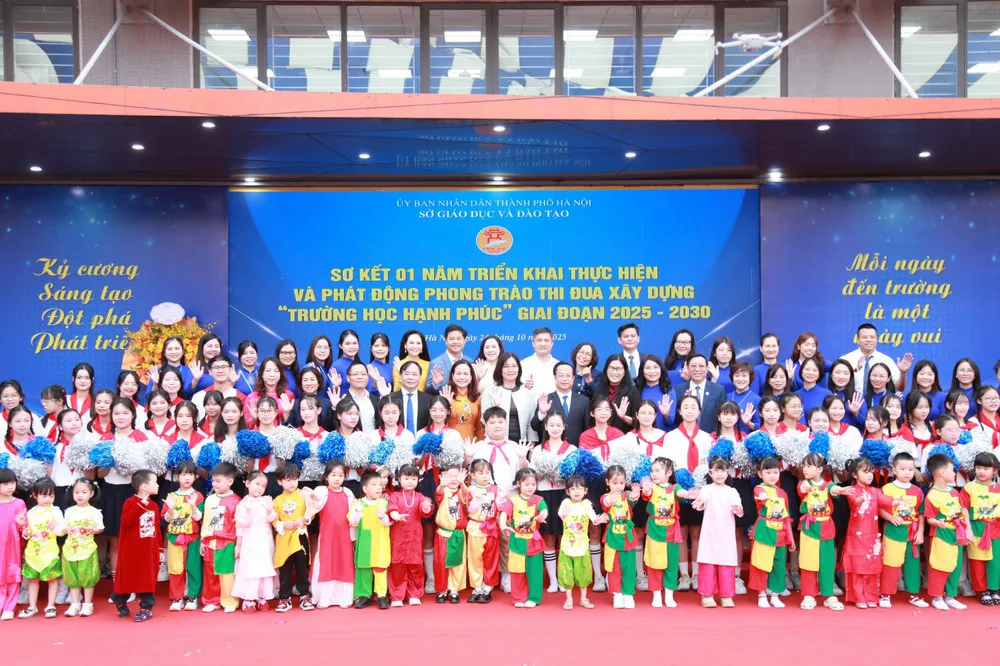
Delegates took a commemorative photo with teachers and students.
Referring to recent cases of school violence, the director noted that these were isolated incidents and did not reflect the overall spirit of the education system. He also pointed out that social media and academic pressure are major influences on school life.
“Discipline must be firm but also compassionate and appropriate,” he said. “Students must remain the focus and teachers must be role models for them. Only then can schools truly be happy.”
Cuong added that building a happy school requires cooperation among families, schools and society as the education sector alone cannot achieve this goal.
The Hanoi Department of Education will continue to train teachers in psychology, set up counseling teams and promote ethics and life-skills education to prevent negative behavior, he said.
Miki Nozawa, Head of Education at UNESCO Vietnam, praised Hanoi’s efforts, saying that developing happy schools is a global vision where learning connects with happiness, empathy and positive emotion.
However, the work must continue. The education sector, school leaders and teachers must keep striving to nurture happiness in every classroom.
To help expand the movement, Gia Bao from Tay Mo 3 Secondary School suggested a “Classroom Community Project”.
In this project, students from different grades could form mixed teams to work on community projects such as building green bookcases, supporting disadvantaged children, or sharing and listening to one another to build mutual trust.
“When we work together to overcome challenges, a natural bond forms among students. I think this is a meaningful way to build a happy school,” Bao said.
Ha Chi from Tran Duy Hung Secondary School proposed a “Students Speak – Teachers Listen Forum”. Each school could regularly hold this forum so students can express their thoughts and teachers can listen and connect with them.
She also suggested a “No-Judgment Day”, when students can freely express their opinions, dreams and individuality without fear of criticism.
Another idea by Chi is “Happiness Sharing Day”, where students spread kindness and support to others, such as sanitation workers, orphans and people in need.
“These activities not only help the school grow but also give students joyful learning experiences that make them feel happier every day,” Chi said.