Hanoi officials in Beijing to learn from heritage preservation experience
Preserving and protecting the Cultural Heritage is one of the key priorities that Hanoi wants to achieve better.
The delegation from Hanoi, led by Secretary of the Hanoi City Party Committee Dinh Tien Dung, visited the Summer Palace in the imperial city of Beijing on September 28.
| Hanoi officials visit the Summer Palace in Beijing. Photo: The Hanoi Times |
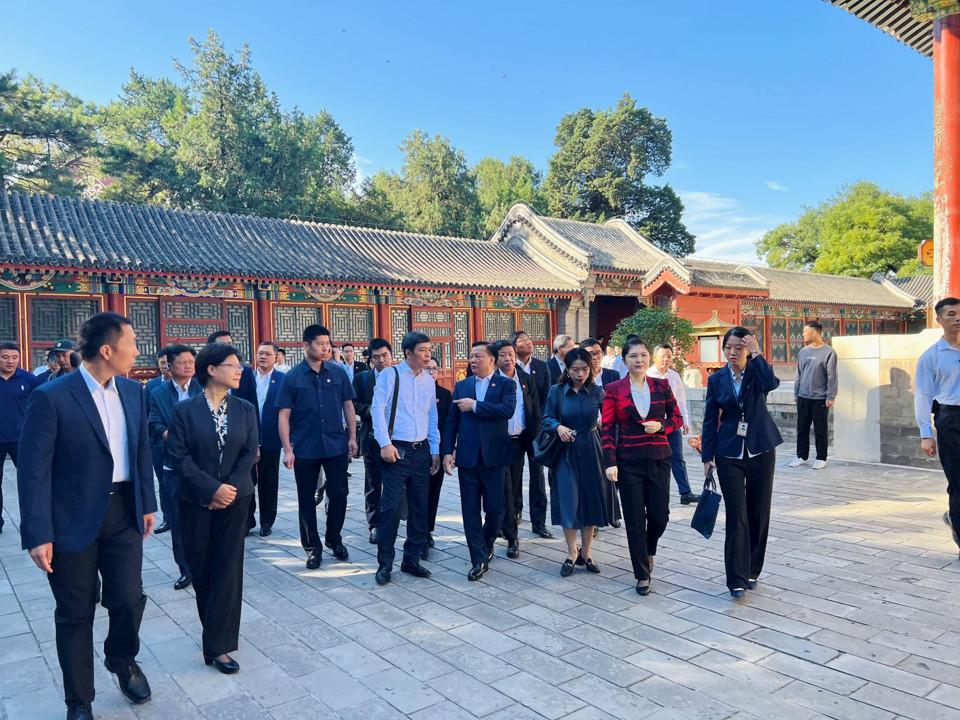
At the Summer Palace, the guests from Hanoi were introduced to the historical background and values of the relic. The officials also learned about the efforts and solutions taken by Beijing and Chinese authorities to preserve the site and attract tourists.
The Summer Palace, with a total area of about 3 km2, is an imperial garden built in the Qing Dynasty (1644-1911). It was first built in 1750, largely destroyed in 1860, and restored to its original design in 1886.
According to the UNESCO World Heritage Conservation, the Summer Palace is "a masterpiece of Chinese landscape garden design".
In 1961, the Summer Palace was declared one of China's first national cultural relics. In 1998, it was listed as a World Heritage Site. In 2009, the Palace was voted the largest imperial garden in China.
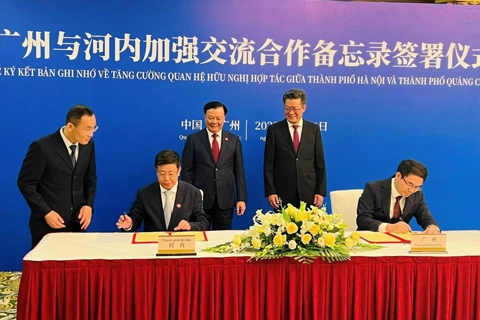
On September 27, Hanoi and Beijing authorities signed an agreement to promote efforts to preserve historical and cultural heritage.
Historic and cultural preservation, along with health and education, is one of Hanoi's three priority sectors.
The city has planned to allocate more than VND90 trillion (US$3.7 billion) for the three sectors in 2022-2025 and subsequent years.
The Hanoi Party Committee is also the first in Vietnam to issue a resolution on the development of the cultural industry, focusing on preserving historical and cultural relics and providing solutions to boost tourism and socio-economic growth.
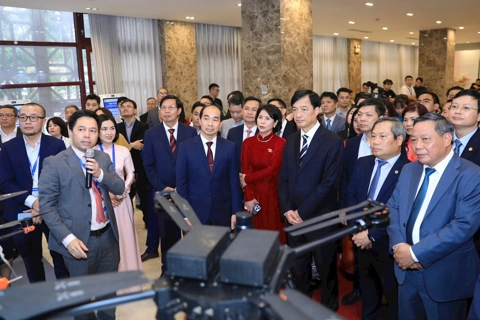
On September 27, Hanoi Party Chief Dinh Tien Dung and the delegation visited Beijing's Urban Planning Exhibition Center and Traffic Control Center.
The Urban Planning Exhibition Center covers a total area of 16,000m2 and displays scale models of Beijing's urban development. Since its establishment in 2004, the center has welcomed more than 100 national leaders and nearly five million visitors.
The Beijing Traffic Control Center is a highly technologically integrated facility that monitors traffic movements in urban areas based on an extensive network of surveillance cameras.
Beijing is also installing the Global Positioning System (GPS) in all taxis to better manage traffic and adopt solutions to handle traffic violations.