Hanoi pioneers in building “Digital Health Station” model
The model is designed to provide digital tools and data for enhancing the quality and accessibility of healthcare at the grassroots.
THE HANOI TIMES — Hanoi pioneers in building “Digital Health Stations” model to improve community-level health services, according to Tran Thi Nhi Ha, Vice Chairwoman of the National Assembly’s Committee for People’s Aspirations and Supervision.
Ha said at a recent meeting with the city's Department of Health that developing the “Digital Health Station” model is an inevitable step in digital transformation and a practical solution for residents.
Building the “Digital Health Station” model is considered a strategic step to improve frontline healthcare capacity while modernizing the healthcare system.
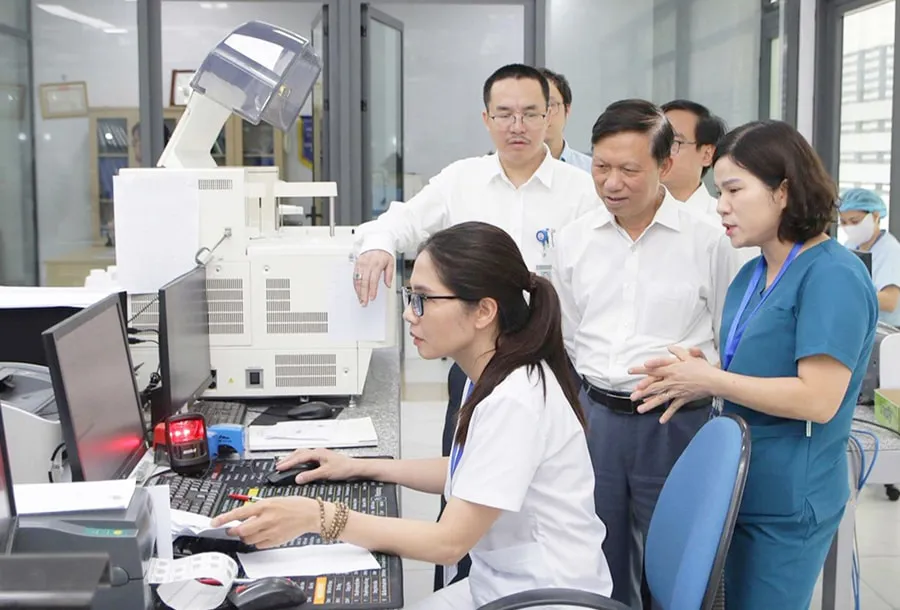
Son Tay General Hospital in Hanoi deploys electronic medical records for medical examination and treatment. Photo: Hanoimoi
"This model is a modern health management system connecting primary health care with upper-level hospitals and other medical examination and treatment facilities," stressed the official.
Particularly, each person will have an electronic health identification code, which stores all health data, including medical checkup and treatment history, vaccination, testing and nutrition.
The data is regularly updated and synchronized in medical facilities, helping people receive continuous care, save time and costs as they do not have to redo tests at each examination location.
Achievements of Hanoi's health sector by 2025
Hanoi's health sector has recorded outstanding results, notably the implementation of electronic health records at all 42 public hospitals, making it the first locality in Vietnam to achieve this result.
Hanoi has also promoted the application of science and technology with a series of high techniques introduced at specialized hospitals such as Hanoi Oncology Hospital, Hanoi Heart Hospital, Hanoi Obstetrics and Gynecology Hospital, among others.
As of September 2025, 75 facilities had connected over 244,000 records of birth certificate data to the Health Insurance Assessment Portal. All facilities examining and issuing driver health certificates have also connected more than 542,000 records.
Medical checkup and treatment facilities have conducted more than 14 million examinations using chip-embedded citizen identification cards, replacing traditional health insurance cards.
Regarding electronic health records integrated on VNeID, over 9.6 million records have been verified and connected.
The city has deployed cashless payments at 100% of public hospitals through POS, static QR, dynamic QR and e-wallets. In addition, five other hospitals have deployed a remote medical examination and treatment system.
In early 2025, Hanoi piloted the "Digital Health Station" model in two outskirts communes of Quang Minh and Ba Vi, synchronizing more than 85,000 medical examinations and nearly 190,000 population data.
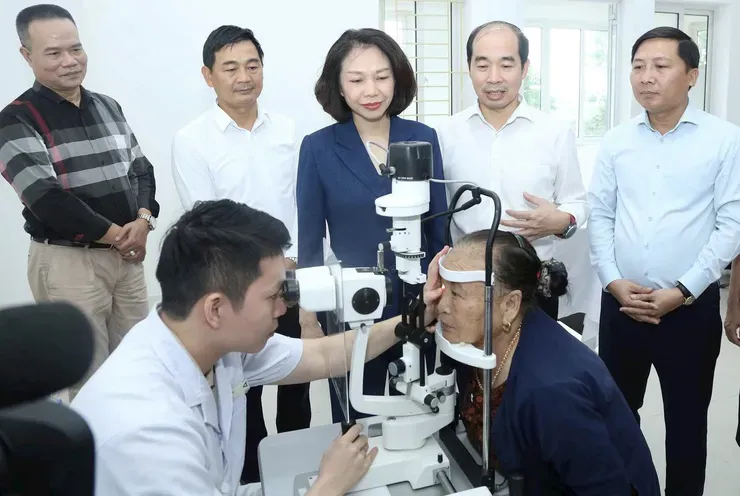
Vu Thu Ha, Vice Chairwoman of the Hanoi People's Committee (center), asks about the health of an old patient who takes medical examination in Hanoi's outskirt commune of Quang Minh. Photo: Kinh te & Do thi Newspaper
Some big general hospitals such as Duc Giang, Saint Paul and Hanoi Oncology have applied artificial intelligence (AI) in lung X-ray diagnosis, digestive endoscopy and early cancer screening, helping improve accuracy, reduce workload for doctors.
Challenges and solutions
According to Truong Viet Dung, Vice Chairman of the municipal People's Committee, the digital transformation of Hanoi's healthcare sector still faces many challenges.
He noted that medical data in Hanoi remains poorly connected, limiting its use for analysis and affecting doctors’ decision-making.
In response, Hanoi plans to build an integrated medical data system comprising four layers: basic, specialized, applied and interactive data.
To implement this, the city will form interdisciplinary working groups, engage multiple technology partners and temporarily pause small-scale projects to focus resources on the new data system.
It will also allocate appropriate funding, establish clear mechanisms and select strategic investors to develop a modern digital infrastructure for the health sector.
Vice Chairwoman of the Hanoi People’s Committee Vu Thu Ha stressed that this is a comprehensive initiative, calling it a long-term vision to improve public health management and enhance people’s quality of life.