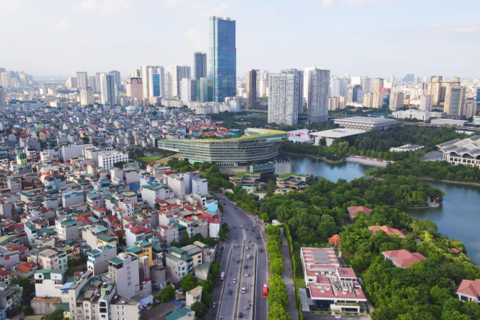
Hanoi plans multi-purpose upgrades to flood control dikes
Hanoi needs a modern and integrated plan with a 100-year vision capable of responding to extreme flood scenarios.
THE HANOI TIMES — Hanoi is planning multi-purpose upgrades to its flood control dikes to strengthen disaster resilience while better serving transport and urban needs.
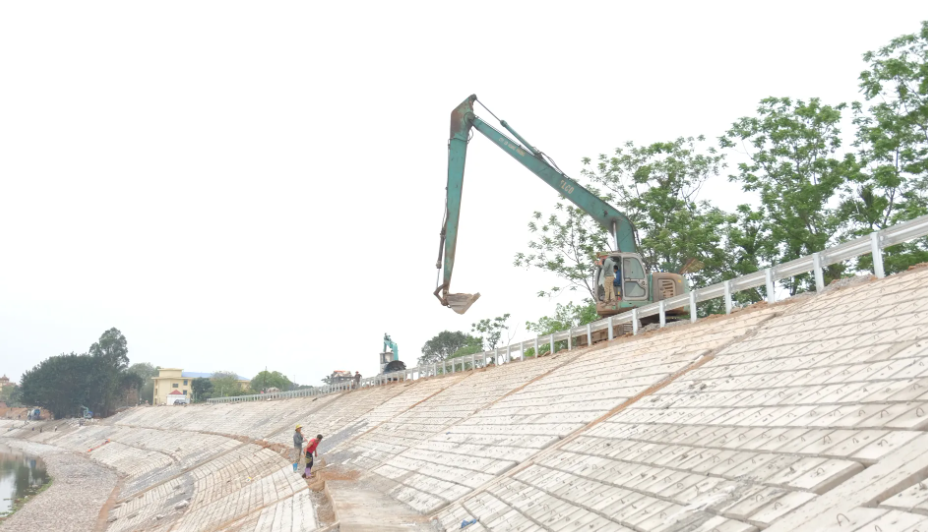
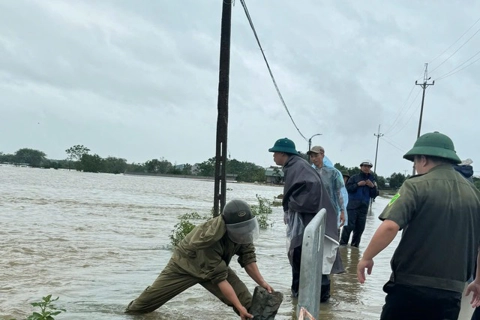
Upgrading and rehabilitation works underway on the Ca Lo River dike section running through Da Phuc Commune in Hanoi. Photo: The Hanoi Times
According to the Hanoi Department of Agriculture and Environment, the city’s dike system spans nearly 800 kilometers, with more than 626 kilometers already classified by management level. Of this total, about 38 kilometers along the right bank of the Red River are designated as special-grade dikes by the Ministry of Agriculture and Environment, providing direct protection for the capital.
Despite their critical role in flood prevention, many sections of the dike system face shortcomings, requiring coordinated and well-planned upgrades.
Nguyen Dinh Hoa, Deputy Director of the Department of Agriculture and Environment, said the department recently worked with relevant units and found that most dikes are earth-built with sharp bends and localized bottlenecks.
He said several sections fail to meet the designed flood protection elevations, feature steep slopes and narrow cross-sections and rest on weak foundations, while most culverts beneath dikes are deteriorated or damaged.
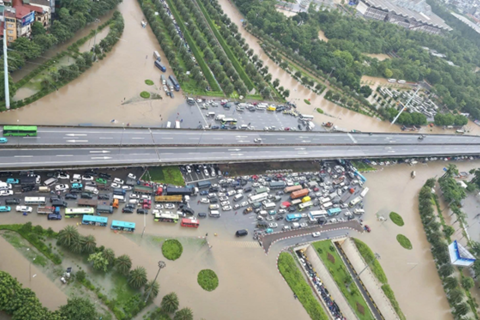
In recent years, Hanoi has recorded dike-related incidents almost every year. Although authorities have detected and addressed these issues promptly to prevent breaches, increasingly unpredictable weather has heightened concerns over the safety of earth-built dikes.
Hoang Thi Ha, Vice Chairwoman of Da Phuc Commune People’s Committee, said that safety risks are also rising due to traffic pressure. “In Da Phuc, dikes running along three rivers now serve not only flood control functions but also act as key transport routes.”
A 100-year vision
However, load capacity has become a pressing issue as many dikes were built long ago and continue to degrade over time.
Nguyen Duy Du, Head of the Hanoi Sub-Department of Irrigation and Disaster Prevention, said the city has consistently prioritized major resources for upgrading and reinforcing dike infrastructure.
The city's leaders, including Vice Chairman of the Hanoi People’s Committee Nguyen Manh Quyen, have repeatedly conducted on-site inspections and directed the Department of Agriculture and Environment to develop a comprehensive plan to upgrade the entire dike system with a multi-purpose approach.
Vice Chairman Quyen recently chaired a meeting to review reports and gather feedback from departments on the draft master plan to refine the proposal before finalization.
He stressed that Hanoi needs a modern and integrated plan with a 100-year vision capable of responding to extreme flood scenarios. The city must elevate its overall planning approach so that dikes meet transport needs and broader infrastructure development goals in areas where they are located.
“We must decisively abandon outdated thinking and avoid fragmenting projects. When investing, dikes should have a minimum cross-section of two traffic lanes to ensure operation and emergency response, with an additional lane at the dike toe where conditions allow,” Quyen said.
Regarding the master plan, the city's leaders also called for reinforced embankments and upgraded lighting in urban sections, with solar lighting considered for non-urban areas. Dike upgrades must align with planning frameworks while improving riverfront landscapes and enhancing the quality of urban space along river corridors.
| “The master plan for investment in upgrading and reinforcing the dike system will be implemented by dike classification and by individual sections, with phased investment stages. Total investment, phasing and funding sources will be determined and prioritized accordingly,” said Nguyen Duy Du, Head of the Hanoi Sub-Department of Irrigation and Disaster Prevention. |