Hanoi plans to restrict polluting vehicles around Hoan Kiem Lake
Residents and businesses within the low-emission zone will have a 12-month transition period to upgrade their vehicles to meet the required emissions standards.
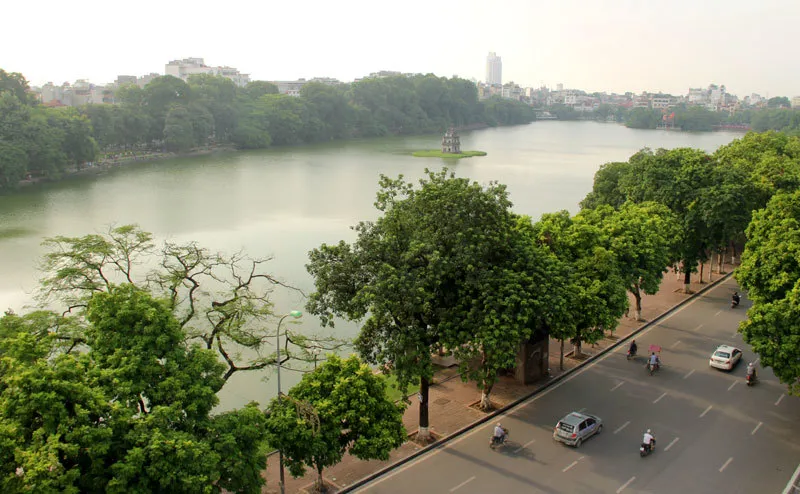
Hoan Kiem Lake, its surrounding areas, and the Old Quarter in Hanoi’s Hoan Kiem District are proposed as pilot zones to curb polluting vehicles in a bid to improve air quality.
| A corner of Hoan Kiem Lake. Photo: Pham Hung/The Hanoi Times |
Hoan Kiem District has been selected as the first low-emission zone (LEZ) trial area. By 2031, Hanoi aims to foster the establishment of such a zone in every district. This new initiative is part of a draft resolution introduced by the municipal Department of Natural Resources and Environment, which outlines criteria, conditions, procedures, and steps for designating low-emission zones in the city.
The draft includes a specific timeline: from 2025 to 2030, Hanoi will trial the LEZ in a selected part of Hoan Kiem District and assess its impact before expanding it to other districts. The proposed Hoan Kiem LEZ would cover Hoan Kiem Lake, surrounding areas, and the Old Quarter, spanning over 145 hectares. Measures include restricting heavy diesel trucks, prioritizing vehicles meeting Euro 4 standards for cars and Euro 2 standards for motorbikes, and replacing 45-50% of the public transportation bus fleet with 100 electric or green-energy buses operating in the area.
Residents and businesses within the LEZ will have a 12-month transition period to upgrade vehicles to meet the required emission standards.
From 2031 to 2035, Hanoi will encourage the setting up of LEZs in other districts, and starting in 2036, LEZs will be mandatory in areas with severe air pollution, with the necessary resources allocated to ensure compliance.
The primary objective of these LEZs is to curb polluting traffic and enhance air quality. However, the Department of Natural Resources and Environment acknowledges challenges, particularly the lack of emission standards for motorcycles and outdated emission monitoring infrastructure for currently operating vehicles.
Hanoi lacks a comprehensive network for in-use vehicle emissions testing, and air quality monitoring stations remain insufficient. Additionally, updated and routine emissions inventories, especially from traffic, are needed for policy evaluation.
The draft resolution, which defines the criteria and process for establishing LEZs in Hanoi, is expected to be reviewed by the city’s People’s Council in December and, if approved, would take effect on January 1, 2025.
According to Hanoi’s Department of Transport, as of April, the city had over 8 million vehicles, including more than 1.1 million cars and 6.9 million motorcycles, with nearly 73% of vehicles over 10 years old.
The Department of Natural Resources and Environment notes that older, unregulated vehicles significantly increase air pollution. During peak hours or in heavily congested areas, vehicle emissions cause driver discomfort and elevate health risks associated with exposure to air pollution.