Hanoi plans to stimulate domestic tourism for economic recovery
As Hanoi is now focusing on economic recovery, boosting domestic tourism would help speed up the process.
From now on until the end of the year, Hanoi’s Department of Tourism would step up efforts to stimulate domestic tourism, said Tran Duc Hai, director of the agency.
| Photo: Hai Linh. |
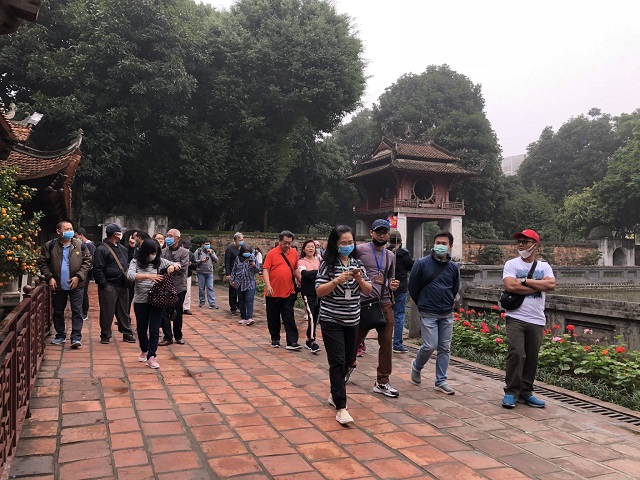
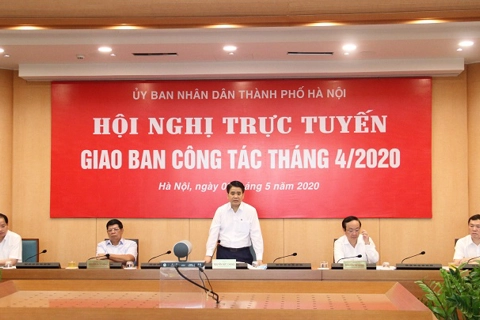
The advantages of Hanoi lie in cultural, craft village and agricultural tourism, and the department will ensure tourists' safety and their experiences, Hai said at a meeting on May 6 discussing measures to boost Hanoi’s economic recovery.
In preparation to the reopening of heritage sites and tourist attractions, Director of Hanoi’s Department of Culture, Sports and Tourism To Van Dong said his department is developing new tourism products to meet growing demands.
In April, tourist arrivals to Hanoi fell 98.4% year-on-year to over 35,500, leading to a decline of 98.3% year-on-year in tourism revenue to VND143 billion (US$6.1 million).
During the four-month period, the number of tourists to Hanoi stood at 3.89 million, down 59.2% year-on-year, and revenue dropped 53.2% to VND15.83 trillion (US$675.72 million).
Severe impacts on economic performance
At the meeting, Director of Hanoi’s Planning and Investment Department Nguyen Manh Quyen said the city’s major economic indicators in April deteriorated considerably compared to the previous month.
Total state budget collection in the January – April period stood at VND88.27 trillion (US$3.76 billion), or 31.7% of the year's estimate and down 1.6% year-on-year.
Meanwhile, exports declined by 4.7% year-on-year to US$4.32 billion. Some of the city’s key export staples recorded a sharp decline year-on-year, including petroleum products, smart phones, agricultural products, electronics and parts, among others.
In contrast, exports of basic necessities and medical equipment spiked month-on-month, Quyen added.
Hanoi’s foreign direct investment in the first four months hit US$981.5 million, including 235 fresh projects with registered capital of US$324 million; 53 existing projects with additional capital of US$365 million and US$292.5 million in capital contribution.
The number of enterprises temporarily suspending operations increased 36% year-on-year to 4,877 in the four-month period, Quyen stated.
Pushing for administrative reform
Considering the severe impacts of the Covid-19 pandemic on the local economy, head of the Hanoi Taxation Department Mai Son estimated state budget collection in the second quarter would only reach half of the amount recorded at the same period last year, or VND31.61 trillion (US$1.35 billion).
Son stated the tax authorities would continue to support the business community via administrative reforms and helping enterprises to access government’s supporting programs.
Regarding this issue, Chairman of the Hanoi People’s Committee Nguyen Duc Chung said administrative reforms should be a backbone during the process of socio-economic development. All local agencies must focus on addressing issues related to administrative procedures for enterprises and citizens, he stressed.
Time is gold, and a lost opportunity would result in high cost for businesses, Chung added.
Among measures to boost economic recovery, Chung emphasized the necessity to cut regular spending by 15%, while continue pushing for speedier disbursement in public investment.
Meanwhile, the city would continue to organize goods supply – demand matching programs to drive up domestic consumption.