Hanoi ramps up global engagement in semiconductor sector
Vietnam and its capital city of Hanoi have become an increasingly attractive option in the global semiconductor supply chain.
THE HANOI TIMES — International cooperation continues to play a vital role in driving the development of the semiconductor industry in Vietnam overall and in Hanoi in particular.
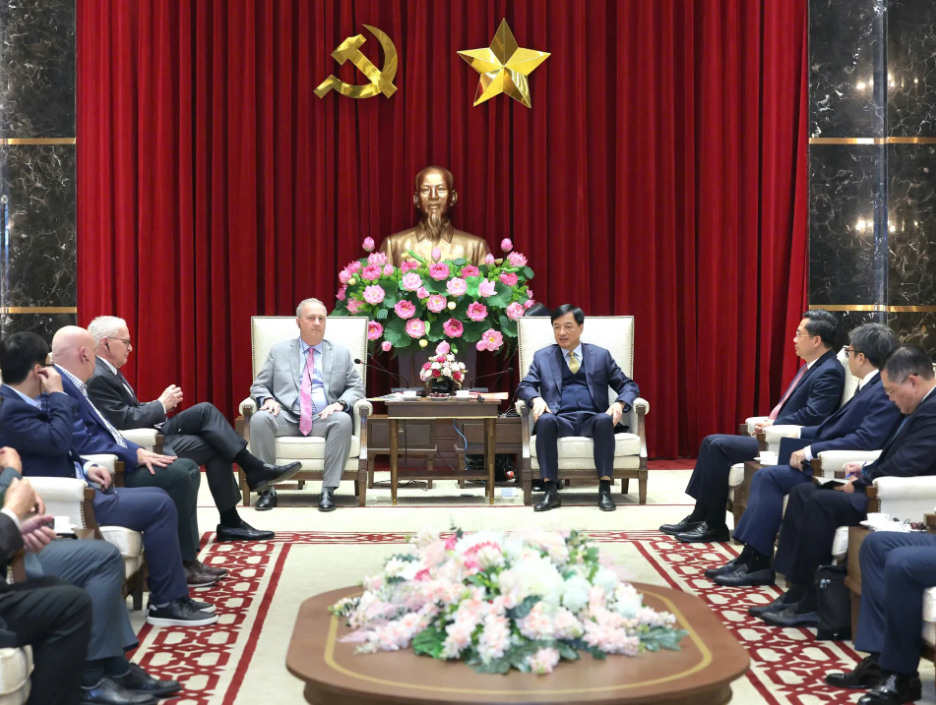
Overview of the meeting. Photos: Thanh Hai/The Hanoi Times
The view was shared at a January 12 meeting between Hanoi Party Committee Secretary Nguyen Duy Ngoc and international delegates and experts, who are in Hanoi to attend the conference Shaping the Future of the Semiconductor Industry, held from January 11 to 14.
At the meeting, Jeffrey S. Goss, Vice Provost for Southeast Asia, Executive Director of Global Partnerships and Extended Education and a leader at the Ira A. Fulton Schools of Engineering at Arizona State University (ASU), said ASU is currently the leading public university in the US, with around 190,000 students enrolled.
ASU is also among a small number of universities in the US and worldwide capable of delivering the full value chain through public-private partnership models.
He said Vietnam’s focus on developing shared infrastructure, training its workforce, promoting research and strengthening national intellectual capacity in the semiconductor sector has impressed international delegates.
Emphasizing Arizona State University’s long-standing partnership with Vietnam, Goss expressed optimism about positive changes in Hanoi’s government apparatus as well as across Vietnam more broadly.
ASU’s leadership reaffirmed its readiness to support Hanoi and Vietnam and its commitment to maintaining an open and constructive dialogue to advance cooperation.
For his part, John Neuffer, President and Chief Executive Officer of the Semiconductor Industry Association (SIA), said he was pleased to return to Vietnam.
“Each time I come back, I am genuinely impressed by the progress you have made,” Neuffer said.
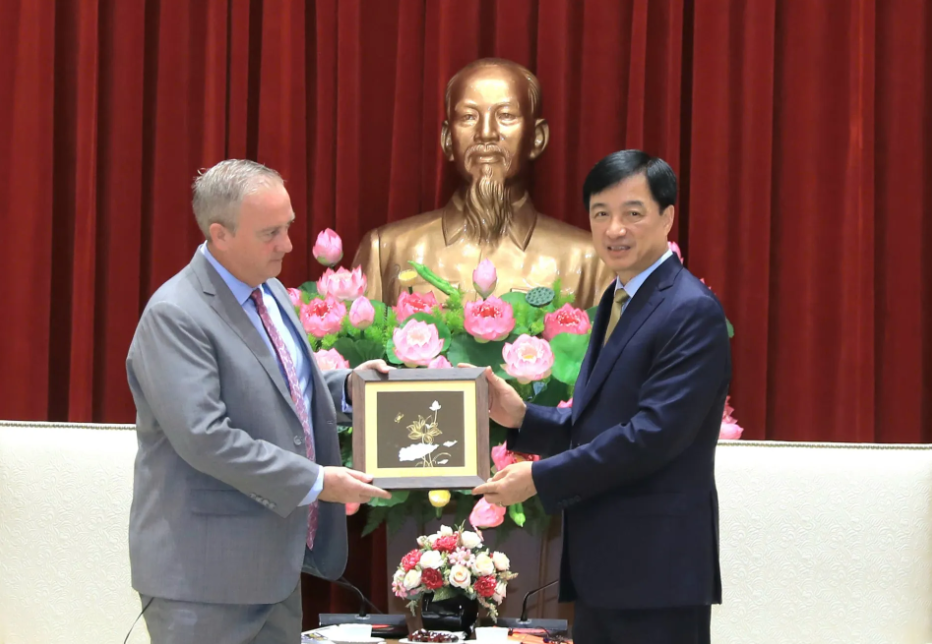
Hanoi Party Chief Nguyen Duy Ngoc presents a souvernir to the ASU representative.
He added that the Washington-based association has many member companies that are already operating in Vietnam, including Intel, Samsung, Qualcomm, Qorvo, Amkor and Marvell.
Neuffer expects Vietnam and Hanoi to seize new development opportunities, adding that the global semiconductor industry is expanding at an exceptionally rapid pace and could reach a value of $1 trillion earlier than expected.
He said Vietnamese partners are on the right path, with strong determination to deepen their integration into the global value chain.
Speaking at the meeting, Hanoi Party Chief Nguyen Duy Ngoc thanked the delegates for sharing valuable insights into the semiconductor industry.
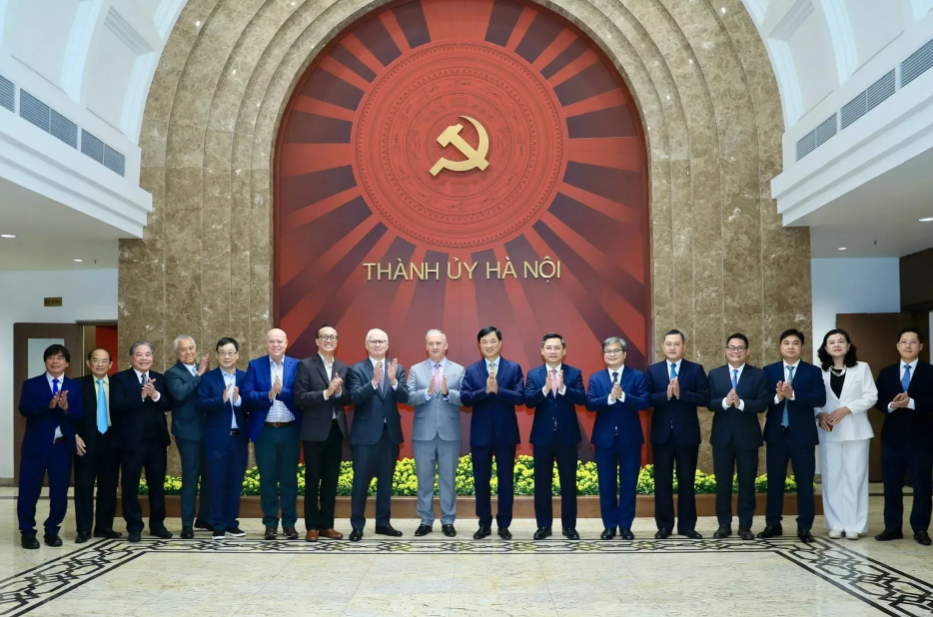
Delegates at the meeting.
Ngoc said the seminar would produce decisions that help further develop the sector and make positive contributions to the global semiconductor industry, Vietnam and Hanoi.
"The National Assembly’s late 2025 session continued efforts to basically complete legislation on science and technology, artificial intelligence and digital transformation, creating more favorable conditions for Vietnam to engage with the world in these fields," said Ngoc.
He said Hanoi hosts a large network of central-level universities alongside city-run institutions, describing this as a valuable resource that could work closely with Arizona State University to develop human capital aligned with both long-term development strategies and the directions outlined at the seminar.
He expressed his hope that seminar participants would actively introduce investment opportunities, support connectivity for Hanoi and Vietnam, and contribute to productive and meaningful working days that advance the city’s future development.