Hanoi’s AI traffic system shows early gains
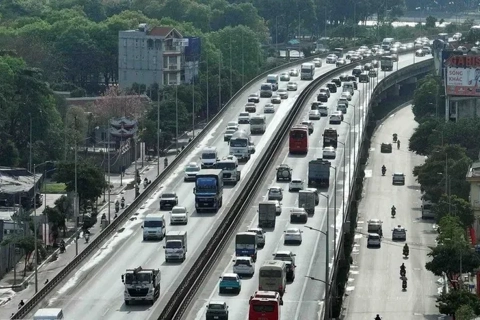
The AI camera system has helped promote more civilized urban behavior and reduce congestion at major intersections.
THE HANOI TIMES — More than 10 days after Hanoi police began deploying AI in traffic management, congestion at several long-standing bottlenecks across the capital has eased, with traffic flow improving by up to 18% at key intersections.
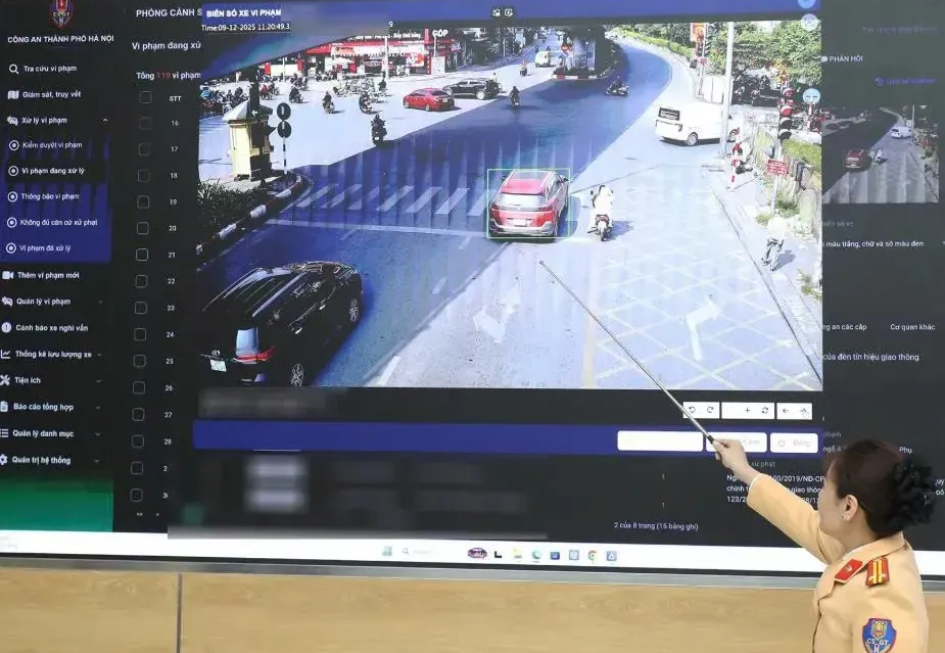
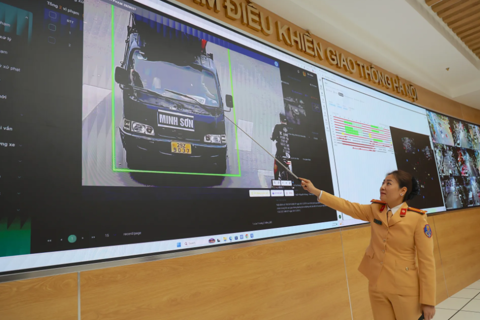
The smart traffic control center is equipped with 1,837 AI cameras installed at 195 key intersections. Photo: Dat Le/The Hanoi Times
The results follow the official launch of the upgraded Hanoi Traffic Control Center on December 13, which is equipped with modern systems to detect road safety violations, optimize traffic signals through real-time adaptive intelligence, and support public order management.
At the core of the system is the Smart Traffic Light Controller, which creates coordinated green waves along major corridors, allowing vehicles to maintain steady speeds and move more smoothly through intersections, thereby increasing corridor capacity.
After nearly two weeks of operation, police evaluated the green wave system at intersections along major routes, including Tran Phu, Tran Hung Dao, Hai Ba Trung, Nguyen Thai Hoc, and Giai Phong–Truong Chinh.
Comparisons with the same time periods before deployment showed traffic volumes increased at all intersections using AI-based signal control.
According to Lieutenant Colonel Truong Song Thanh, Head of the Traffic Command and Signal Control Unit under the Hanoi Traffic Police Division, traffic flow improvements ranged from about 4% to more than 18% depending on intersection geometry and traffic composition.
At complex and heavily used intersections such as Nguyen Thai Hoc-Ton Duc Thang and Giai Phong-Truong Chinh, the system still delivered stable gains of 6% to 11%, demonstrating both effectiveness and reliability under dense traffic conditions.
The AI camera system can automatically detect and process up to 23 types of traffic violations. It can also recognize license plates and accurately record violations.
According to the Traffic Command and Signal Control Unit, during the first 10 days of operation from December 13 to December 23, the system detected 1,453 violations.
Most involved running red lights with 965 cases and not wearing helmets with 477 cases, along with several illegal stopping and passenger pickup violations.
Motorcycles accounted for the majority of offenses with 1,099 cases. Violations are handled objectively and transparently through digital platforms, strengthening deterrence and prevention.
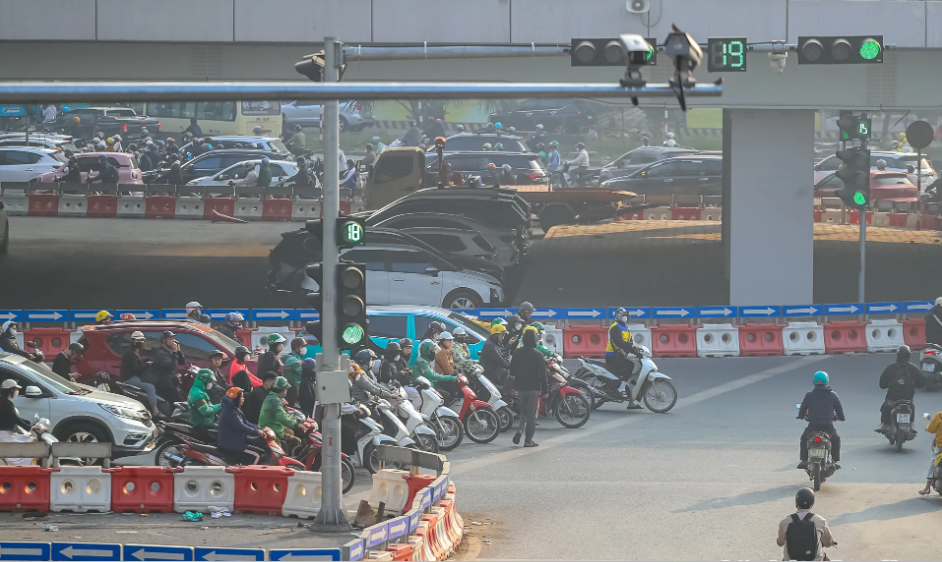
The use of AI cameras has also led to noticeable changes in driver behavior. Photo: Duy Minh/The Hanoi Times
The use of AI cameras has also led to noticeable changes in driver behavior. Observations over the past two weeks show that both car and motorcycle riders are stopping correctly behind stop lines with fewer cases of crowding or deliberate encroachment.
Nguyen Phuong Nhi, a resident of Van Mieu-Quoc Tu Giam Ward, said the AI camera system has encouraged more civilized urban behavior while helping reduce congestion at major junctions.
Refining legal regulations as priority
Despite these early gains, local authorities still face legal challenges in handling violations through electronic systems due to the lack of shared data platforms and a unified system.
This highlights the need to review and amend existing decrees and circulars on administrative penalties in road traffic management.
Colonel Pham Quang Huy, Deputy Director of the Traffic Police Department under the Ministry of Public Security, said violations detected by AI cameras will be connected to analysis software and integrated into the shared data infrastructure.
The system will be linked with relevant professional units to support electronic confirmation of violations, issuance of digital penalty decisions and online fine payment. This approach is expected to reduce travel needs and improve convenience for the public.
The Ministry of Public Security plans to use Hanoi’s model as a basis for nationwide expansion, while continuing to review and refine legal regulations to align with electronic enforcement processes.
“The Traffic Police Department will continue to support the Hanoi Police in professional legal and technical areas”, Huy said.
To address one of the city’s biggest challenges, traffic congestion, AI camera systems are seen as playing a critical role in ensuring road safety and order.
Major General Nguyen Hong Ky, Deputy Director of the Hanoi Department of Public Security, said the police leadership has directed units to work closely with city departments to adjust traffic organization and restrict vehicle access during peak hours on key routes and areas.
At the same time, the force is accelerating digitalization and technology use and expanding shared data platforms to improve command and operational efficiency, he noted.
Lieutenant General Nguyen Thanh Tung, Director of Hanoi Department of Public Security, said the force will continue to maximize the effectiveness of the Hanoi Traffic Control Center in monitoring violations, analyzing traffic conditions and managing traffic flexibly.
Local authorities are also studying time-based and area-specific traffic organization solutions, strengthening inspections and supervision with strict enforcement, clear accountability for leaders, and weekly reporting mechanisms to promptly address challenges during implementation.