Hanoi’s craft villages adapt to digital age
Hanoi’s craft villages apply technological advances in production for higher productivity and competitiveness, and sustainable development.
The Hanoi Times — In the digital age, Hanoi's villages have been gradually changing to increase their visibility, mostly through e-commerce platforms and social networks.
Pham Van Dat, owner of Bao Quang Ceramics in Bat Trang Pottery Village in Hanoi’s Gia Lam District, said that after a period of doing business on the e-commerce platform, through the website and social networks such as Facebook and Zalo, the Bat Trang ceramic brand has been known by millions of people, resulting in more orders for his business.
"Our pottery products are now displayed using virtual reality (VR) and augmented reality (AR) on http://gombattrang.fairs.vn/ to boost tourism and trade of our 700-year-old traditional craft village," Dat told The Hanoi Times.
"TikTok is also a useful platform for e-commerce, making it easier for customers to find suitable products," he said.
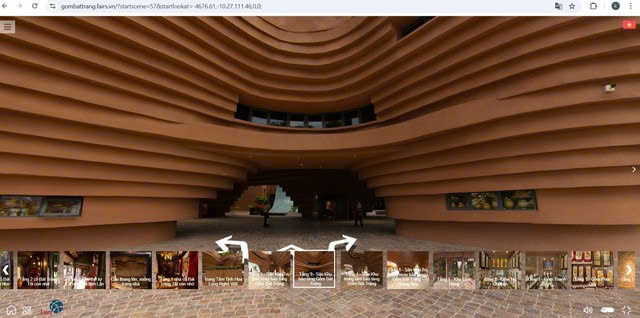
The ceramics on display using AR/VR at http://gombattrang.fairs.vn/ to promote the Bat Trang pottery brand in the digital environment. Photos: Anh Kiet/The Hanoi Times
Do Van Kien, Deputy Chairman of the Bat Trang Commune People's Committee, said that the digital transformation in Bat Trang Pottery Village is strong, especially after the Covid-19 pandemic.
"The local pottery workshops over the past two years has invested in automation to increase their productivity while diversifying designs to make their products more competitive. The local government has also supported them with concrete measures," he said.
Kien stressed that digital marketing helps Bat Trang target markets more accurately and increase sales while saving time and cost.
Ha Van Long, General Director of Long Loan Ceramics Ltd. Co., said that technology has helped reduce production costs by more than 30%.
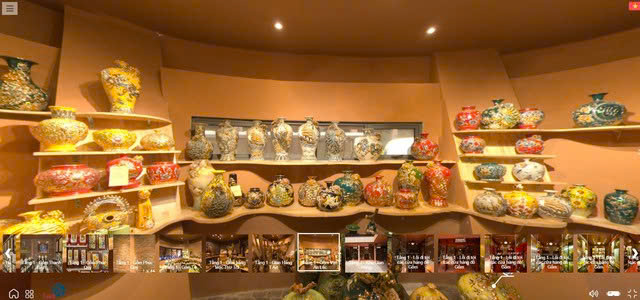
A booth of Bat Trang pottery on the digital environment.
"The percentage of defective products has dropped significantly, and the design of the products is more diverse thanks to machine production. By turning to online sales, we can better promote our products on the market," Long said.
As a result, the volume of goods sold on electronic platforms is very stable, and the company exports to Australia, Japan, and some European countries such as Denmark, he added.
Bat Trang craftsmen have also changed their way of thinking, replacing firewood and coal kilns with gas and electric ones, solving the problem of environmental pollution, improving product quality, and building a green craft village suitable for tourism development.
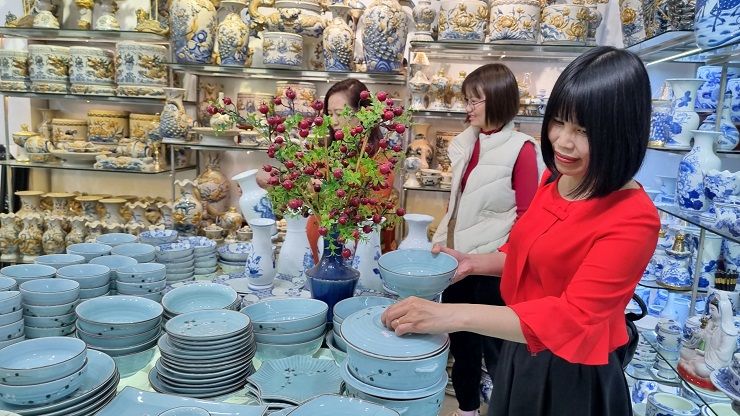
Tourists are selecting Bat Trang ceramic products.
Other traditional craft villages in Hanoi have found a way for their products to survive despite a tough global economy and scarce export orders. They have changed their production and business models, undergoing a digital transformation from management to production and trade.
In addition to on-site sales to customers visiting Van Phuc Silk Village in Ha Dong District, households here have turned to live-stream shopping.
-1741561268.jpeg "Hình ảnh 4")
The products of Van Phuc Silk Village are diverse.
Artisan Tran Thi Ngoc Lan, Vice President of the Van Phuc Silk Weaving Village Association, said that artisans are combining traditional business with e-commerce, which has improved marketing and gained more profits.
New silk weaving technology has been introduced in marketing and production, she said.
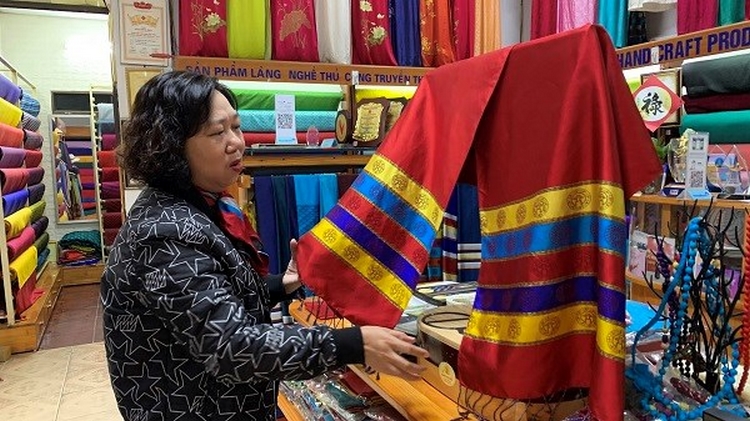
Artisan Tran Thi Ngoc Lan introduces Van Phuc silk products.
"E-commerce needs better human resources and market research to expand the clientele and increase the value of products. In particular, it is necessary to identify the target market for the products," Lan told The Hanoi Times.
For that reason, if the villages fail to catch up with international standards, they will continue to lag behin, said the artisan.
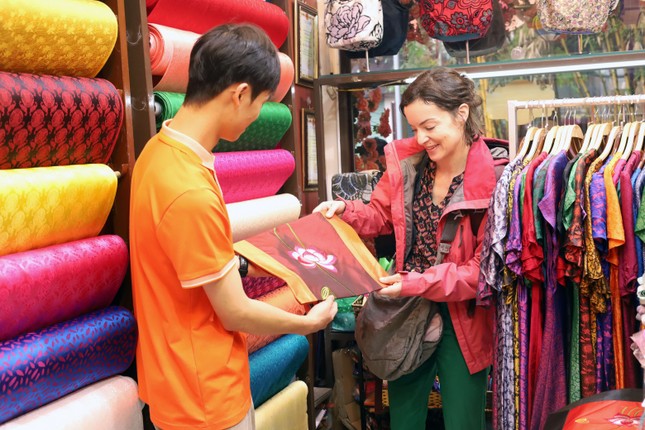
A foreigner at Van Phuc Silk Village.
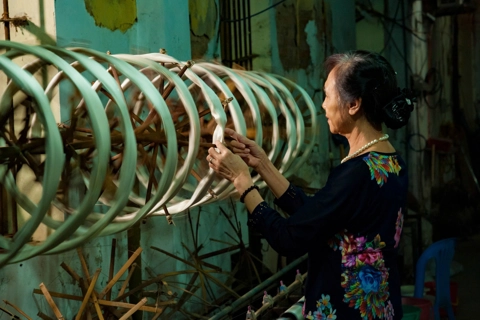
Another benefit of applying technologies is to have better products. Artisan Nguyen Anh Son said that 200 households in Van Phuc have switched from manual labor to using machines, which has helped silk products meet higher standards in terms of quantity, quality, and design.
-1741561367.jpeg "Hình ảnh 5")
Weaving machines have replaced all the old looms in the silk production in Van Phuc Silk Village.
According to Nguyen The Lanh, Deputy Director of the Hanoi Industrial Promotion and Development Consultation Center, industrial promotion policies and handicraft development projects encourage many households to invest more in modern machinery.
"The change has shortened manual production stages, reduced labor, and improved environmental impact," he said.
Many traditional artisan villages have applied technological advances in production with the support of the local government. The center has helped 64 rural industrial units innovate production technologies to increase labor productivity and reduce environmental pollution.
This year, Hanoi aims for handicraft villages to account for 8.5% of the total industrial economic value. The infrastructure of 50 villages will be improved, and pollution in the 50 most contaminated villages will be solved.
"In 2025-2030, the city targets that more than 10,000 enterprises and rural industrial facilities will receive support from Hanoi's industrial promotion program, and 50,000 jobs will be created for rural workers. Handicraft exports will increase by 5-8%," Lanh told The Hanoi Times.
Hanoi currently has 1,350 craft villages practicing 47 of the country's 52 traditional trades.
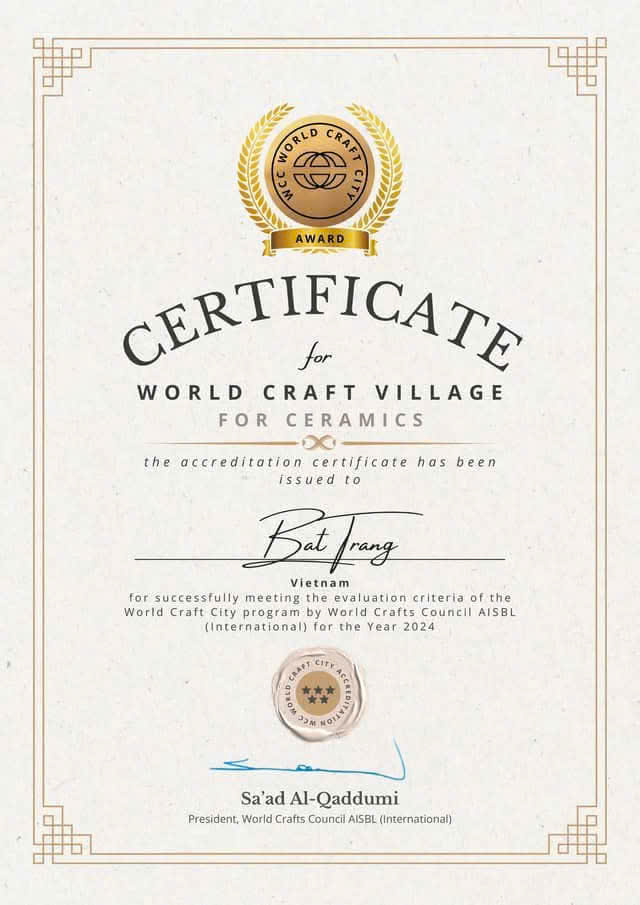
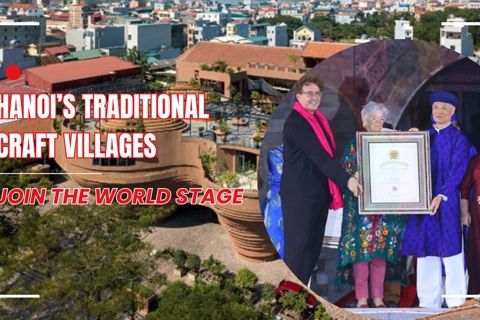
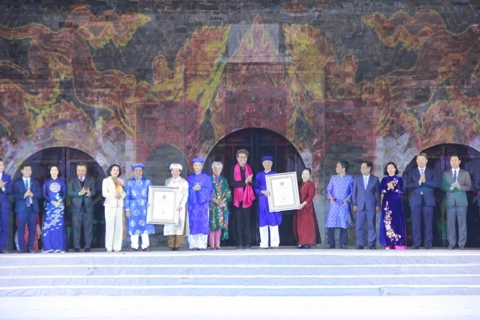
The certificate recognizes Bat Trang Ceramic Village as a member of the World Creative Craft Cities Network.
The World Craft Council on February 14 recognized Bat Trang Pottery Village and Van Phuc Silk Village as members in honor of their contributions to the economy, culture, society, environment, community spirit, and innovation.
The memberships are expected to help them better preserve traditional values, expand markets, and promote international cultural exchange and sustainable development.
According to Saad Al-Qaddumi, President of the World Craft Council, Van Phuc and Bat Trang are symbols of revival and strong development. These craft villages are a clear testament to resilience, centers of craftsmanship, and cultural pride once again.