Hanoi’s top culinary artist and her secret to keeping traditional recipes alive
Known as the “chef of heads of state”, a “living dictionary of traditional cuisine” and “Hanoi’s foremost culinary artist”, culinary artist Nguyen Thi Anh Tuyet has long been recognized as one of the leading figures in Vietnam’s culinary world.
THE HANOI TIMES — Culinary artisan Nguyen Thi Anh Tuyet has overseen numerous national culinary events, including the State Banquet welcoming 21 economic leaders during the APEC 2017 Summit.
Beyond her mastery in the kitchen, she has trained thousands of Vietnamese and international students in preparing traditional Hanoi dishes. Her appearances on major global television channels have helped introduce Hanoi cuisine to the world, reinforcing her role as a cultural ambassador.
For her contributions to preserving Hanoi’s culinary heritage, she holds the titles of Meritorious Artisan and Distinguished Citizen of the Capital.
She talks to The Hanoi Times about the essence of Hanoi cuisine.
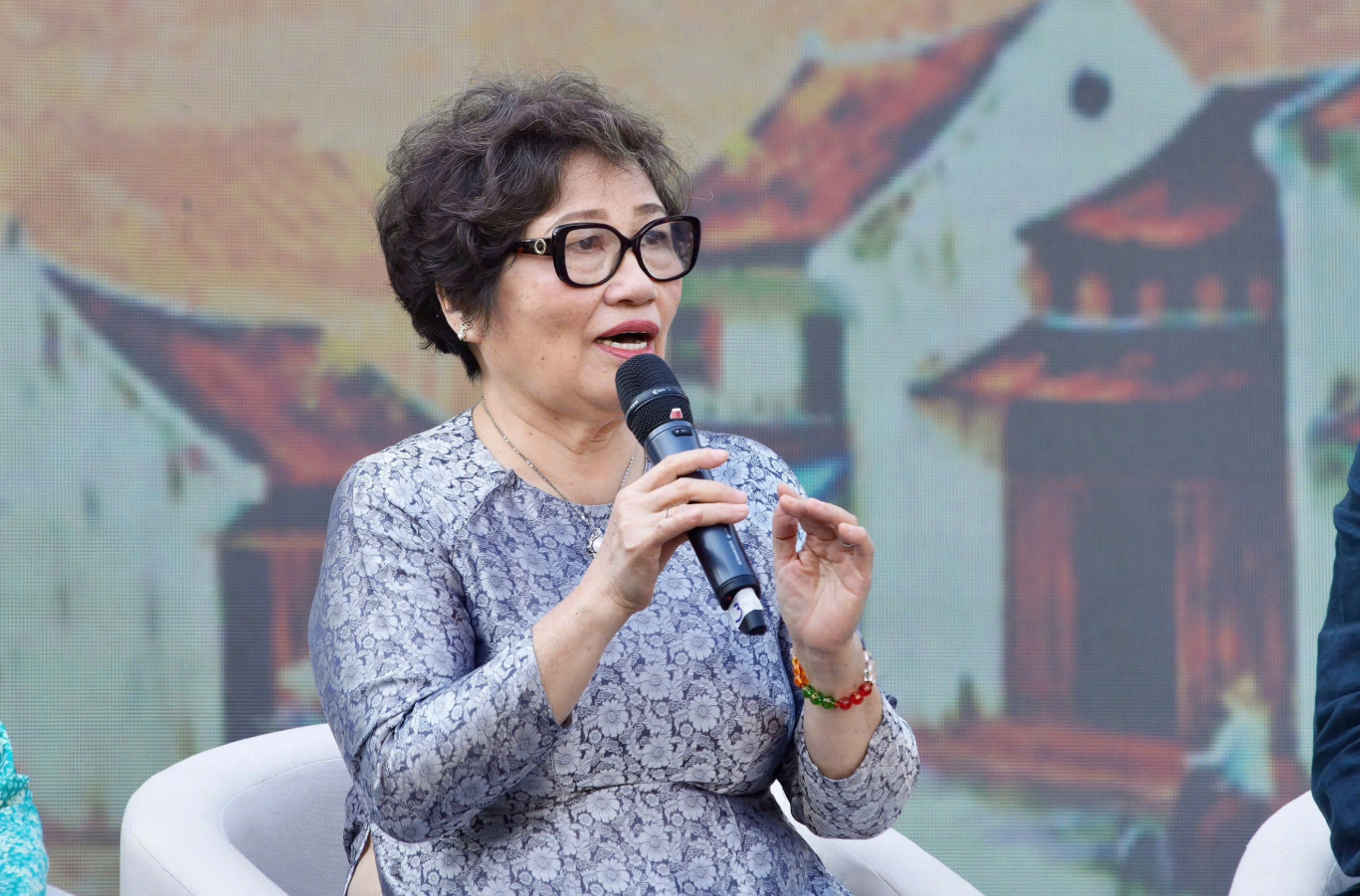
Artisan Anh Tuyet is an icon of Hanoi cuisine thanks to her experience and knowledge of traditional recipes. Photo courtesy of the artisan
How did you nurture your passion for cuisine to become one of today’s leading culinary experts?
I am the seventh generation of a Hanoi family. Since childhood, I grew up with the traditional values expected of Hanoi girls. Cooking was one of the earliest lessons. At nine years old, I followed my grandmother to the market to choose ingredients and learned to prepare traditional Hanoi dishes.
In her kitchen, I learned recipes and absorbed her philosophy on food and life. The lesson that stayed with me is this: the sophistication of Vietnamese women appears in the smallest details of the kitchen, where care and precision matter.
To enjoy a dish, you must see it first, breathe in its aroma, taste its flavors and feel its texture as it melts in your mouth. Cuisine must awaken all the senses.
Hanoi has recently organized several events to promote pho. In your view, what makes Hanoi pho distinctive?
I have prepared Hanoi pho for well-known international politicians and artists and they are always impressed. Many describe it as a perfect harmony of spices and ingredients.
The broth simmers for hours from beef bones blended with cinnamon, star anise, ginger and cardamom. It must be clear and naturally sweet, without relying on artificial flavoring.
The noodles come from high-quality rice, spread thin and cut evenly. They must stay soft and smooth without breaking and they should keep the natural fragrance of rice.
As demand grows, Hanoi has seen a wide variety of pho styles. Traditional pho focused on beef, but today we see pho tron (pho mixed with other ingredients without broth), pho with rare beef, pho with wine sauce and pho rolls. This evolution reflects modern tastes, yet we must preserve the authentic character of Hanoi and Vietnamese pho as a whole.
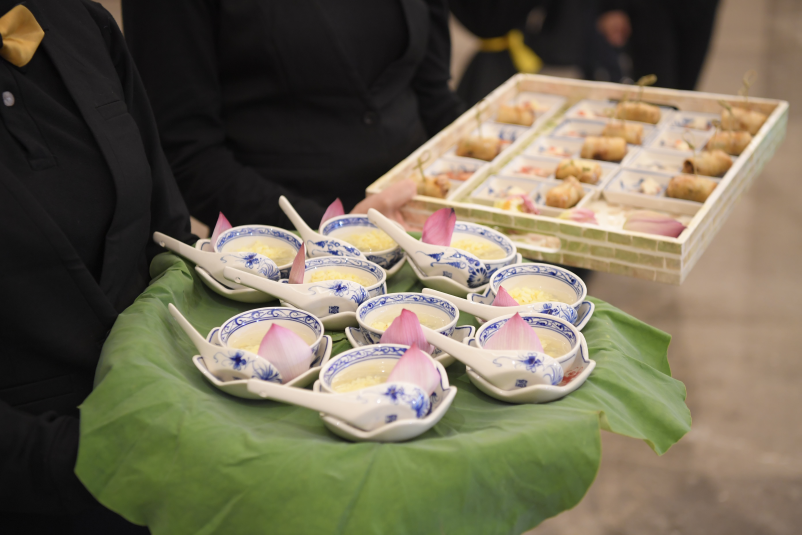
Hanoi cuisine is known for its sophistication. What is your secret to promoting it?
Hanoians take pride in their refined palate. They choose ingredients with care and pay attention to every detail, from main dishes to desserts. Each season has its signature foods.
When I prepare traditional dishes, I follow strict standards so that every recipe retains its true flavor. The delicacy of Hanoi’s Tet (Lunar New Year) tray appears in three steps: choosing ingredients, preparing them and savoring the final dish.
Growing up in Hanoi, I learned that girls had to master household skills. These expectations were once very strict and reflected a family’s upbringing. Because of this, I became confident in the kitchen at a young age and that early foundation shaped my culinary career.
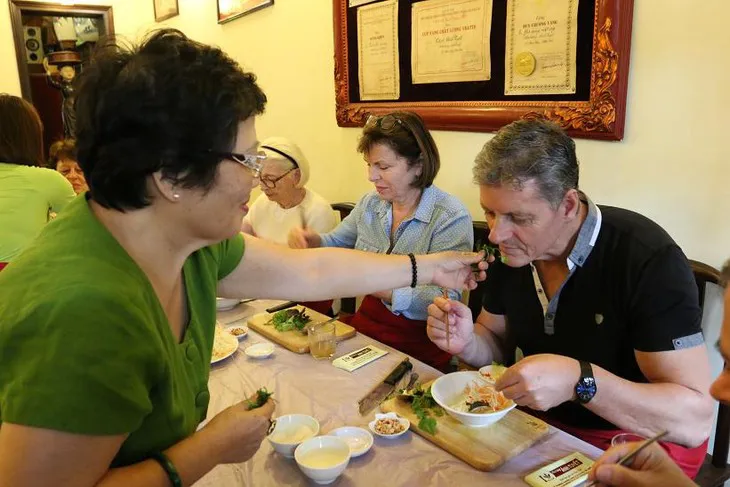
Her cooking class draws participation of foreigners. Photo courtesy of the artisan
What factors do you think Vietnamese cuisine needs to stand out on the world map?
Vietnamese cuisine is special because of its fresh ingredients and health benefits. Food is also medicine. That message should be our guiding theme when promoting Vietnamese cuisine to the world.
Ingredients are more than meat, fish or vegetables. They reflect the chef’s knowledge of nutrition, culture and healing. A skilled chef must know which foods support health and which ones harm those who are ill.
Chefs must understand culture and society to choose ingredients that represent the essence of Vietnamese cuisine and help introduce it globally.
In recent years, dirty food has become a serious concern and cancer cases have risen quickly. These issues worry me deeply.
There is an opinion that when recognized by Michelin, Vietnamese cuisine needs to be "internationalized." What do you think about this?
Michelin standard respects the indigenous values of each country. Therefore, I think there is no need to change Vietnamese dishes. When I introduce cuisine abroad, I only bring the traditional flavors of Vietnam. What kind of cultural depth is required to have those dishes? That is the quintessence and soul of the nation.
Remembering in 2017 when I planned the menu for the heads of state attending the APEC conference, people also asked me why I didn't include high-class ingredients to make it luxurious, such as lobster. I think that the heads of state are no strangers to delicacies. High-class cuisine actually comes from everyday dishes, but differently.
Sharing with you a memory when I was abroad, I mistook coriander for water celery because it was up to 40cm long, it looked big and beautiful but the aroma and delicious taste could not compare to Vietnamese coriander. We have a source of fresh, valuable native ingredients, just need to use them well to have a dining table with classy dishes.
Thank you for your time!