Hanoi schools open doors to the world with cultural exchanges and English focus
Hanoi is deepening international school partnerships and promoting English learning to nurture globally minded students and cement its role as Vietnam’s hub for high-quality education.
THE HANOI TIMES — Hanoi ramps up efforts this August to globalize its classrooms, rolling out new plans to expand cultural exchanges and strengthen English learning across the city.
These plans build on a growing trend seen in schools throughout the capital, from Cau Giay Secondary School’s lively exchange with Singaporean students to long-running programs with Japan’s Fukuoka and emerging partnerships with South Korea, the UK, and the US.
One such program took place in May at Cau Giay Secondary School, where students welcomed peers from Singapore’s Dunman Secondary School for a week of folk games, STEM workshops, and cross-cultural learning.
The event was part of a wave of exchanges that education authorities say will now be extended to suburban schools to reduce the urban–rural gap in opportunities.
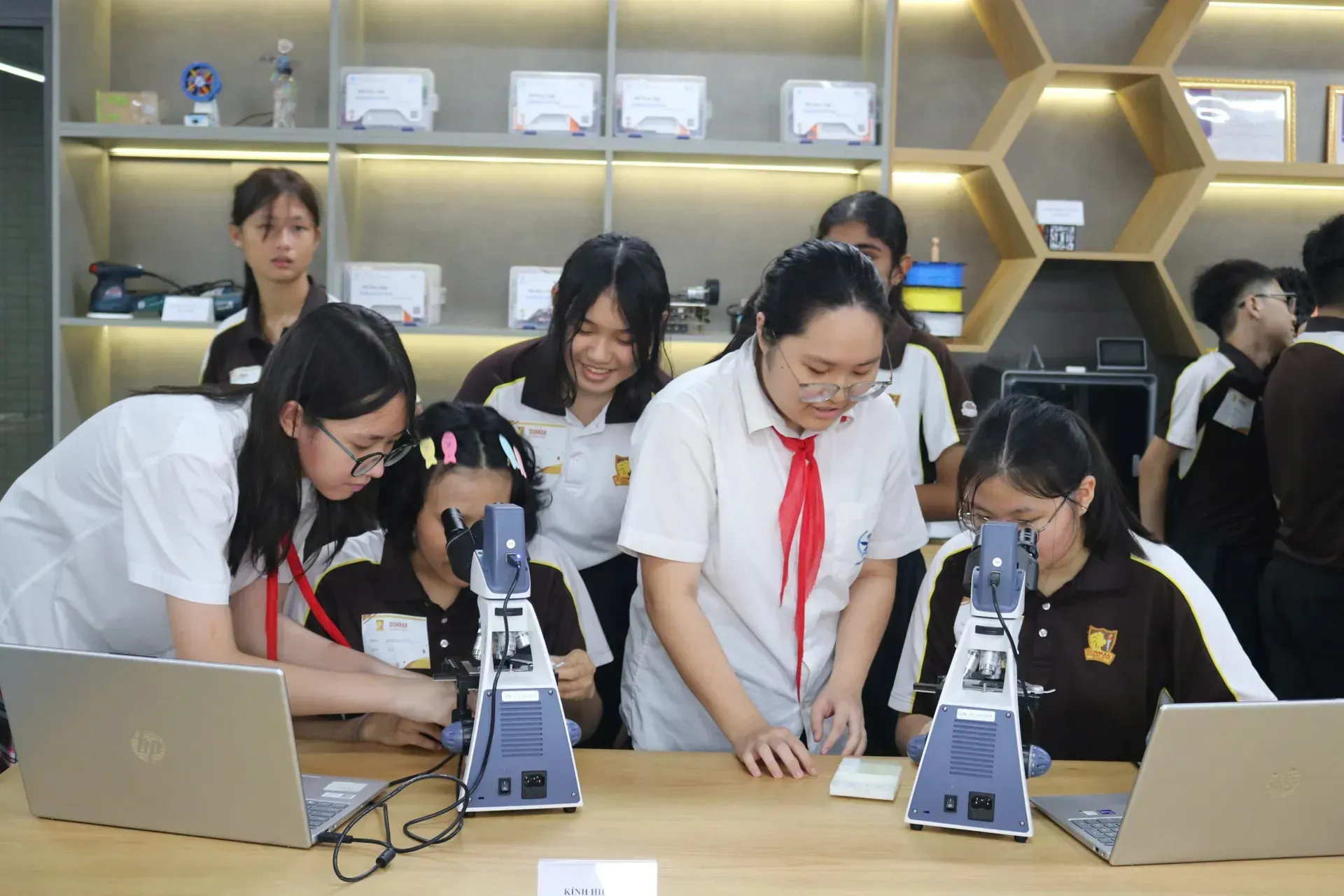
Students from Dunman Secondary School in Singapore enthusiastically took part in STEM activities at Cau Giay Secondary School. Photo: Nam Du
Months after Cau Giay Secondary School hosted Singaporean students in a cultural exchange, Principal Luu Van Thong still remembers how the courtyard buzzed with excitement on one warm May morning. Colorful banners fluttered above rows of students in crisp uniforms, their faces bright with anticipation.
Thong told The Hanoi Times that when a group of teenagers from Singapore’s Dunman Secondary School stepped onto campus, they were greeted not with formal speeches, but with laughter, folk games, and invitations to join a spontaneous bamboo dance.
He said for many students, it was their first time meeting classmates from another country, and the encounter left a lasting impression. “Our students introduced Singaporean visitors to traditional games and joined them in STEM activities, while teachers from both schools exchanged expertise to enhance education and training."
This exchange, part of a cultural week organized in mid-May, reflects a push by Hanoi’s education sector to open classrooms to the world. The city is leveraging international cooperation as a pillar of its education reform, aligning with Article 22 of the 2024 Capital Law that calls for Hanoi to become a national leader in high-quality education, digital transformation, and global integration.
From cultural exchanges to lifelong friendships
In recent years, exchanges like the Cau Giay–Dunman program have become a familiar part of school life in Hanoi. Students no longer just read about global cultures in textbooks, but they experience them firsthand. One of the most enduring initiatives is the Hanoi–Fukuoka exchange program with Japan, now nearly a decade old.
The program goes far beyond classroom visits. Vietnamese students stay with Japanese host families, join local festivals, and learn about the resilience that defines Japanese society. In return, Japanese students come to Hanoi to explore its rich traditions, from temple visits to street food tours. Friendships forged during these visits often continue long after students return home, with many staying in touch online.
“These connections expand students’ horizons and foster mutual respect. They are learning to see the world through multiple lenses, which is essential for becoming global citizens,” said Thong.
Director of the Hanoi Department of Education and Training Tran The Cuong noted that the city is stepping up similar programs with partners in South Korea, the UK, the US, and other countries.
“Such collaborations help our students see what is possible elsewhere, while also showcasing the creativity and curiosity of Vietnamese youth,” he said.
Cuong said plans are underway to extend these exchanges to schools in suburban districts, reducing the urban–rural gap in educational opportunities.
English as the key to integration
Global friendships are meaningful, but language is what unlocks their full potential. Recognizing this, the Ministry of Education and Training has identified English as Vietnam’s strategic second language, a crucial step for developing a competitive workforce in an era of deep global integration.
Hanoi has embraced this priority with creative initiatives. Earlier this year, the city launched a “Month of Self-Study in Foreign Languages,” a campaign encouraging students and teachers to sharpen their English skills through both classroom and online learning.
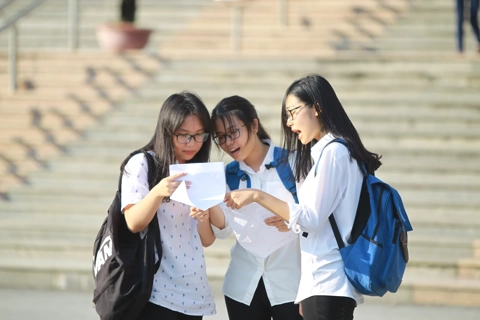
Running from February 20 to March 20, 2025, the campaign attracted nearly 625,000 registered participants, more than 600,000 of them students. By the end of the month, 480,000 students had completed a citywide English proficiency test, a participation rate approaching 80 percent.
Educators hailed the program for instilling self-study habits and boosting listening and speaking skills. It also brought modern learning tools to rural districts, which often lag behind urban schools in access to technology. Online platforms, centralized placement tests, and after-school self-study sessions were introduced to help students practice in flexible ways.
A vision set in policy
The push for international integration is anchored in major policy frameworks such as the 2024 Capital Law and Resolution 15 of Hanoi’s People’s Council. These documents outline an ambitious vision, cultivating well-rounded citizens fluent in languages, adept in technology, and creative in the arts, ready to thrive in a fast-changing world.
Deputy Chairwoman of Hanoi’s People’s Committee Vu Thu Ha recently underscored this vision, urging the education sector to “expand partnerships, adopt innovative teaching models, and raise quality across the board so Hanoi can serve as both a national leader and a regional example.”
The scale of the challenge is significant. Hanoi operates the largest education system in Vietnam, with nearly 2.3 million students enrolled in 2,913 preschools and general schools, plus more than 140,000 teachers and staff in vocational training institutions. Yet the city consistently ranks at the top nationwide for high school graduation rates and medals in national and international academic competitions, particularly in STEM fields.
As Hanoi moves forward, the city’s dual focus, fostering global exchanges and elevating English proficiency, is expected to shape the next generation of students. The hope is that they will emerge not only as skilled professionals but as cultural ambassadors, capable of bridging Vietnam with the wider world.
Back at Cau Giay Secondary School, the memories of May’s cultural week linger. Students scroll through photos of their new Singaporean friends, already planning to stay in touch online. For them, the world no longer feels so distant.
And for Hanoi, these friendships mark small but meaningful steps toward the capital’s ambition: to become Vietnam’s leading center of international education.