Hanoi seeks Dutch experience in “material passport” model
The capital is seeking support for digital public governance, smart water management, an innovation startup ecosystem and innovation centers in Hoa Lac and citywide.
THE HANOI TIMES — Hanoi hopes the Netherlands will share its experience in the “material passport” model for construction, viewing it as a key solution for sustainable urban development, a circular economy and the green transition in the time ahead.
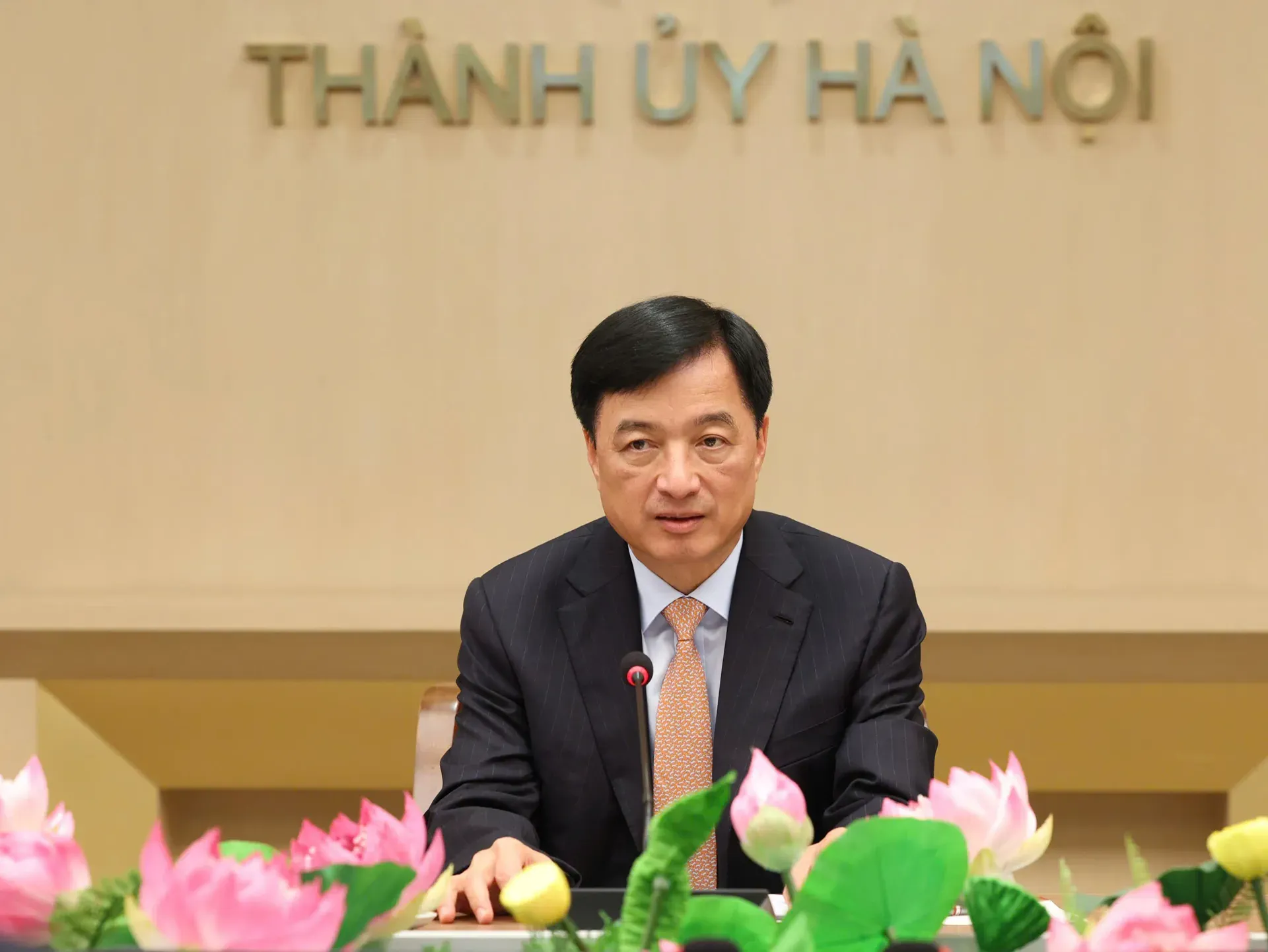
Hanoi Party Secretary Nguyen Duy Ngoc at a meeting with Dutch Ambassador to Vietnam Kees van Baar on December 24. Photos: Thanh Hai/The Hanoi Times
The message was highlighted by Hanoi Party Secretary Nguyen Duy Ngoc at a meeting with Dutch Ambassador to Vietnam Kees van Baar on December 24 during exchanges on future bilateral cooperation.
Ngoc said Hanoi highly values the Netherlands’ strengths and experience in sustainable development, the green economy, the digital economy, smart cities, water management and adaptation to climate change.
On that basis, the capital looks forward to receiving guidance and support in digital transformation for public governance, smart water resource management, building an innovation startup ecosystem and establishing innovation centers in Hoa Lac and across the city.
In renewable energy and sustainable construction, Hanoi showed keen interest in learning from the Dutch “material passport” model for buildings.
“Material passports” in the Netherlands are secure, web-based digital records documenting a building’s components, materials, toxicity as well as reuse potential to advance a circular economy.
Under this approach, every new building is required to have a detailed record of materials that can be recycled after demolition, thereby effectively turning the entire city into a material bank while cutting emissions.
The municipal Party’s secretary affirmed that the city is ready to create the most favorable conditions for Dutch enterprises to invest, cooperate and pursue long-term development in Hanoi.
He also called for stronger cultural exchanges and cooperation in training officials in education, community health care and urban management.
Bilateral ties underpin future cooperation
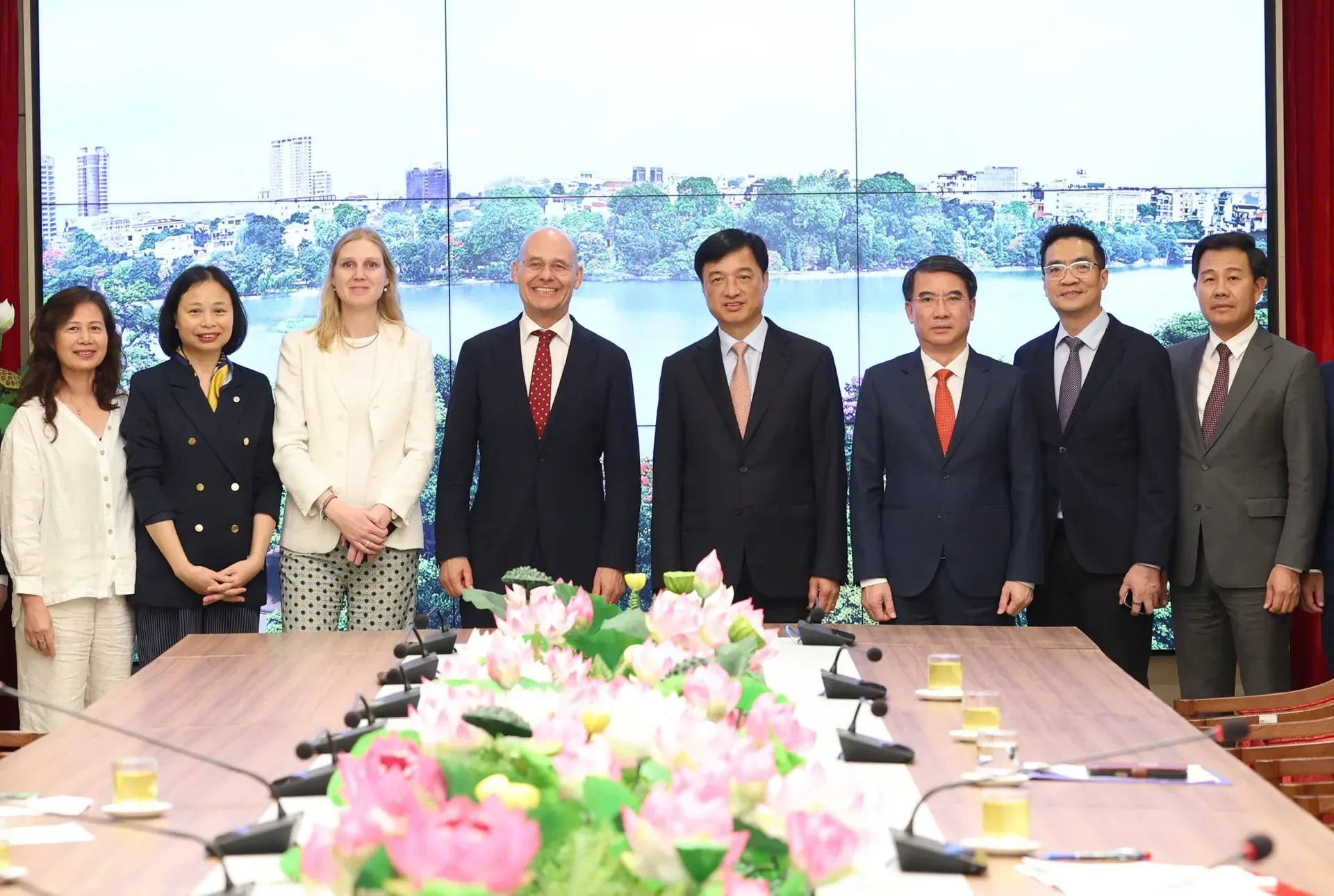
At the meeting, Ngoc noted that over the past 50 years, Vietnam and the Netherlands have built a strong and effective partnership across many fields.
The two countries have established a strategic partnership, which includes climate change adaptation, water management, sustainable agriculture and food security and are exploring opportunities to elevate bilateral ties to a new level.
On that foundation, Hanoi has always valued the support and assistance of the Dutch people through different historical periods, from the struggle for national reunification to renewal and international integration.
The city also seeks to deepen cooperation with Dutch localities in a comprehensive manner across all sectors.
Ngoc said trade and investment ties between Hanoi and the Netherlands have continued to expand. By the end of 2024, the Netherlands’ foreign direct investment (FDI) in Hanoi exceeded US$1.3 billion.
Two-way trade reached US$1.2 billion, with Hanoi exporting US$791 million and importing US$374 million.
Cultural and educational cooperation has also left a strong mark, notably the Hanoi - Amsterdam High School for the Gifted, launched in 1985 with funding from contributions by residents of Amsterdam.
In recent years, Hanoi and the Dutch Embassy in Vietnam have jointly organized many political and cultural events, strengthening people-to-people exchanges and bilateral friendship.
Updating the capital’s development, Ngoc said the city’s economy in 2025 is estimated to grow about 8.5% while the total GRDP is at US$63.5 billion.
State budget revenue might rise 24% on year to VND647 trillion ($25 billion), whereas total social investment will approach VND595 trillion ($22.6 billion) and FDI attraction is expected to hit US$4.1 billion, up 52%.
Regarding the cultural aspect, Hanoi is now a member of UNESCO’s Global Network of Learning Cities.
Meanwhile, the city is accelerating institutional reform, synchronized planning alongside investment in urban infrastructure, Red River bridges and ring roads to create new growth drivers.
The municipal Party leader said science and technology development, innovation and digital transformation are defined as core pillars in Hanoi’s development strategy for the new era.
In 2026, the city will continue strong reforms with a series of large-scale infrastructure and urban projects scheduled to be launched on December 19.
They include the Red River Landscape Boulevard with an estimated investment of 855 trillion dong, the Olympic Sports Urban Area with over 925 trillion dong in planned capital and major projects such as Metro Line No.5 Van Cao - Hoa Lac, the To Lich River renovation and a road linking Gia Binh Airport with Hanoi.
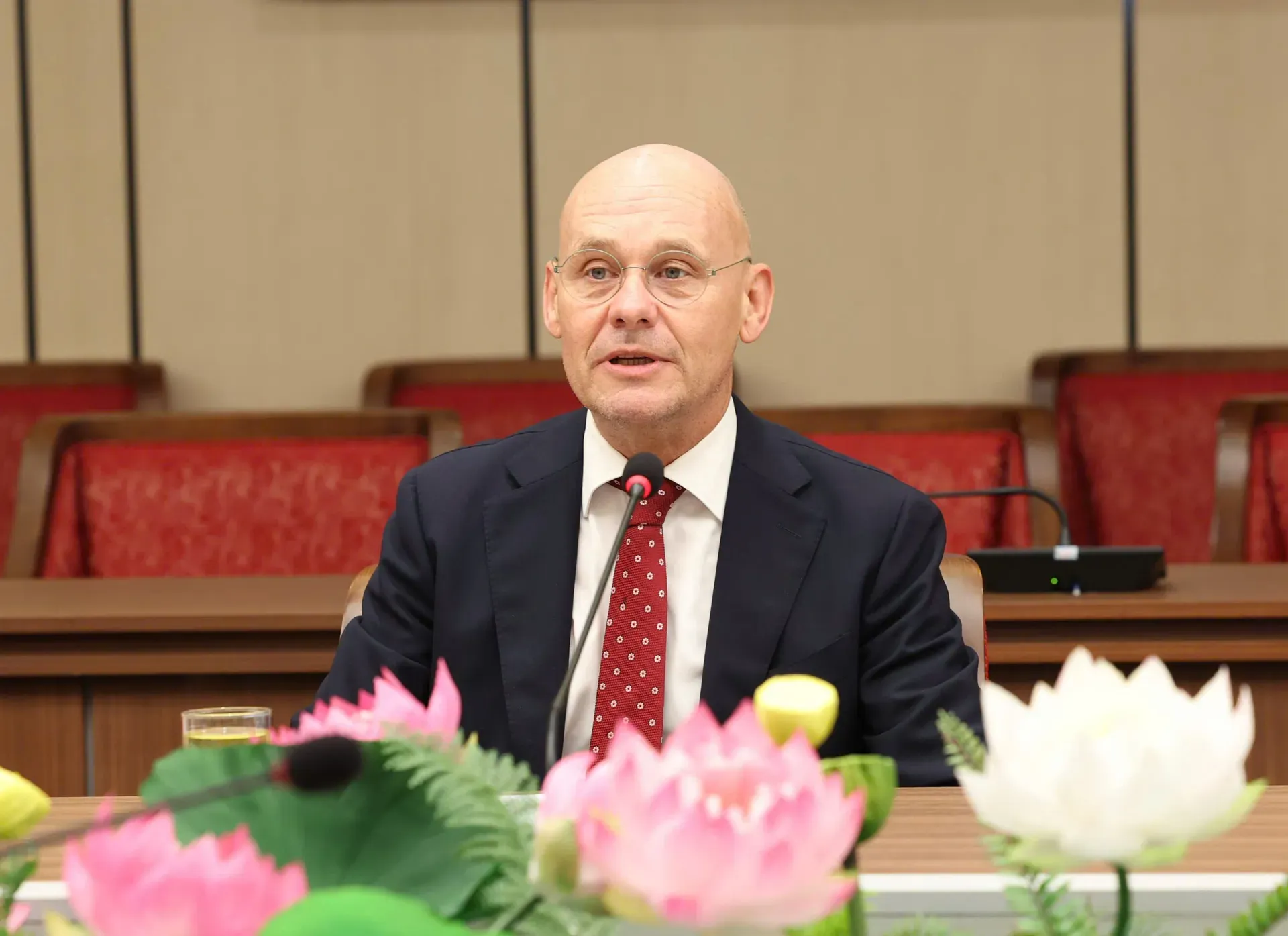
Dutch Ambassador to Vietnam Kees van Baar at the meeting.
Speaking at the meeting, Ambassador Kees van Baar praised Vietnam - Netherlands relations, especially in education and training.
He said the Netherlands has extensive experience in water management and climate adaptation due to high flood risks and stands ready to share expertise with Hanoi.
The ambassador noted that the two countries share similarities in natural conditions, agricultural-based economies and river delta systems, creating a strong foundation for long-term cooperation.
Fifteen years ago, Vietnam and the Netherlands signed a strategic partnership on climate change and water management, opening pathways for knowledge transfer, technical support and the implementation of sustainable cooperation programs.
Welcoming Hanoi’s development plans, especially the Red River Landscape Boulevard project, Van Baar said the Netherlands is ready to send scientists to share experience and solutions on water management and sustainable flood control.
He also expressed hope that Hanoi will continue to facilitate stronger cultural exchanges in the time ahead.
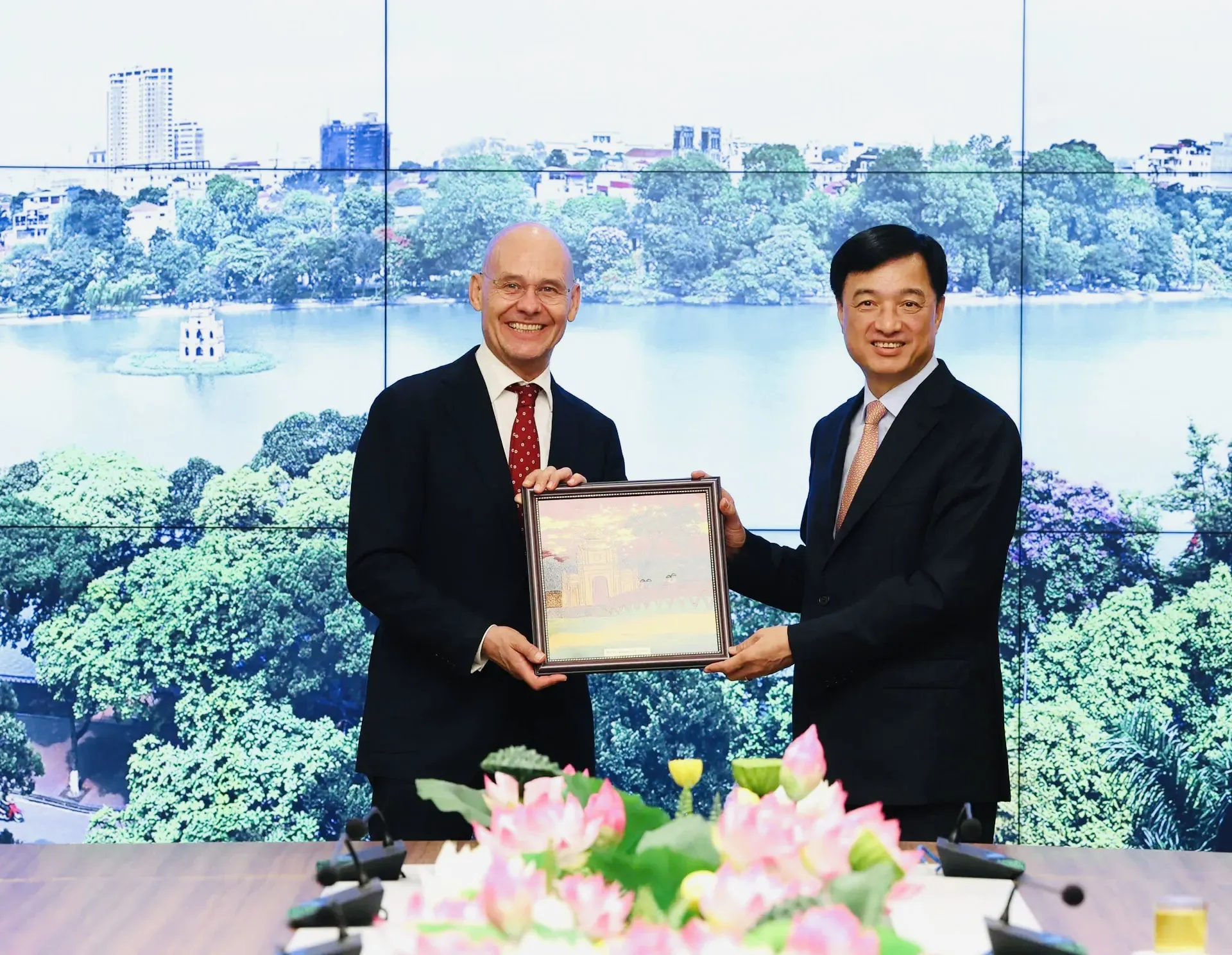
The Hanoi Party chief presents a gift to Dutch Ambassador to Vietnam.