Hanoi suspends in-person classes for younger students as cold wave tightens grip
As winter cold intensifies across northern Vietnam, Hanoi has rolled out flexible school attendance measures aimed at safeguarding students.
THE HANOI TIMES — Preschool and primary students in Hanoi will stay home when forecast temperatures fall below 10°C, while lower secondary students will not attend in-person classes when temperatures drop below 7°C.
The measure is part of a directive issued late this week by the Hanoi Department of Education and Training as severe cold continues to affect northern Vietnam.
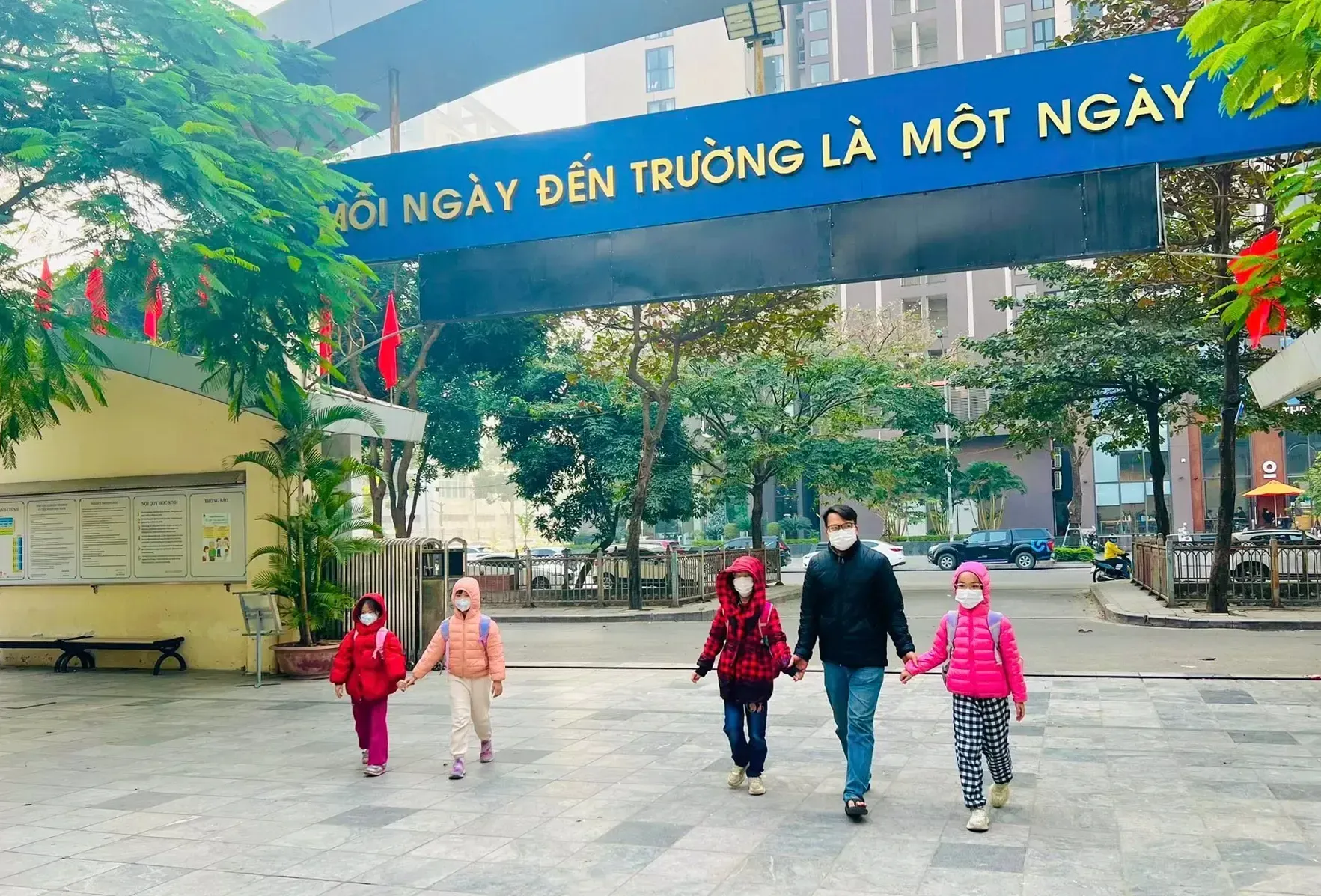
Primary students dressed warm before going to school. Photo: Nam Du/The Hanoi Times
The directive aims to strengthen cold-weather prevention and protect the health and safety of students, teachers and staff.
The department instructed schools to monitor weather forecasts aired during the evening news on Vietnam Television and proactively decide on in-person classes for the following day.
Schools and teachers must promptly notify parents and prepare suitable online learning plans.
If parents cannot supervise children at home due to unavoidable circumstances, schools must coordinate with families to receive and manage students on campus while ensuring safety.
During severe cold spells, schools must suspend outdoor group activities and adjust teaching schedules to weather conditions.
The department also required subordinate units, ward- and commune-level authorities and schools to strengthen communication on cold-related health risks, common winter illnesses and effective prevention measures for staff, students and parents.
According to the National Center for Hydro-Meteorological Forecasting, the northern Vietnam is under effect of a strong cold this week with nighttime temperatures in Hanoi dropping to 10°C-13°C and daytime highs of 14°C-17°C, accompanied by light rain and severe cold.
After January 24, the cold air mass is expected to weaken, with temperatures gradually rising. Prolonged cold is likely to continue affecting daily life and health, particularly among young children, the elderly and people with underlying conditions.
On January 23, many preschools and primary schools adjusted start times and strengthened warming measures to protect students.
At Anh Sao Kindergarten in Nghia Do Ward, about 30 students stayed home out of 640 enrolled across 18 classes.
Principal Vu Ngoc Du said preschools apply flexible arrangements during severe cold, as some children arrive late, including after 10 AM.
She said parents only need to inform the school in advance so the school can prepare meals and ensure proper care for their kids.
The school uses blankets, hot water and heaters during cold days. It also prepares nutritious meals and ensures food remains warm when children arrive, Du said.
Nghia Tan Primary School in Nghia Do Ward delayed the first class to 9 AM. Students were allowed to arrive at the school in different time frames.
During cold spells, the school placed special focus on semi-boarding services, from nutrient-rich menus to ensuring meals stay hot.
Thai Thinh Primary School in Dong Da Ward also informed parents that students need no wear uniforms and must dress warmly.
In suburban areas, where temperatures often run lower than in the city center, schools such as Van Noi Primary School in Phuc Thinh Commune and Nam Phuong Tien A Primary School in Xuan Mai Commune delayed the first class to 8 AM, turned outdoor activities to indoors and ensure lighting and warmth for the classrooms.
Parents and students reacted positively to the changes made by the schools.
Le Thi Hoai Anh, a parent at Doan Ket Primary School in Long Bien Ward, said relying on the previous evening’s forecast proved more practical than waiting for early morning updates.
The approach allows families to plan transport and childcare in advance and avoid last-minute disruption, she said.
Nguyen Tuan Anh, a student at Chuong Duong Lower Secondary School in Hong Ha Ward, said the school does not require uniforms during cold weather, allowing students to wear extra layers.
Classes and activities take place indoors or in the gym, meals remain hot, rest areas stay warm and students feel comfortable, easing parents’ concerns, he said.