People - the quiet infrastructure behind Vietnam’s growth
As Vietnam moves into a new development phase, policy debates are increasingly centered on a people-first approach, where citizens are seen not just as beneficiaries but as the foundation of sustainable growth.
THE HANOI TIMES — At the entrance of a modern urban development on Hanoi’s western edge, two ancestral graves stand in the middle of a major access axis that makes the newly paved lanes curve around them, not for technical reasons but no agreement on relocation.
The image has sparked debate precisely because it captures a distinctive feature of Vietnam’s development path. Roads can be rerouted and capital reallocated, but cultural and spiritual values demand patience, dialogue and respect.
In that pause of asphalt and machinery lies a larger truth that beyond highways and smart cities, Vietnam’s progress rests on an invisible foundation - the relationship between development and the people it affects, shaped by belief, tradition and dignity as much as by economic logic.
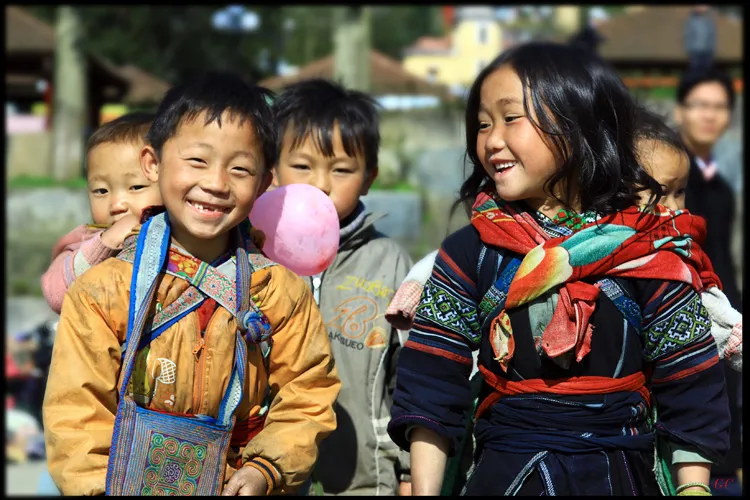
Vietnam's policies secure that all people are equal in development. Photo: Giang Coi
People as the foundation
At every stage of development, nations confront the same fundamental question: what is the most reliable foundation for long-term progress? For Vietnam, the answer is not new: “Dan la goc” (people are the foundation), what is new is the clarity and strategic weight with which it is now articulated.
In Vietnam’s political tradition, the principle of “dan la goc” holds that the people are the source of national strength, the foundation of political legitimacy and the ultimate measure of governance effectiveness. In this view, development and authority can endure only when they are firmly grounded in the people.
Long regarded as a moral truth rooted in history, this principle is increasingly understood as Vietnam’s most important form of soft infrastructure. It underpins social trust, enables effective control of power, mobilizes human potential and ultimately determines the sustainability of economic and social development.
Analyzing the report submitted to the 14th National Party Congress, Dr Nguyen Si Dung, former Vice Chairman of the Office of the National Assembly, highlighted a notable shift in which the significance lies not in reaffirming the idea of “people as the foundation” but in elevating it to a methodological lesson guiding leadership and governance.
When placed among core lessons rather than general orientations, the principle ceases to function as a value slogan. It becomes an operating framework shaping how power is organized, how institutions function and how leadership capacity is assessed.
The governance sequence often cited in this approach - people are informed, consulted, involved in implementation, empowered to supervise and entitled to benefit - reflects a modern model in which citizens participate substantively throughout the entire public policy cycle.
According to Dr Nguyen Si Dung, power gains durability only when it exists in a constant, living relationship with the people, allowing authority to correct itself, renew itself and maintain long-term legitimacy.
At a deeper ideological level, this approach extends directly from the legacy of President Ho Chi Minh. From the earliest days of the revolutionary government, he affirmed that the nation is rooted in its people and that all policies must serve their interests.
In his speeches, writings and practical directives, Ho Chi Minh consistently emphasized the two-way relationship between power and the people. Citizens were not merely recipients of state services, but the source of national strength and a vital force in supervising authority.
At its core, his view of “people as the foundation” was a philosophy of governance. Power has meaning only when connected to real lives, and institutions are justified only by the extent to which they improve public well-being.
That philosophical foundation continues to shape contemporary discussions on governance quality and political legitimacy in Vietnam.
Soft infrastructure and social trust
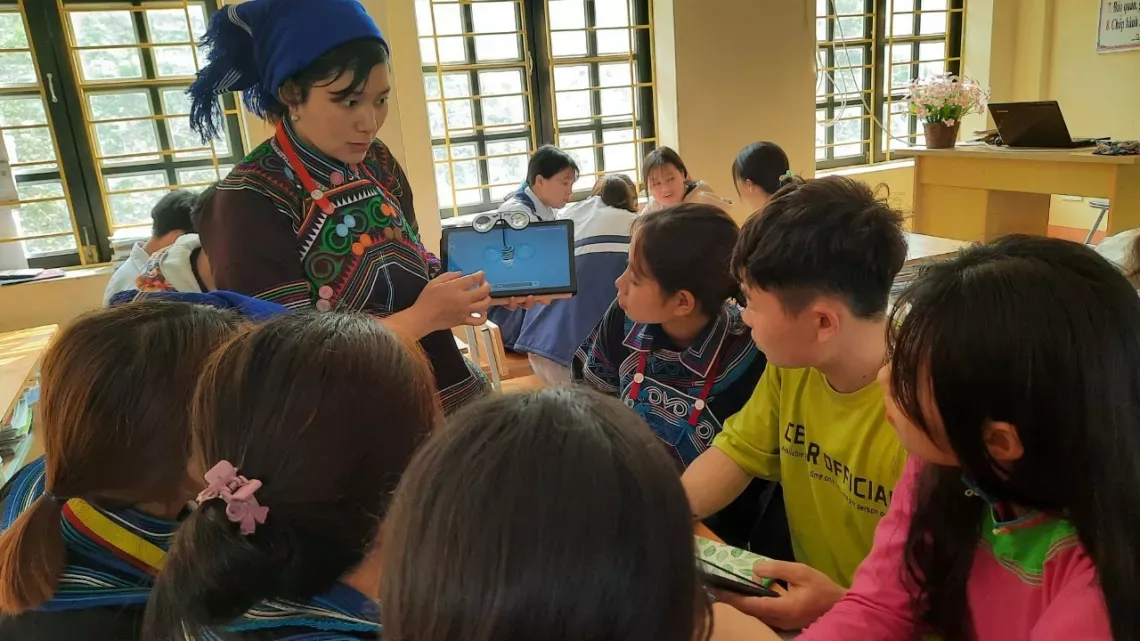
Children get new teaching methods. Photo: Ho Hoang Thien Trang/UNICEF
Modern development strategies have long prioritized hard infrastructure such as transport, energy and urban systems, yet growing research shows that soft infrastructure, particularly social trust, is equally decisive in sustaining growth.
At recent academic conferences on sustainable development and national governance, Professor Nguyen Xuan Thang, President of the Vietnam Academy of Social Sciences, has repeatedly described public trust in the state as a unique form of social capital that cannot be replaced by financial investment or technology.
He noted that trust cannot be built through communication alone but accumulates through lived governance experiences, where citizens feel heard, protected and treated fairly. When trust is strong, societies are better able to accept deep reforms and endure prolonged challenges.
On economic perspective, Professor Tran Dinh Thien, former Director of the Vietnam Institute of Economics, has argued that sustainable development cannot rely solely on GDP growth or headline indicators.
National competitiveness increasingly depends on governance quality, transparency and social participation and an economy is truly healthy only when improvements in public services, living standards and citizen satisfaction accompany growth.
A central element of this approach is recognizing citizens as the foundation of power oversight. Dr Nguyen Si Dung has observed that authority cannot fully regulate itself without social supervision.
When public satisfaction and trust among citizens and businesses become benchmarks for evaluating officials, power is redefined as service. Titles and procedures give way to outcomes that matter in everyday life, he added.
This marks a shift from process compliance to impact-based governance, from administrative control to results-oriented leadership.
Beyond its political meaning, “people as the foundation” is also Vietnam’s most important economic and social resource. In numerous policy discussions and analytical writings, economist Pham Chi Lan has emphasised that economic strength comes not only from capital and technology but from creativity, initiative and civic responsibility.
When people are empowered and enabled to participate, they move beyond being beneficiaries of growth and become drivers of innovation, entrepreneurship and structural transformation.
This is particularly critical as Vietnam advances the digital economy, green growth and the circular economy, the areas that depend heavily on broad community participation and behavioural change.
The quiet infrastructure that endures

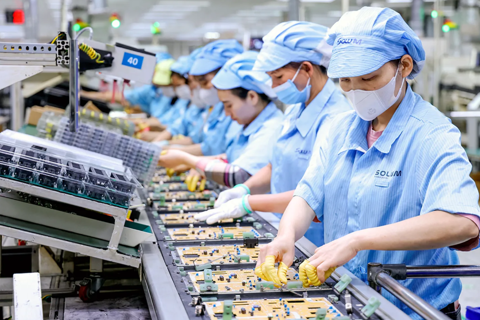
“People as the foundation” is increasingly recognized as Vietnam’s most essential form of soft infrastructure and human capital. Photo: VOV
These perspectives show that “people as the foundation” is no longer an abstract ideal but increasingly recognized as Vietnam’s most essential form of soft infrastructure, integrating trust, consensus, power, accountability and human capital.
In a rapidly changing world where competition is defined less by natural resources and more by institutional quality and social cohesion, this quiet infrastructure determines how far a nation can go.
As Dr Nguyen Si Dung has noted, when “people as the foundation” becomes an action-oriented ideology shaping policymaking, power organisation and leadership evaluation, development rests on its most sustainable base.
At its deepest level, the idea returns to a simple yet demanding question rooted in Ho Chi Minh thought: does each decision make people’s lives better?
That question, more than any slogan, remains the strongest foundation for Vietnam’s long-term development.