Vietnam’s human-centered development is inspiring: Cuban Ambassador
As Vietnam advances toward its centenary, the National Assembly will be key in aligning human development with economic growth on the path to becoming a high-income, socialist-oriented nation.
THE HANOI TIMES — Cuban Ambassador to Vietnam Rogelio Polanco Fuentes has said that Vietnam’s approach to human-centered development is earning international recognition, with the role of the National Assembly in advancing people-focused policies.
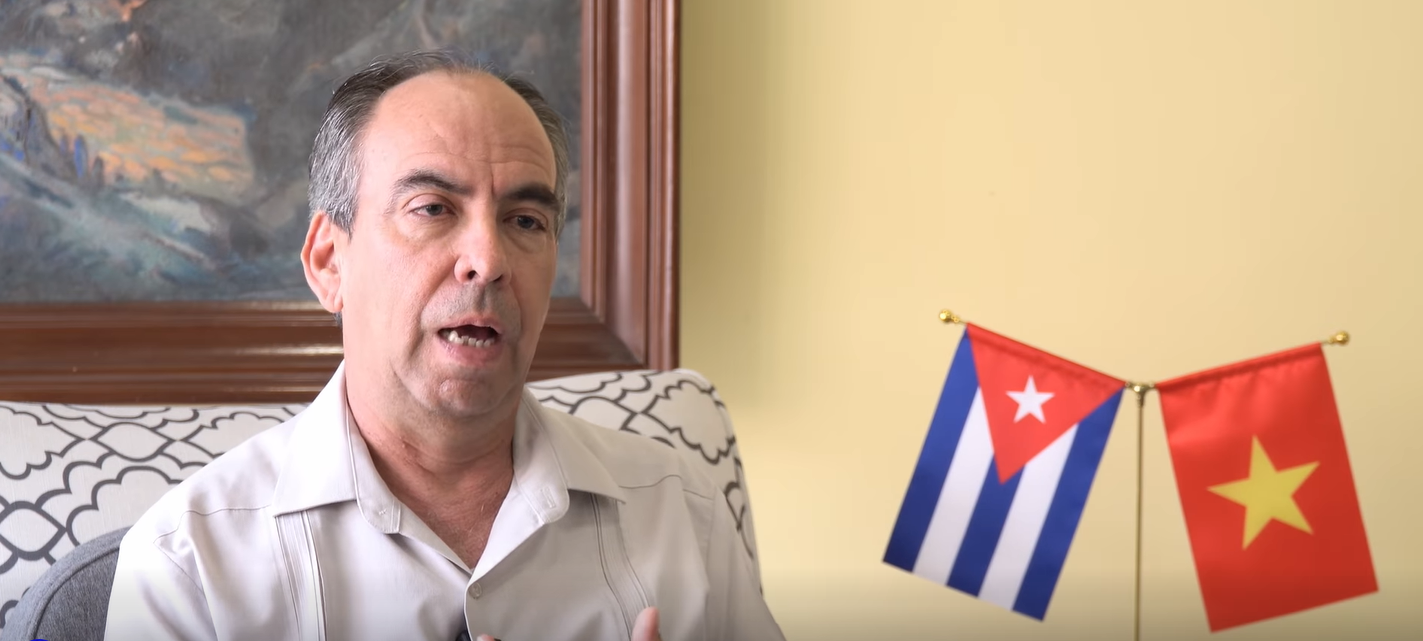
Cuban Ambassador to Vietnam Rogelio Polanco Fuentes. Photo: The Hanoi Times
He shares with The Hanoi Times about the growing Vietnam–Cuba partnership built on ideals of social justice and inclusive growth.
On the occasion of Vietnam’s 80th National Day, how do you assess the role of Vietnam’s National Assembly in shaping social security policies centered on human development?
Vietnam’s National Assembly has historically played a vital role in formulating laws and regulations related to social policies, public welfare, education, healthcare and social security.
Similarly, it has fulfilled its responsibility to oversee the enforcement of laws by institutions and citizens and to make key decisions on social matters.
Over the recent years, amid major socioeconomic and political challenges such as the Covid-19 pandemic, geopolitical tensions and natural disasters, the National Assembly has consistently placed people at the center of its legislative work in the genuine representation of the Vietnamese people.
In line with the policies of the Communist Party of Vietnam, the National Assembly has ensured a balanced approach between economic growth and social protection, demonstrating that Vietnam’s political system fully safeguards human rights and social justice for all citizens.
A notable example of its contribution to improving public welfare is the reform of the Social Security Law by expanding its coverage and benefits while reducing informal employment.
The National Assembly has also prioritized implementing Party decisions related to education and health, ensured the timely allocation of state budget resources and supervised the fulfillment of social targets in the government’s socioeconomic plans, including housing and poverty reduction programs.
As Vietnam pursues ambitious goals for the next two decades, the National Assembly will play an essential role in ensuring that comprehensive human development advances in step with economic investment, guiding the nation toward becoming a high-income, developed country with socialist orientation by the centenary of its independence.
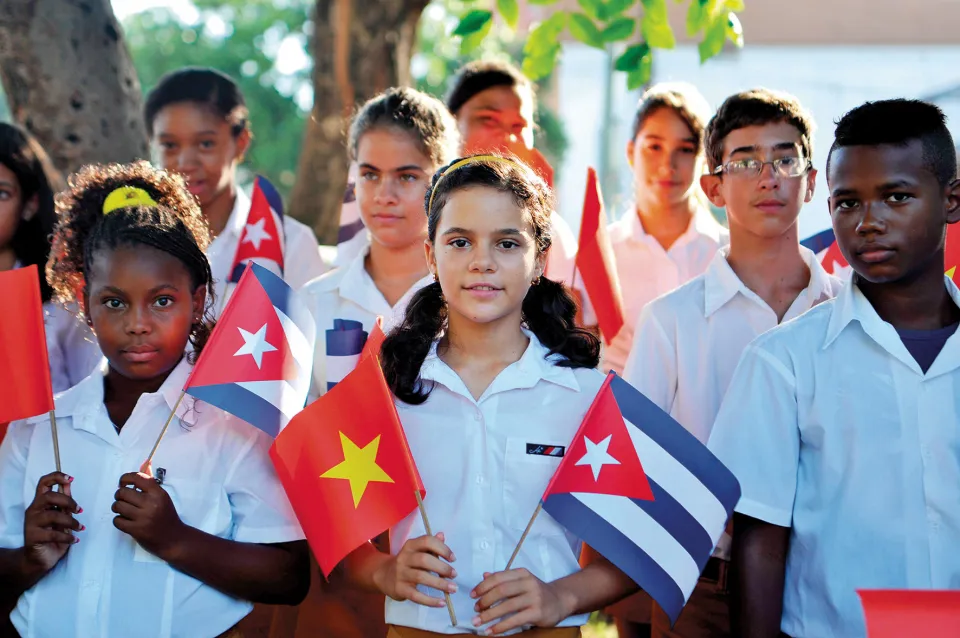
The Vietnam-Cuba friendship has flourished over the years thanks to some shared vision for the development. Photo: VUFO
Vietnam and Cuba share the ideals of social justice and welfare. In which areas can the two countries strengthen cooperation, particularly where Vietnam can share its experience and support Cuba in reforming social security policies?
Since its inception, the Cuban Revolution has placed the well-being of the people at the heart of its mission. Substantial material and human resources have been devoted to education, healthcare, sports, culture and social protection, enabling Cuba to achieve remarkable progress in comprehensive human development.
From the early stages of bilateral relations, Cuba and Vietnam have cooperated in human resource training, healthcare services and other social sectors. Cooperation between the two nations remains consistent at the highest level across party organizations, parliaments, mass organizations, government entities and local authorities.
While each country follows its own path, Cuba greatly admires Vietnam’s achievements in the Doi Moi (renewal) process and regards its experiences as valuable references for updating Cuba’s socialist-oriented economic and social development model.
Recently, the Ministries of Justice of both countries have signed a technical assistance agreement in legal affairs that will play an important role in implementing Cuba’s new Constitution.
Likewise, the two National Assemblies have established a Joint Inter-Parliamentary Cooperation Committee and have maintained regular exchanges between their standing committees on issues of mutual interest.
Cuba’s legislative agenda includes the adoption of a new Social Security Law to update the 2008 version, reflecting constitutional, socioeconomic and demographic changes in recent years. This presents an opportunity for bilateral cooperation, particularly as Vietnam has recently enacted its 2024 Social Security Law. Such collaboration will allow comparative legal studies while respecting the unique particularities of each country.
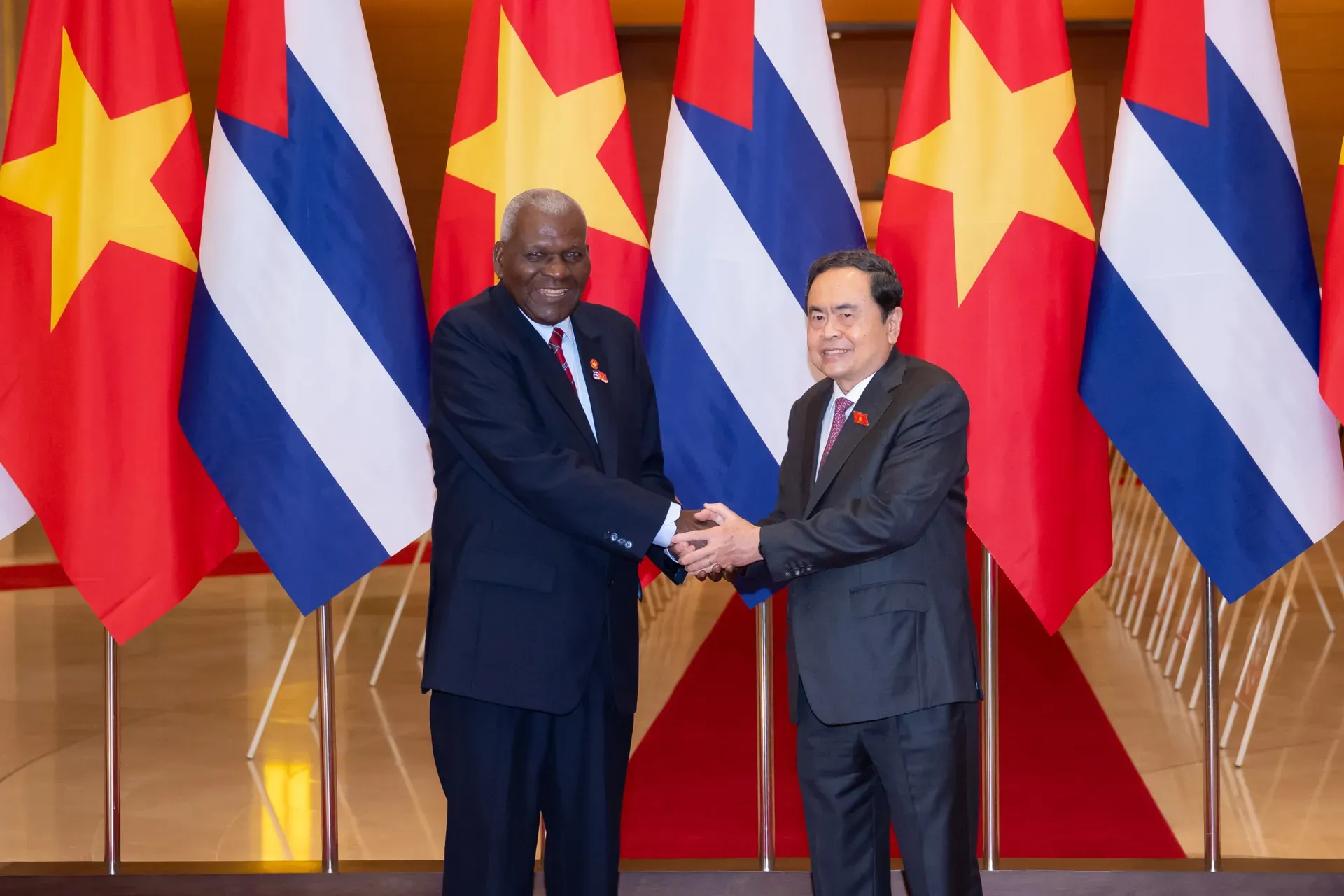
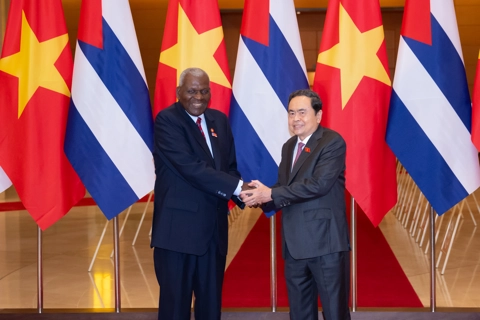
President of Cuba's Council of State Esteban Lazo Hernández visits Vietnam in early October, 2025. Photo: Quochoi
How can parliamentary friendship and cooperation between Vietnam and Cuba contribute to building inclusive, sustainable and people-centered societies in both countries?
The establishment of an exchange and monitoring mechanism for legislative work between Cuba and Vietnam, whose second session of the Inter-Parliamentary Cooperation Committee took place earlier this month in Hanoi, allows both sides to stay updated on key legislative debates and institutional oversight processes.
The Cuban National Assembly of People’s Power has established such mechanisms with only a few parliaments worldwide. The fact that Cuba and Vietnam share common political goals in building socialism with a human-centered approach represents an exceptional opportunity to learn from each other openly and sincerely.
This spirit of cooperation is rooted in the exemplary friendship forged more than six decades ago by President Ho Chi Minh and the historic leader of the Cuban Revolution Fidel Castro Ruz.