Hanoi targets poverty alleviation by 2025
The total budget allocated for the program is estimated at VND1.58 trillion (US$68.7 million).
Hanoi targets to keep the poverty reduction rate at 25-30% per year, which eventually leads to no poor households by late 2025.
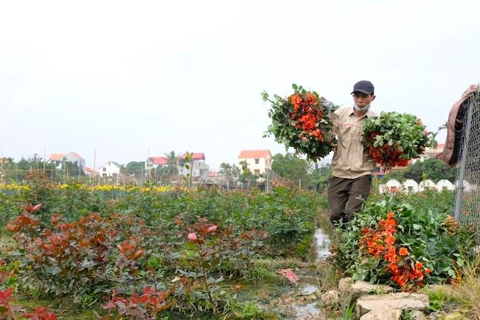
| Me Linh District has been one of the bright spots in Hanoi's efforts for poverty reduction. Photo: Trong Tung |

The goal was set in the city’s action plan on sustainable poverty reduction in the 2022-2025 period that was recently signed off by the Chairman of the Hanoi People’s Committee Chu Ngoc Anh.
Under the plan, the total budget allocated for the program is estimated at VND1.58 trillion (US$68.7 million).
The city is expected to carry out a host of poverty reduction solutions, especially in localities with high poverty rates, while creating incentives for poor households to soon escape poverty.
By the end of 2021, Hanoi’s poverty rate stood at 0.04% with two-thirds of the localities having no more poor households.
The focus would be to support poor households on welfare, ethnic minority people, those suffering severe illnesses, with a disability, or those of non-working age group.
Hanoi’s authorities called for local units to continue raising public awareness of sustainable poverty reduction, and provide poor households with timely support under the city and central government's poverty reduction policies.
Poor households are expected to have favorable access to basic social services such as healthcare, education, housing, clean water, hygiene, or job placement.
To achieve these objectives, Hanoi would accelerate ongoing projects to support the people in need, including those on “diversifying livelihoods and promoting poverty reduction models”, “supporting businesses/production activities and improving nutrition for the poor”, “Supporting vocational training for sustainable job security”, “raising public awareness on poverty reduction”, ”raising supervision capabilities on the implementation of poverty reduction program”.
During the 2021-2025 period, the Government has earmarked VND75 trillion ($3.2 billion) for the national program on sustainable poverty reduction. In the past five years, the poverty rate in Vietnam declined sharply from 9.88% in 2015 to 2.75% in 2020, with over eight million people escaping from the poor and near-poor status. According to Minister of Labor, Invalids, and Social Affairs Dao Ngoc Dung, Vietnam is the first and also among 30 countries to adopt the multi-dimensional approach for assessing poverty, in line with the UN sustainable development goals. The country has achieved the UN’s millennial goals on poverty reduction ahead of schedule, he noted. By 2025, the Government expects to reduce the national poverty rate by 1-1.5% per year; the rate of poor households in poor areas to decline by 4-5% per year; the rate of poverty in ethnic minority groups to drop by 3% per year according to the multi-dimensional poverty approach. |