Hanoi to build on-site museum at Thang Long Citadel
A large underground archaeological museum with direct access to the excavation pits can be an attraction for visitors to Thang Long Imperial Citadel.
Building an on-site museum of Thang Long Citadel relics is among the ideas raised by French experts to promote the value of the archaeological site in Hanoi.
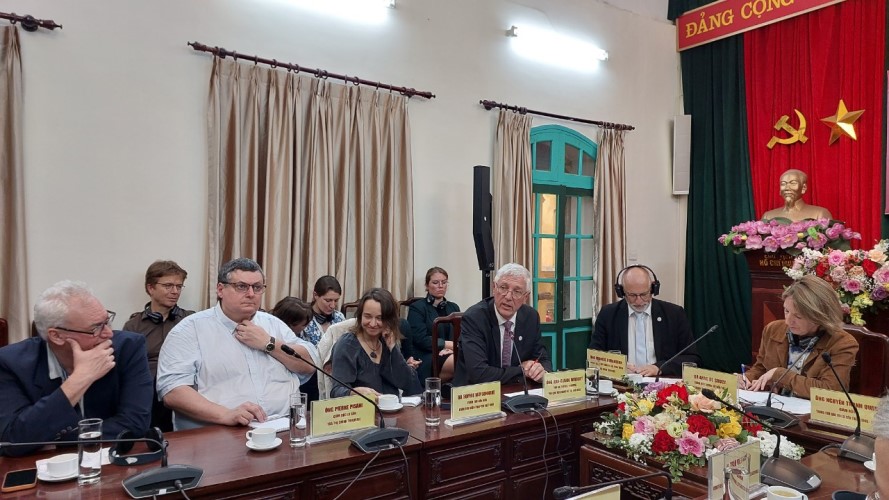
The ideas were presented at the seminar "Promoting the Value of Thang Long Imperial Citadel Archaeological Site" held at the 12th Vietnam-France Decentralized Cooperation Conference on April 14-16.
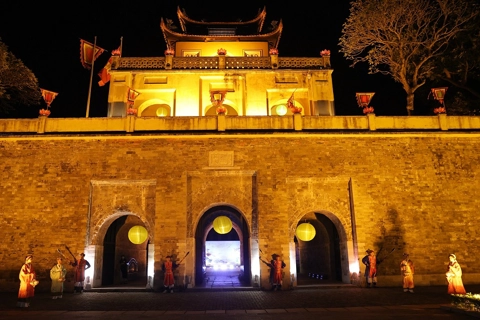
With many layers of culture and history, the Thang Long Imperial Citadel is not only a symbol of Vietnam's feudal regime but also an attractive and curious destination for international tourists. However, the heritage site located in the heart of this city is facing difficulties in promoting its value due to many reasons.
For that reason, Vietnamese and French experts discussed solutions to tackle the problems.
According to architect Jean Francois Milou, building an on-site museum is a popular solution practiced worldwide to protect excavation pits at heritage sites in urban areas.
"The strict planning requirements of the area around the Thang Long Imperial Citadel stipulate that new buildings cannot exceed 5 meters in height," Milou said.
| Vietnamese and French experts talk about the preservation of Thang Long Imperial Citadel. Photo: Ngo Minh/The Hanoi Times |
This place can be turned into a park dedicated to the archaeological site of the Thang Long Imperial Citadel. This park will be visible from the side of the parliament building. The image of two buildings side by side symbolizes the connection between Hanoi today and Hanoi in the past. Once inside, visitors would enter the large underground archaeological museum with direct access to the excavation pits.
Architect Maie Kitamura, a French expert in heritage conservation, agreed with the idea and shared her experience in building on archaeological relics. She said the Thang Long Citadel's Relics Management Board should consider a plan to protect the relics and artifacts in bad weather; manage rainwater and groundwater surges by restoring the old drainage system; promote the values of the site; and strengthen heritage education.
Pierre Pisani, Director of Heritage for Toulouse City Hall, shared that the archaeological site of La domus de Cieutat in Eauze has many similarities to the Thang Long Imperial Citadel. This area consists of three sites that complement each other, including Eauze Ruins, Eauze Museum, and Montréal Ruins.
As soon as the excavations began in 2001, the town of Eauze and the authorities had the plan to exploit and promote the value of this area. In 2009, the city launched a project management contest and selected the winning team while the excavations were still underway. After the excavation process, in 2013, this archaeological site was opened to visitors.
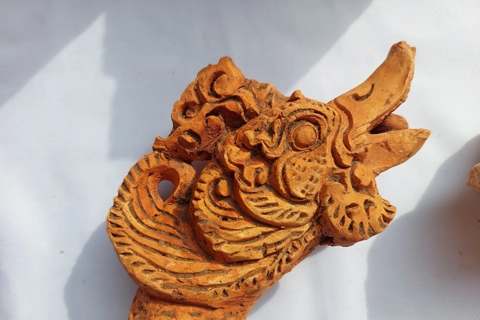
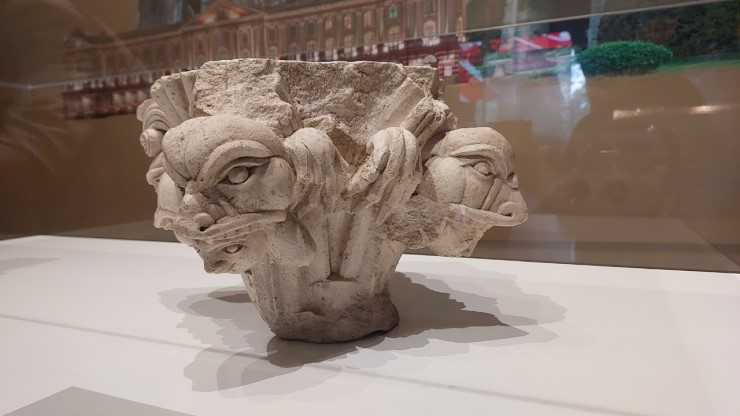
An artifact found from Thang Long Imperial Citadel relics. Photo: Ngo Minh/The Hanoi Times |
In the process of exploitation, the heritage site aims to achieve three goals: to protect and promote the value of archaeological relics by building a roof system; to display relics of the 4th century; and to restore the underground water system.
Pisani suggested that the Thang Long Citadel's relics could be promoted and introduced to visitors in a similar way to La domus de Cieutat in Eauze.
"To be successful in preserving and promoting heritage values, the project needs the cooperation of archaeologists, architects, authorities, and various organizations," he said.
Director of the Thang Long-Hanoi Heritage Conservation Center Nguyen Thanh Quang highly appreciated the ideas of the French experts as the results of the seminar will be the scientific basis for the center to develop plans to preserve and promote the value of archaeological heritage.
"Preserving and promoting the value of archaeological heritage, especially those located in urban areas, is a challenging issue not only in Vietnam but also in many countries. The point is how the existence of archaeological remains along with millions of priceless artifacts can cope well with urbanization," Quang said.