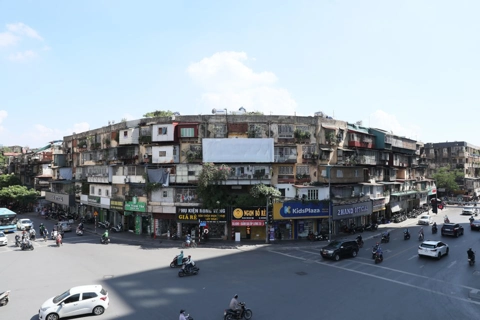
Hanoi to implement Safe Traffic City model
Hanoi should prioritize economic tools over regulations to limit private vehicles, enhance smart traffic control, and improve public transport access.
THE HANOI TIMES — Hanoi is set to put the "Safe Traffic City" model into practice and actively promote its integration with programs on smart transportation, smart urban development, and green public transport.
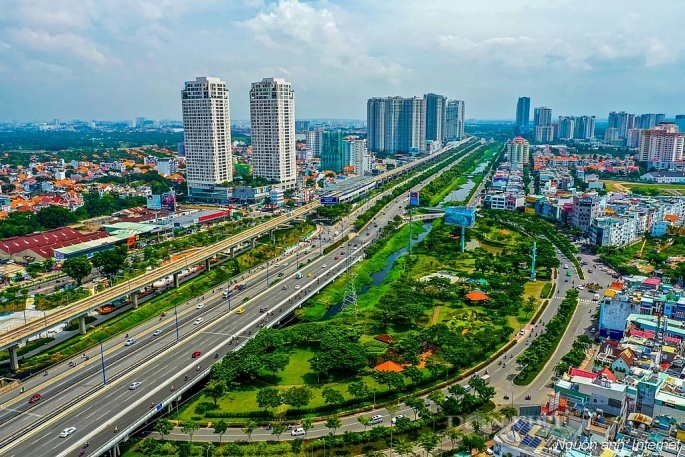
Hanoi from above. Photo: Pham Hung/The Hanoi Times
Chairman of the Hanoi People's Committee Tran Sy Thanh shared this view today [March 26] during a meeting with Deputy Prime Minister Tran Hong Ha to discuss various urban challenges facing the capital.
"As one of the localities severely affected by environmental and air pollution, Hanoi has prioritized projects such as cleaning the To Lich River," Thanh said, adding, "At the same time, the city has organized numerous conferences and scientific workshops, drawing on international experience and strengthened cooperation with localities in the capital region."
Deputy Prime Minister Tran Hong Ha took note of Hanoi's proposal to tackle pollution in the To Lich River, stressing that the goal must be restoring all rivers in the city and that the government, sectors, and localities will work together to achieve this.
On traffic safety, the Deputy Prime Minister urged Hanoi to immediately develop a plan for the "Safe Traffic City" model.
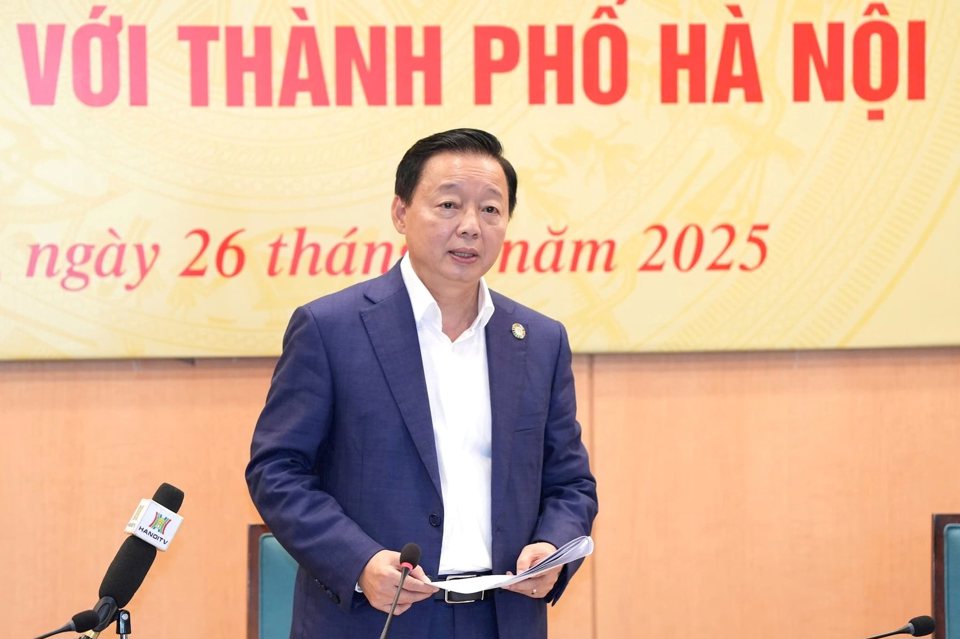
Deputy Prime Minister Tran Hong Ha at the meeting. Photos: VGP
At the meeting, Nguyen Trong Dong, Deputy Chairman of the Hanoi People's Committee, said the city’s investment plan for 2025 is $3.42 billion, 1.13 times higher than the 2024 plan, and accounts for 10.5% of the nation's total budget,.
Viewing public investment as a key driver for achieving over 8% growth, Hanoi has prioritized measures to speed up disbursement since the beginning of the year, Dong said, noting that the city has introduced fast-track approvals for further administrative reform, especially for large public investment projects.
A "green lane" mechanism now ensures speedy approval within 24 hours for 10 key projects, including the rehabilitation of the eastern area around Sword Lake, the renovation of Dong Kinh-Nghia Thuc Square, the construction of Tu Lien and Tran Hung Dao bridges, the upgrading of roads around West Lake, the water restoration of the To Lich River, the Hoa Lac High-Tech Park, and the Van Cao-Hoa Lac urban railway.
As of March 24, Hanoi had disbursed over $198 million in public investment, reaching 5.8% of the annual plan.
On air quality, Dong noted that Hanoi's economic expansion has led to growing environmental concerns, particularly worsening air pollution.
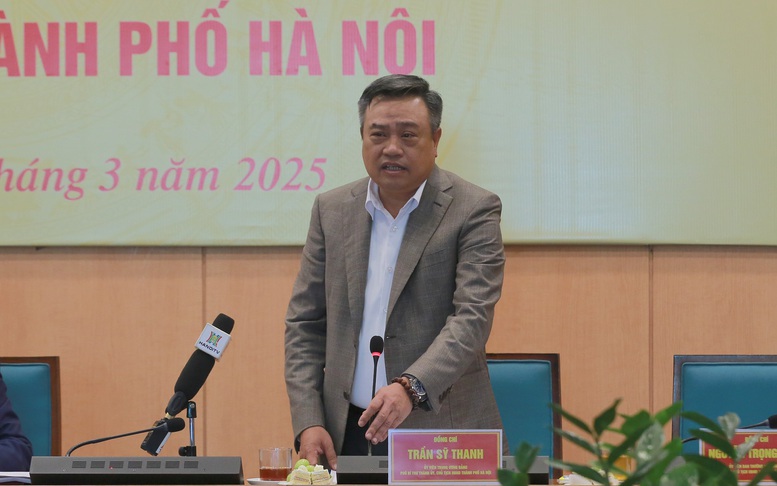
Chairman of the Hanoi People's Committee Tran Sy Thanh.
"The city is implementing policies to monitor and control air quality, enhance environmental databases, expand real-time monitoring systems and strengthen enforcement against pollution sources," Dong said.
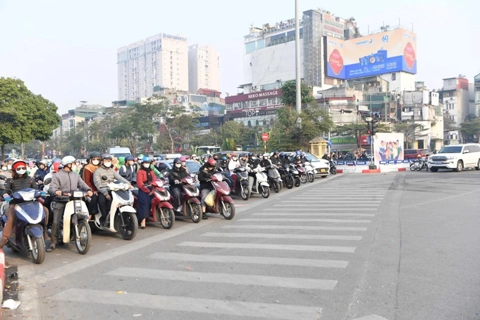
Traffic congestion remains a critical issue, especially during holidays and peak hours on major and ring roads.
According to Dong, the city has put in place eight long-term policy solutions and six immediate measures, reducing congestion in three out of 37 hotspots so far.
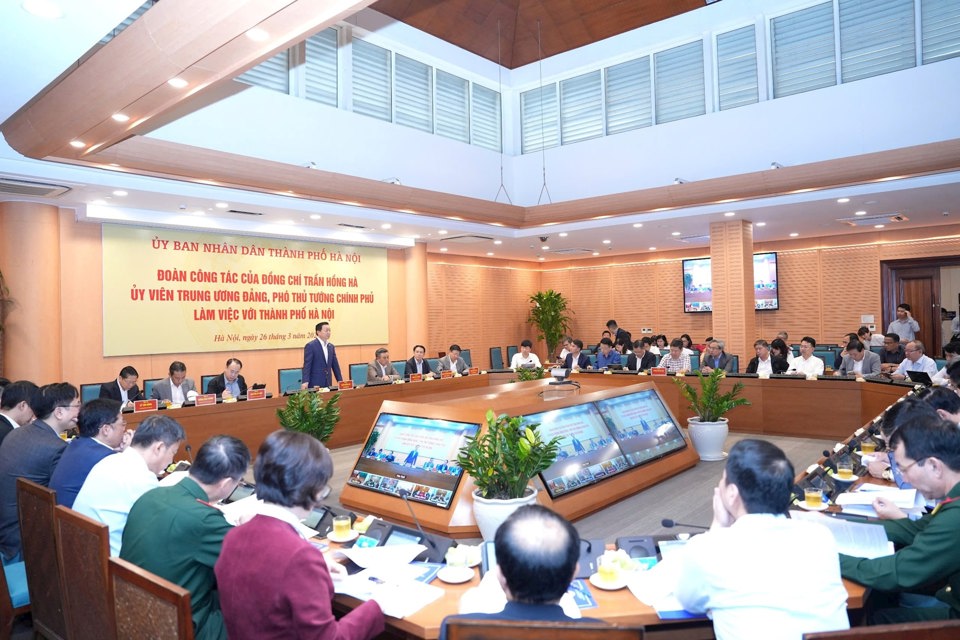
Overview of the meeting.
More decision-making power for local governments
Ha acknowledged Hanoi's proactive approach in preparing for major national and municipal projects and stressed the need to outperform public investment targets, while attracting additional sources of capital. He instructed relevant ministries to address Hanoi's concerns, support decentralization efforts, and facilitate financial allocations for priority projects.
"Addressing Hanoi's challenges will not only benefit the city, but also provide a model for solving similar problems in other localities," said Ha.
Regarding ODA-funded urban railway projects, Ha called for streamlined negotiations and simultaneous land clearance alongside investment preparation. He also urged accelerated construction of the Ngoc Hoi, Tu Lien, and Tran Hung Dao bridges, and pitched for new infrastructure links between Hanoi and Bac Ninh's Gia Binh Airport.
To combat air pollution, the Ministry of Agriculture and Environment is tasked with working with Hanoi and regional provinces to develop a comprehensive pollution control plan that details responsibilities, policy mechanisms, and enforcement measures. Authorities will identify major sources of pollution and implement stringent measures, including relocating or closing high-emitting facilities and tightening vehicle emission standards to reduce pollution.
On traffic management, the Deputy Prime Minister urged Hanoi to work with ministries to formulate solutions, prioritizing urban planning, traffic flow regulation, and vehicle management.
He suggested using economic instruments rather than administrative measures to curb private vehicle use in key areas, leveraging technology for intelligent traffic control, and optimizing public transport infrastructure to improve accessibility.