Hanoi to launch information system to handle administrative procedures
The system is part of the city’s roadmap toward simplification of administrative procedures for the benefit of the people and businesses.
The Hanoi People's Committee on February 23 agreed on adopting an information system for managing administrative procedures in the city.
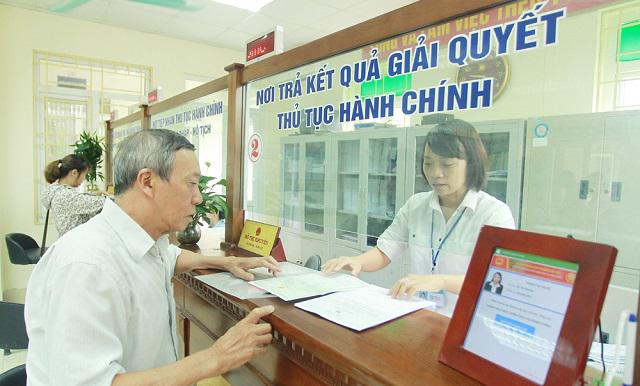
| Handling administrative procedures for locals at Nam Tu Liem District. Photo: Pham Hung |
Under the city’s directive, the municipal Department of Information and Communications has been tasked with ensuring the stable and effective operation of the information system, while also maintaining uninterrupted reception and processing of administrative tasks and online public services through the one-stop-shop mechanism, “The system must also adhere to regulations concerning information safety and security,” stated the directive.
The department is also responsible for proactively developing a plan to implement the administrative procedure information system and coordinating with relevant units to ensure adherence to the schedule. In particular, the Department of Information and Communications will lead efforts to monitor, test, and evaluate the implementation of the software system at submunicipal agencies.
In addition, it will work with the City People's Committee Office to collaborate with VNPT Group to transfer all data generated from the experimental one-stop software system run by VNPT to the city.
They will also ensure that the trial system is shut down when it becomes officially operational.
The Department of Information and Communications will oversee the conversion of all data from the experimental system to the new system and establish connections between the city's new administrative procedure information system and the information systems of central ministries and branches.
The city also expects the department to work with relevant agencies and service providers to update and complete the electronic processes of the information system.
They will also be responsible for installing, training, and transferring the system to the Office of the City People's Committee after ensuring that it operates stably and smoothly with all the necessary features to meet professional requirements for management and information security according to regulations.
Additionally, the Department of Information and Communications will coordinate with the Hanoi Police, the Office of the City People's Committee, and relevant agencies to check and assess the information safety and security of the software system before connecting, integrating, and sharing data. They will periodically conduct such checks before and after the system is officially put into use.
The Departments, branches, and People's Committees of districts and towns are responsible for organizing, implementing, and using the information system for carrying out administrative procedures.
The City's departments, agencies, and branches will appoint coordinators and direct relevant departments will review the list of administrative procedures, internal processes, and electronic processes. Those staff would participate fully in training courses, transfer, and guide the use of the software. In the event that an internal process or electronic process has not yet been developed for an administrative procedure, the relevant department should coordinate with the Information and Communications Department, the Office of the City People's Committee and the service provider to develop the necessary process under their respective industries/fields.
This will align with the city’s roadmap toward simplification of administrative procedures for the benefit of the people and businesses.