Hanoi urged to facilitate building of new traditional markets
Traditional markets are an indispensable part of daily life for the capital city's residents.
Hanoi needs to implement sectoral and land-use planning to provide a legal foundation and attract business investment in the renovation and modernization of traditional markets, according to local experts.
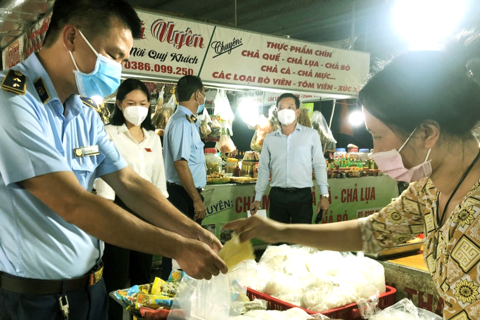
| Locals at a traditional market. Photo: Hoai Nam/The Hanoi Times |
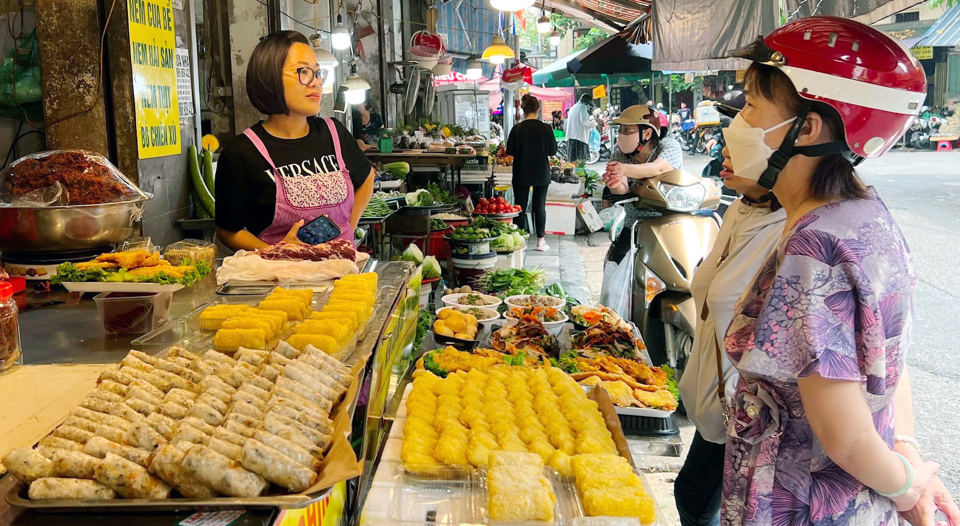
The Hanoi Department of Industry and Trade reports that there are currently 455 markets, with traditional markets meeting about 40% of demand in urban districts and 70% in suburban areas. However, the absence of local markets in some districts and suburban areas has led to the rise of informal and unauthorized markets.
Nguyen Kieu Oanh, Acting Deputy Director of the Hanoi Department of Industry and Trade, said that the department has been working with other agencies to address challenges in the investment, construction, and renovation of markets.
As a result, Hanoi has completed the construction of four markets namely Phu Do (Nam Tu Liem District), Dong Tam (Hai Ba Trung District), the central market in Tram Troi town (Hoai Duc District), and Chau Long Market (Ba Dinh District).
By the end of October 2024, 19 out of 38 planned market renovation projects have been completed, said Oanh.
To tackle unauthorized trading sites, authorities have dismantled 176 out of 213 illegal trading locations across districts. However, 37 unauthorized sites remain in areas such as Nam Tu Liem, Cau Giay, Ha Dong, Bac Tu Liem, and Dong Da, requiring further action.
The city aims to complete the construction of four more markets (8 out of 21 planned) and renovate seven more by the year-end. By 2025, Hanoi plans to build two more markets in Bac Tu Liem and Nam Tu Liem districts and renovate 10 more.
Oanh stressed that renovating and upgrading markets has created jobs, increased local government revenues, and improved shopping convenience, especially in suburban areas. Under Plan No. 110/KH-UBND, issued on April 8, 2024, Hanoi aims to invest in, renovate, and build 38 markets between 2024 and 2025, with 17 new projects and 21 renovation projects.
Despite these efforts, the municipal Department of Industry and Trade admitted that not enough focus had been placed on market investments and renovations.
Progress has been slow due to limited focus in some districts and difficulties in meeting the infrastructure standards required for certification. Additionally, the low revenues of some small, rural markets have made it challenging to attract private investment for renovations under schemes that seek funding from social resources. Existing policies, particularly on land rent incentives, remain insufficient to encourage investment.
Vice Chairman of Nam Tu Liem District People’s Committee Phung Ngoc Son highlighted difficulties in implementing projects, such as issues with land pricing and rental costs, as well as challenges in transitioning market management models, including securing land use rights certificates.
Oanh proposed that the Ministry of Finance develop mechanisms for land rent exemptions, reductions, and preferential loan interest rates for market construction projects. She also suggested that Hanoi allocate public investment funds to ensure financing for market renovations as outlined in city programs.
She also urged district authorities to accelerate progress and provide detailed reports on planning issues, project timelines, and funding allocations. The Department of Industry and Trade would then work with relevant agencies to resolve these issues and ensure targets are met.
Deputy Chairman of the Hanoi People's Committee Nguyen Manh Quyen asked districts to collaborate with the Department of Industry and Trade to address shortcomings in market management, grading, service pricing, food safety, and fire prevention. He requests that the moves be in line with capital law to develop supportive policies to make markets central to the circulation of goods.
The city aims to achieve the following by the end of 2025: construct 34 new markets; renovate, repair, and upgrade 71 existing markets to meet food safety standards as prescribed, ensuring environmental sanitation, fire safety, commercial civility, and public security.
Additionally, 90% of markets will have approved pricing plans for the use of selling areas, 100% will have revised operating regulations and plans for the arrangement of goods categories, and all communes, wards, and towns without existing markets but with development needs will be reviewed and included in the city’s market network plan.