Hanoi urged to green vehicle fleet
Businesses should help their employees replace vehicles, and the city should support this effort by improving charging infrastructure and considering tax reductions or deferrals.
THE HANOI TIMES — Hanoi urgently needs to transition to clean energy hundreds of thousands of fossil fuel commercial vehicles, especially the smaller, high-frequency ones.

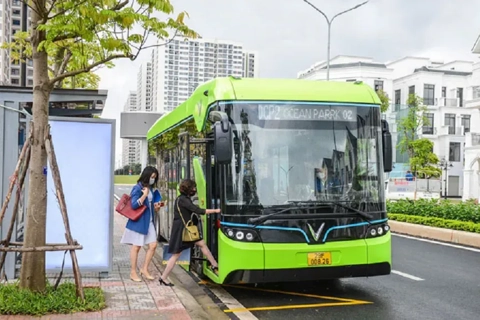
An electric bus on a street in Hanoi. Photo: Pham Hung/The Hanoi Times
Major source of emissions
Hanoi is strongly committed to reducing environmental pollution by making its transportation sector more environmentally friendly, beginning with public passenger vehicles.
According to the Department of Construction, 12.86% of buses and 47.4% of taxis already run on clean energy.
The city aims to fully replace its public transportation fleet with green vehicles by 2030. In line with this goal, the prime minister has instructed Hanoi to create a plan to restrict and eventually discontinue the use of gasoline-powered private vehicles in the urban core.
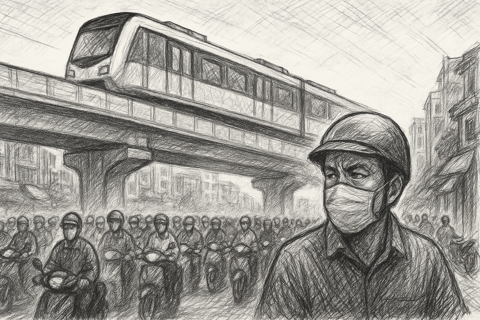
However, many commercial transport vehicles still operate without a clear transition plan. Initial estimates suggest that tens of thousands of gasoline-powered taxis and delivery vehicles, including cars and motorbikes, remain in operation.
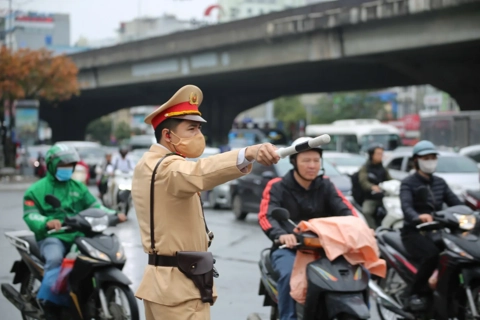
These vehicles contribute significantly to the city’s emissions. Every day, thousands of delivery workers for companies such as Grab, Shopee, and Bee use gasoline motorbikes intensively. In addition, small trucks, modified vehicles, and makeshift three-wheelers navigate every corner of Hanoi, producing emissions that arguably require urgent attention.
Recently, Ho Chi Minh City introduced a policy requiring delivery workers to switch from gasoline motorbikes to clean-energy vehicles. Many experts view this as a more practical and feasible approach than banning private gasoline vehicles.
Most private motorbikes are used just twice a day for commuting, while delivery vehicles often operate for six to ten hours daily. Consequently, these high-usage vehicles may contribute a disproportionately large share of transport-related emissions.
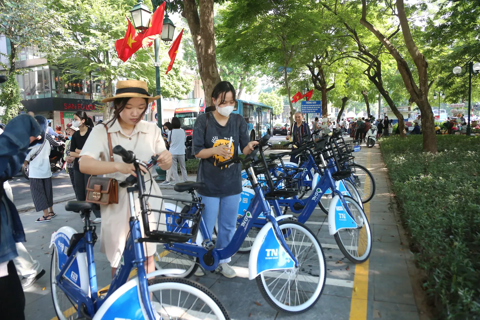
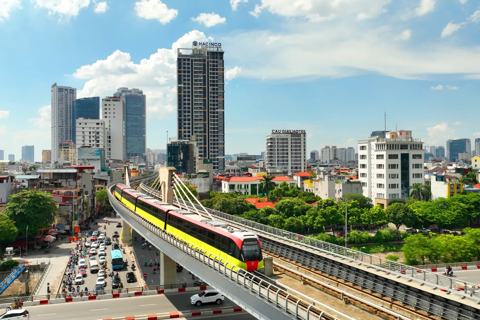
Over the next few years, as Hanoi's public transportation network expands, many residents will opt to leave their private gasoline vehicles at home in favor of buses, metro lines, shared bicycles, or walking.
Meanwhile, commercial transport vehicles, especially small cargo vehicles such as motorbikes, three-wheelers, and pickup trucks, will continue to be extensively relied upon. This makes it even more urgent for the city to prioritize transitioning commercial transport vehicles to clean energy.
For smaller vehicles, however, this goal is much more achievable. Hanoi is preparing to convert garbage trucks, street-cleaning vehicles, and three-wheelers to green alternatives. Electric vehicle manufacturers have begun developing small trucks suited to densely populated urban environments like Hanoi's.

Delivery services are gaining popularity in Hanoi. Photo: Khanh Ly/The Hanoi Times
Shared responsibilities
The government and city authorities are mobilizing resources and calling on electric vehicle manufacturers to help the public make the switch.
Now is the time for transportation companies to take concrete action and share responsibility with the city.
Hanoi should start by developing a detailed plan for smaller freight vehicles, such as motorbikes, small trucks, and delivery vans.
Major delivery service providers, such as Grab and Be, should take the lead. If workers are left on their own to replace their gas vehicles with electric motorbikes, the transition will be daunting.
Meanwhile, businesses must help their employees switch to electric vehicles, and the city should support this effort by improving charging infrastructure and considering tax reductions or deferrals.
Some commercial transport businesses may worry about higher costs and try to transfer the burden to their workers, which is understandable.
The city needs to take a balanced approach that supports both workers and companies and encourages collaboration to ensure a just and effective transition. If businesses leave their workers to fend for themselves, the transition process will suffer serious setbacks.
Electric vehicle manufacturers should also design durable, specialized electric vehicles suited for commercial use. Dedicated charging stations for commercial fleets must be established.
In addition, manufacturers should produce small electric trucks tailored to Hanoi's specific needs, considering its narrow streets and high population density.
As these vehicles become more widely available, outdated and makeshift three-wheelers will gradually disappear, easing congestion, reducing traffic risks, and cutting air pollution.
Hanoi, along with relevant ministries, should set stricter standards for commercial vehicles operating within the city and in low-emission zones, with a clear preference for clean energy vehicles. For example, the Ministry of Construction could consider banning modified cargo trucks converted from passenger vehicles in urban areas or low-emission zones.
The city can also combine public awareness campaigns with incentives to encourage the replacement of three-wheelers with small electric trucks.
Hanoi is working toward fully converting its public passenger transportation system to clean energy by 2030. Until then, the city must make steady progress in greening its freight transport fleet. Converting commercial vehicles first could be a more practical step than turning to private transport.
A gradual, carefully planned transition could positively influence public perception, and commercial vehicles operating for several hours a day would strengthen public confidence in green transport.
Regardless of the focus, Hanoi needs to prepare thoroughly, particularly by developing charging infrastructure that enables convenient and accessible use. This will minimize disruptions and ensure a smoother transition for everyone.