Hanoi urged to sustain traditional crafts through youth involvement
From traditional artisan villages to emerging digital marketplaces, Hanoi’s handicraft industry must strike a balance between preserving heritage and embracing modern innovation.
THE HANOI TIMES — Hanoi must develop certified raw material zones and encourage younger generations to carry on traditional craft legacies, according to Trinh Quoc Dat, Chairman of the Vietnam Handicraft Village Association.

Delegates attend the forum “Handicraft Products: Opportunities and Challenges” early this month. Photo: VGP
At the “Handicraft Products: Opportunities and Challenges” forum held earlier this month in Hanoi, Dat emphasized the need for policies that recognize and reward artisans, while also promoting innovation and digital transformation to secure a sustainable future for the sector.
“We must accelerate technology adoption and digitalize village products, utilize e-commerce platforms to promote and sell handicrafts, and strengthen trade promotion,” he said.
He also called on the government to provide financial and credit incentives for craft producers and enterprises to help them adapt to a changing market landscape.
Dat’s proposals come amid increasing pressure on Hanoi’s handicraft industry, which is grappling with raw material shortages, outdated production models, and weak connections between supply and demand.
Nguyen Anh Duong, Deputy Director of the Hanoi Department of Industry and Trade, said that the capital is home to more than 1,350 traditional craft villages and communities that hold vital cultural heritage legacy.
He stressed that these villages preserve centuries-old craftsmanship and serve as key players in the local and international markets.
“Hanoi’s handicraft products are embedded in the city’s cultural identity, but systemic support is needed to meet modern market demands,” he said.
Rising global pressures

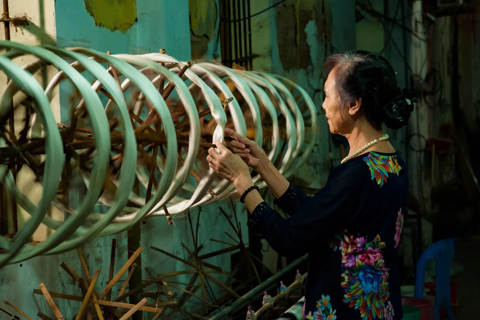
An artisan works on a traditional silk product in Hanoi's Van Phuc Silk Village. Photo: The Hanoi Department of Agriculture and Environment
Le Hoang Tai, Deputy Director of the Vietnam Trade Promotion Agency (VIETRADE) under the Ministry of Industry and Trade, pointed out growing international challenges. Vietnamese handicraft businesses face mounting requirements from export markets in terms of product quality, traceability, labor standards, environmental sustainability, and corporate social responsibility.
He said countries with well-developed craft ecosystems, such as Thailand, India, Indonesia, and Peru, have invested substantially in design, branding, and global distribution.
“Vietnam must catch up or risk losing its competitive edge,” said Tai.
In addition, non-tariff barriers, including unconventional technical standards, are becoming more prevalent, requiring Vietnamese firms to pursue constant innovation to stay afloat.
To address these challenges, the trade agency is working closely with local governments and business associations to enhance the sector’s competitiveness through trade promotion initiatives.
The deputy director outlined strategies to help handicraft businesses go global, including partnerships with the Vietnam Handicraft Exporters Association and the Vietnam Association of Small and Medium Enterprises to facilitate participation in major international trade fairs.
The agency is also strengthening collaboration with Vietnam’s overseas trade offices to provide updated market intelligence, alert businesses about emerging technical barriers, and connect them with global importers via regular trade promotion dialogues.
At the same time, the agency is pushing for digital transformation in trade promotion, enabling wider online distribution and market outreach through digital platforms.
“Vietnam needs a national branding strategy in which products must reflect cultural identity and meet global standards, positioning Vietnamese handicrafts as cultural ambassadors in international markets,” Tai said.
Vision for growth
At the forum, officials and experts exchanged insights on emerging development trends, potential export markets, and policies to ensure the sustainable development of Vietnam’s handicraft industry.
Participants discussed key themes, including market opportunities and challenges, integration into Hanoi’s cultural industry strategy, and scientific applications to improve product quality and design.
In recent years, handicraft exports have consistently ranked among Vietnam’s top 10 export sectors by value, showing steady growth.
The country exports around US$3.5 billion worth of handicraft products annually, with an average growth rate of approximately 10% per year.
Vietnamese handicrafts are now available in 163 countries and territories worldwide.
|
According to Plan No. 368/KH-UBND on Hanoi’s 2025 industrial promotion activities, the city aims to boost handicraft exports by 6%–8% annually. The plan targets the development of 650-800 new product designs for domestic and international markets, supports 600-650 businesses to participate in local and international trade fairs, and trains around 2,000-2,500 rural industrial leaders and managers. |