Hanoi’s heritage house of great historical imprints
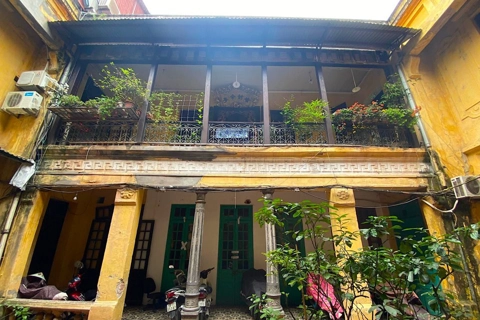
One of the rare old houses in the area of Hanoi's Old Quarter, the Heritage House at 86 Hang Bac Street is full of funky secrets.
One of the most prosperous streets in ancient Hanoi was Hang Bac Silver Street. It is also the city's jewelry trade cradle, with many interesting historical stories.
Hanoi's "well-off" street
| The timeless beauty of the heritage house at 86 Hang Bac Street. Photo: Bao Xay Dung |
Legend has it that Emperor Le Thanh Tong ordered Luu Xuan Tin, who was in charge of internal affairs, to set up a royal mint to cast coins and silver bars.
As the mint required a large number of silversmiths, Luu Xuan Tin brought many skilled craftsmen from Hung Yen Province to Hanoi, who settled on Hang Bac Street.
According to local historians, the first concrete evidence of the existence of Hang Bac is on a stele still found at 42 Hang Bac Street. It indicates that people were already living and trading on Silver Street in 1783.
The royal mint on Hang Bac Street produced gold and silver coins, and its shops traded in precious stones. It was known that the best quality silver pictures, pearls and handmade ornaments were to be found on Hang Bac.
After World War I, the economy of colonial Vietnam boomed. There was a race among the nouveau riche to build the most lavish villa. And much to the chagrin of purists, they built houses with little regard for architectural or classical lines. Architectural design books from Europe filled the shelves of the wealthiest entrepreneurs and were copied in fragments: if two columns were beautiful, four would be even more so.
And given a choice of decorative moldings, medallions, arches, and furbelows, why not add a set of each? The "fashion police" in the newspapers of the day ridiculed this higgledy-piggledy style as far too crass.
Home of the revolutionary scholars
| Heritage House No.86 Hang Bac is an iconic building in Hanoi. Photo: Quang Minh |
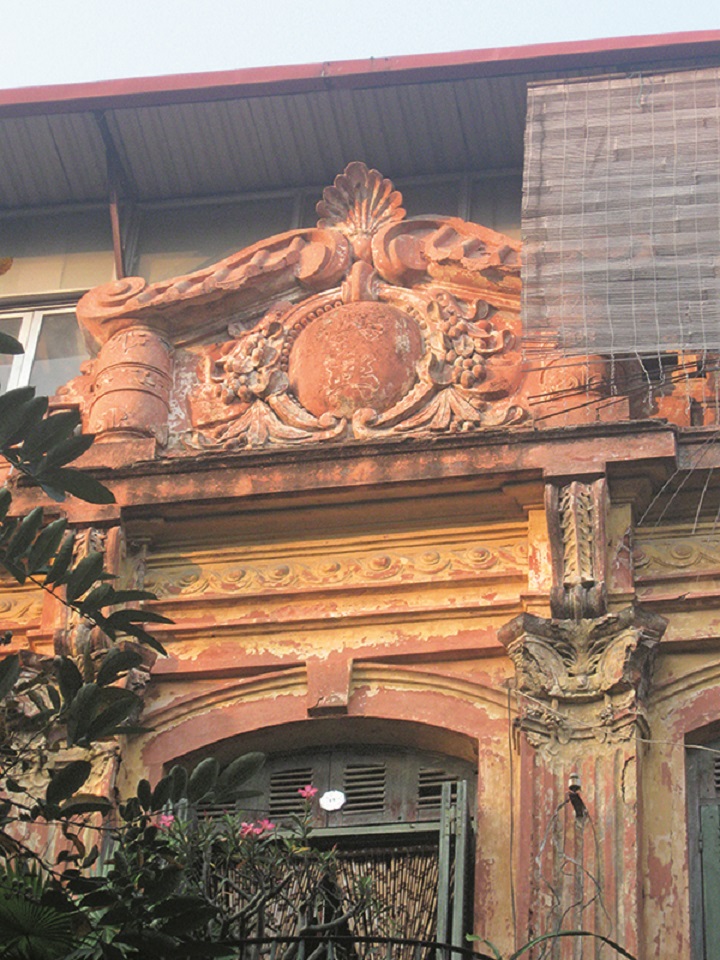
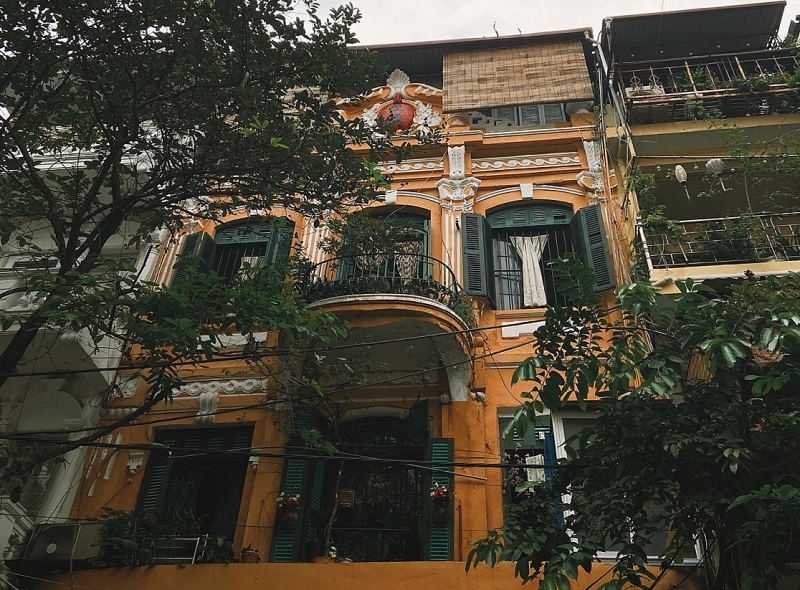
However, there were a few who chose wisely, and thanks to them, 86 Hang Bac still retains the elegance of the neoclassical style. It was known as the "Maison Rouge" because it was painted red, a color associated with good fortune. Perfectly balanced, two side wings cover the central entrance. Even the addition of half a floor and wires draping the front can't detract from this grand old dame.
The original resident of 86 Hang Bac, Pham Chan Hung, owned a gold shop and built his first house in 1923 and rebuilt part of it in the 1930s.
A dedicated follower of Ho Chi Minh's liberation movement, he also served as the editor of a magazine called "Nong, Cong, Thuong" (Peasants, Workers, Businessmen), which published the works of then famous writers such as Pham Huy Thong (Chan Hung's son), Vu Trong Phung (author of Dumb Luck), and Phung Bao Thach.
Their poems and articles covertly promoted ideas of nationalism and the rise of socialism in France.
Chan Hung's children were all well educated. His youngest son, Dr. Dung, an internationally respected epidemiologist, still lives in part of the house. His daughter made headlines when she became the first woman to graduate from a French high school.
The eldest son, Pham Huy Thong, was educated in France, taught at the Sorbonne, and became involved in politics, serving as an assistant to Ho Chi Minh at the Paris negotiations following Vietnam's independence in 1945.
Chan Hung, who had refused a government post under the French, became the chief administrator of his district under the revolutionary government after 1945. With the return of the French, a militia unit, the Hanoi Brigade, found a willing supporter and a home for plotting against the colonialists.
| The current facade of the historic building no. 86 Hang Bac. Photo: Quang Minh |
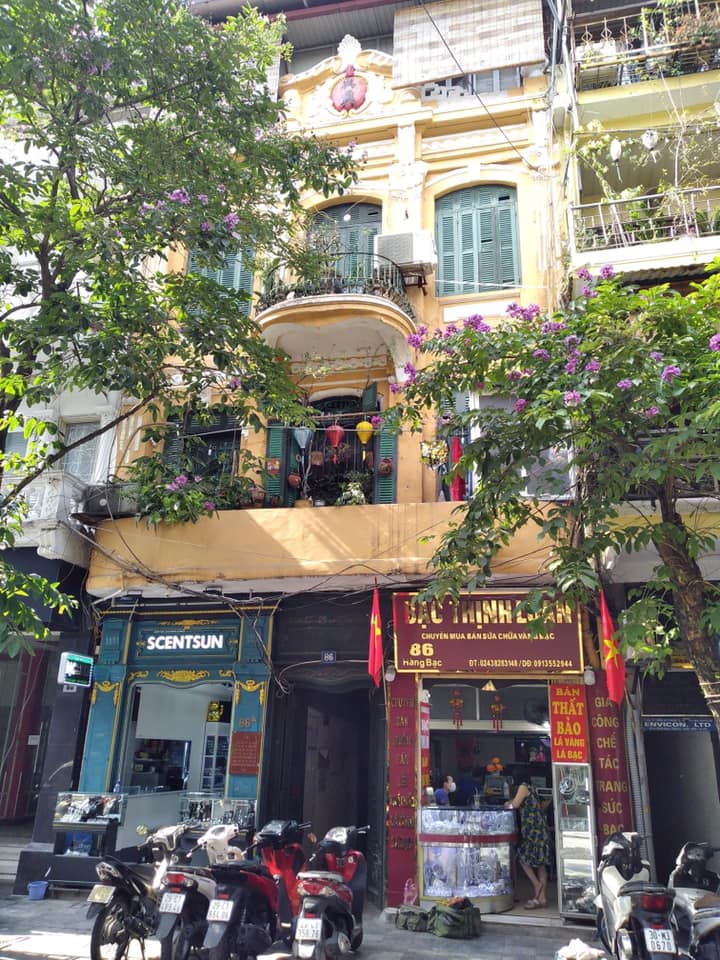
Two houses attached to house number 86, with secret doors and holes carved into the walls, were their meeting places, and the revolutionary activists could arrive without arousing suspicion.
With the start of the street fighting that launched the national resistance against the French in 1946, 86 Hang Bac became the headquarters of the freedom fighters and a makeshift detention center for high-ranking French military officials. Needless to say, after the French invaded Hanoi, Chan Hung and his family were forced to leave the city and seek refuge in the countryside. A plaque on the door frame commemorates their heroism.
Today, many people who were displaced during the wars found shelter at No. 86 Hang Bac after the liberation of Hanoi in 1954. What were once dining halls, living rooms, and the gardens of the house become household dwellings. The Ministry of Culture, Sports and Tourism has declared it a historical building and is taking care to protect it from the wrecker's ball.
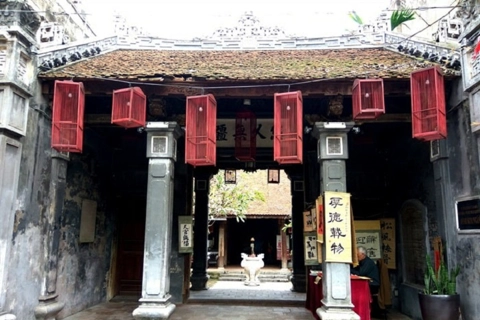
The glamour and intrigue can still be felt as you look down the hall to see the beautifully carved door and original ceiling.