Ho Chi Minh City: 48 years with the whole country, for the whole country
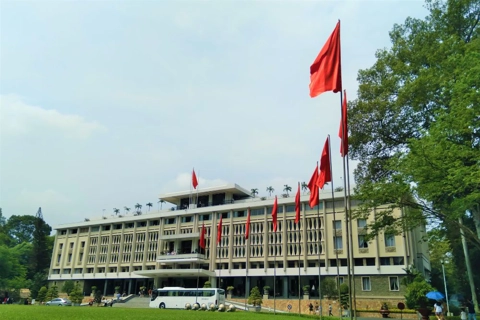
The image of Vietnamese soldiers imposing on a tank from north Vietnam as destroying the gate of the Independence Palace on April 30, 1975, will live forever in the heart of the Vietnamese people, marking the end of the American war and the start of national unification in Vietnam.
Throughout the nation's history, Ho Chi Minh City consistently affirms its important role in the fight against foreign aggression and national independence, leading in the reconstruction work and Doi moi (Renewal) and boosting the whole country to a socialist-oriented market economy.
| The photo taken by a French journalist from Vietnam on April 30, 1975, captured the image of the tank numbered 390 of the liberation army ramming the main gate of the Independence Palace - marking the moment of the fall of the puppet regime. |
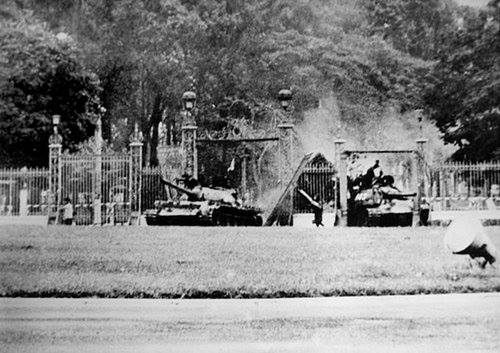
The Great 1975 Spring Victory was a brilliant milestone in national history, becoming a spiritual fulcrum and a solid foundation for the people of Ho Chi Minh City to build and develop the "City named after Uncle Ho", and being under the Party's orientation: "Ho Chi Minh City is the locomotive, the model of renewal, innovation, and development of the whole country".
However, during the 48-year journey (April 30, 1975 - April 30, 2023), Ho Chi Minh City has suffered from hunger, unemployment, and natural disasters, plus the economic system based on centralized bureaucracy and administrative subsidies, that all are making residents more miserable in production and business and living in the shortage of food. Although located in the Southern granary, the city struggled to supply food for 3.5 million people, with daily meals of rice filled with flour and cassava.
The past has left the city with heavy consequences in many facets, with the weak economy mainly relying on external aid and more than 700,000 hectares of land fallow.
The peak of the economic and life crisis in Ho Chi Minh City lasted from 1979 to 1980, resulting in a situation of public confidence. The continuous escalation of inflation with galloping figures has increased the number of workers leaving factories, offices, and waves of people going across the border hoping to seek a better living in other countries.
Facing such difficulties, the city's leaders conducted a series of actions to remove bottlenecks for production and business, making a significant change in thinking from the Party to grassroots and transforming into ideological views in the city's economic development strategy.
During this time, the city's history witnessed the emergence of a series of advanced production and business models, such as Viso Vietnam Joint Stock Company (VISO), Tobacco Factory, Saigon Brewery, Cau Tre Factory, and Thanh Cong Textile Enterprises.
In 1991, from the city's proposal, the Council of Ministers piloted the granting of an investment license to a joint venture company to build and operate the Tan Thuan Export Processing Zone, which became the first of its kind in Vietnam.
One year later, the city continued to open Linh Trung Export Processing Zone. In 1993, the Ho Chi Minh City Party Committee advocated establishing the Securities Center, building the capital market; and in 2000, the Government allowed the establishment of the Ho Chi Minh City Securities Trading Center - Vietnam's first Stock Exchange.
The city set up Quang Trung Software Park in 2000, gathering scientists to study and learn from India, Thailand, Malaysia, and some advanced countries. The park has become the country's first centralized information technology hub, making great contributions to developing the city's software industry and the country's first centralized information technology park.
| As the economic drive of the whole country, Ho Chi Minh City has the strength to continue promoting its significant role and position in the country's development process. |
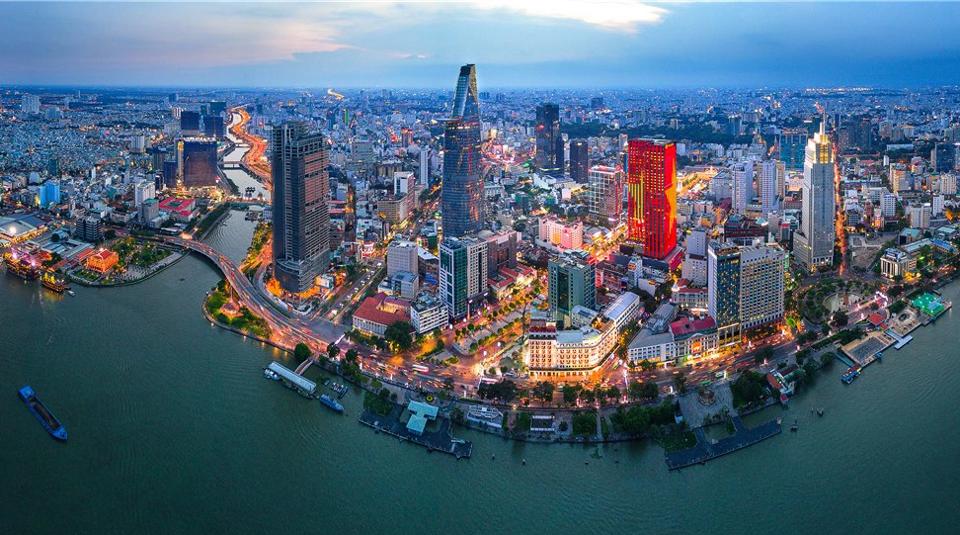
Ho Chi Minh City is one of the few cities in the country, having continuous double-digit economic growth over a long period, making its role as a major center in many aspects and one of the fastest-growing cities in the world.
Entering the 2020 - 2025 term with many difficulties and challenges as the city suffered the heaviest losses of the Covid-19 pandemic, for the first time in its development history, the city experienced a negative growth of 6.78% in 2021. During the harshest period, some industries and fields maintained a good growth rate, with export turnover estimated to increase by 2.8% year-on-year. The total State budget revenue in 2021 was estimated at VND381,531 billion, reaching 104.56% over the year's estimate.
When the pandemic is under control, the city's economy has recovered quickly and impressively from the first months of 2022. Accordingly, the Gross Regional Domestic Product (GRDP) in the first quarter of 2022 increased by 1.88% compared to the same period in 2021. Throughout the past eight months, economic sectors have always maintained growth. Total state budget revenue in eight months is estimated at VND311,921 billion (reaching 80.69% of the yearly estimate).
According to Chairman of Ho Chi Minh City People's Committee Phan Van Mai, entering the historic April days of this year, like the people of the whole country, the people of Ho Chi Minh City celebrate the big holidays with a deep belief in the future development of the city and the country after the pandemic of Covid-19.
"We all will continue to build Ho Chi Minh City into a livable place, a locomotive, a model of renewal, innovation, and development for the whole country," Mai said.