Important archaeological finds unearthed on Hanoi's outskirts
The Vuon Chuoi site, a major Bronze Age archaeological site in northern Vietnam, is a residential and burial site dating from the Pre-Dong Son to Dong Son period (4,000-2,000 BC).
Many significant findings of the pre-Dong Son period (4,000 BC) were revealed by the archaeological excavation team on October 18 at the Vuon Chuoi archeological site in Hoai Duc District, Hanoi.
According to Nguyen Lan Cuong, General Secretary of the Vietnam Archaeological Association, the most notable findings in this excavation were some remains with numerous bracelets on both arms, as well as the practice of burying ceramic and bronze objects with the remains or extracting the upper front teeth. These graves were often the target of robbers since they held numerous priceless burial items.
"We have unearthed more than 70 pre-Dong Son burials and 40 Dong Son burials and found that people at that time had the custom of removing the front teeth of adults, but this custom did not exist in the Dong Son era," Cuong said.
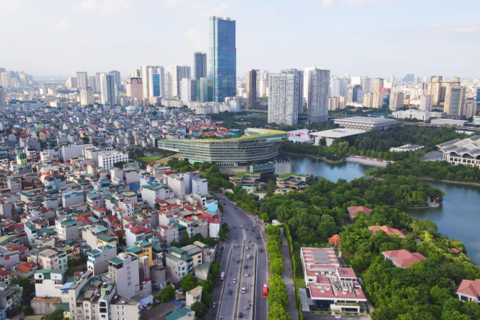
| Aerial view of Vuon Chuoi archaeological site. Photo courtesy of the Institute of Archaeology |
.jpg)
The remains in burials from different periods are still quite well preserved, which promises to bring deeper understanding when conducting research on anthropology, genetics, pathology, movement, and nutrition of ancient Vietnamese people in the Bronze Age in northern Vietnam.
Numerous remnants of foundries, fireplaces, and other living relics were also found during this excavation. The archaeologists also uncovered numerous artifacts from a variety of historical periods, including the late Phung Nguyen (3,000 BC) and late Dong Son (2,000 BC) periods, including stone, bronze, ceramics, wood, iron, and more.
Among the artifacts, about 10 tons of broken pottery have been stored in the warehouse, and many burial pottery clusters are still kept at the site.
Cuong affirmed that this is one of the largest excavations with the most artifacts and remains unearthed from 2001 to the present.
| The experts have found 110 burials with human remains and burial objects. Photo courtesy of the Institute of Archaeology |
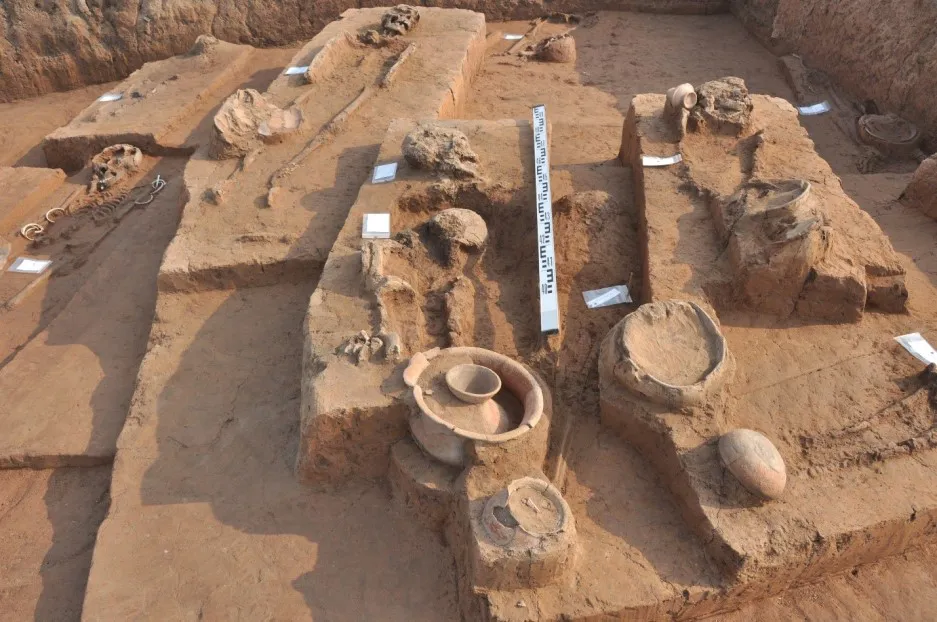
Nguyen Ngoc Quy of the Institute of Archaeology said that the results of the excavation of the site from March 2024 to the present day have added evidence to the assertion that Vuon Chuoi is a village inhabited by Metal Age people for a long time, uninterrupted from 2,000 to 4,000 years ago.
"The results of the excavation and research have contributed to providing sufficient evidence of the presence of humans in the area of present-day Hanoi at a very early date. It also proves the indigenous origin and history of Vietnamese ethnic groups from prehistoric times," Quy said.
According to experts, excavations in the coming time promise to bring more important evidence to unravel the Bronze Age not only in the Hanoi area but also to expand further.
The excavation team urged the Hanoi authorities to allow the next phase of research to be carried out soon to avoid the loss and waste of precious cultural heritage while speeding up the recognition of the Vuon Chuoi site as a city-level relic and implementing a plan to preserve, protect and promote the value of the relic.
Implementing Decision No. 520 of the Ministry of Culture, Sports and Tourism of March 6, 2024; Document No. 938 of the Hanoi Department of Culture and Sports of March 12, 2024, the excavation, which covers an area of 6,000 square meters and includes 60 pits, was conducted in the form of a checkerboard to the west of Vuon Chuoi mound.
The excavation took 330 days (from March 19, 2024), digging from 1.5m to over 3m. The Vuon Chuoi mound is located in a field in Lai Xa Village, Kim Chung Commune, Hoai Duc District, Hanoi, about 18 km west of central Hanoi.
Since the first discovery and excavation at the end of 1969, the Vuon Chuoi archaeological site has undergone eight excavations. The excavation pits were dug over a relatively large area. The results of the excavations show that the site's stratigraphy is relatively stable, with cultural layers from Dong Dau, Go Mun, and Dong Son.