In Asia trip, Esper to discuss Chinese claims in South and East China Sea
At the heart of the US strategy is that America is also a Pacific power.
US Secretary of Defense Mark T. Esper will discuss Chinese claims in the South and East China Sea in his upcoming Indo-Pacific trip that includes South Korea, Thailand, the Philippines and Vietnam in search of support for the US’s increased engagement in the region.
“He will reiterate the US desire that any solutions in the disagreements over national claims in those bodies are arrived at peacefully,” the Defense Department said in a statement on November 12.
This will be Esper’s second trip in the three months to the region that he has called America's “'priority theater.”
US commitment to allies and partners
The trip also highlights the US commitment to partnerships both old and new, according to the department.
In addition to Thailand, which signed a treaty with the US in 1837, the US treaty allies in the Pacific are South Korea, Japan, the Philippines, Australia and New Zealand. Partners in the region include India, Sri Lanka, Indonesia, Malaysia, Brunei, among others.
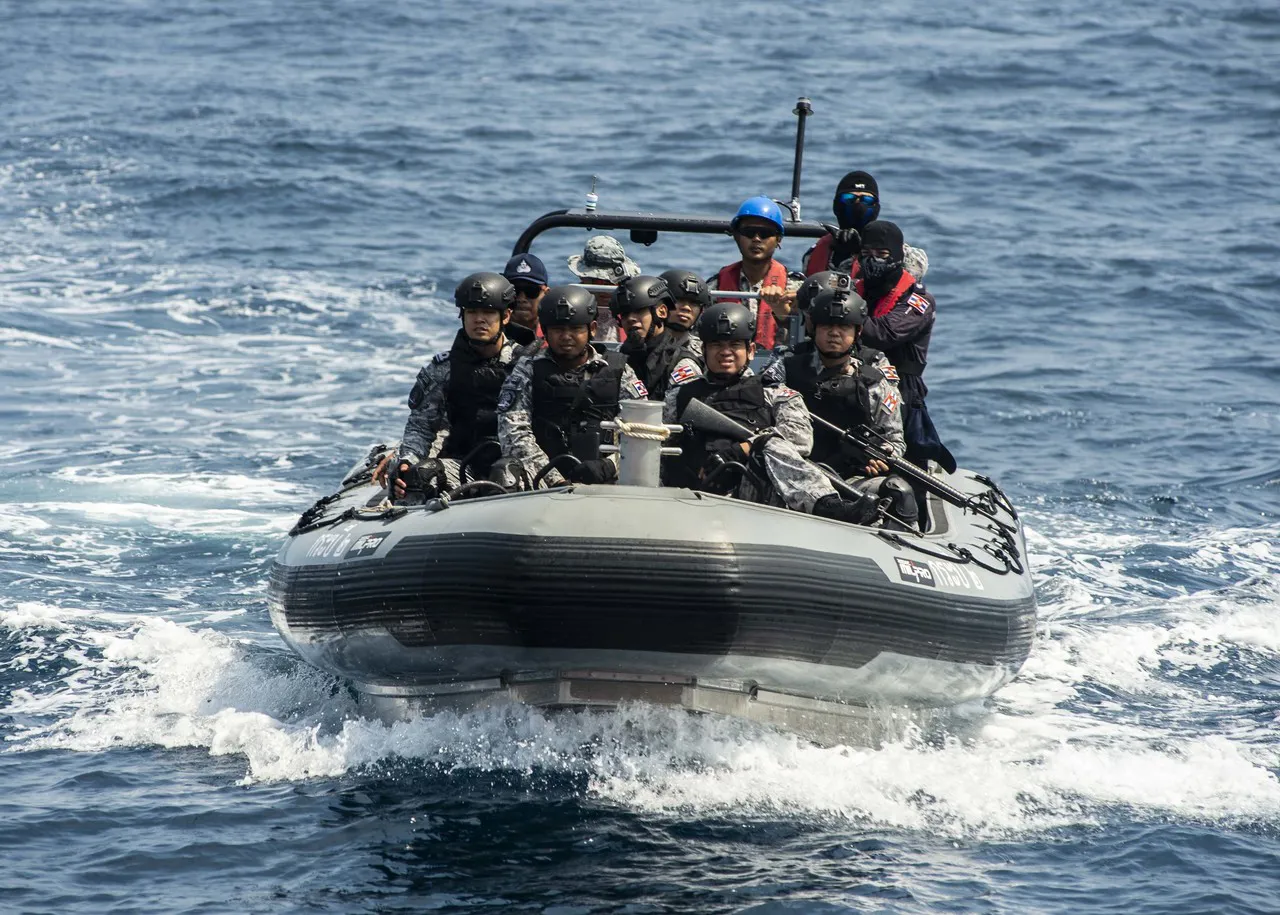
| Royal Thai Navy sailors approach a training vessel on a rigid hull inflatable boat during a visit, board, search and seizure training drill as part of a maritime exercise, Sept. 5, 2019. Photo: US Defense Dept. |
During the tour, the secretary will hear firsthand from allies and partners on their concerns and their progress and what the United States can do to strengthen cooperation.
Esper’s trip highlights that. The secretary will meet with officials from South Korea to underline America's long-standing guarantees to that nation in the face of North Korean aggression.
In Thailand, Esper will build on almost two centuries of amity to increase cooperation and interoperability between the two nations.
In the Philippines, Esper will discuss efforts to defeat terrorist groups that threaten the government.
In Vietnam, Esper will seek new ways to cooperate with the nation to promote peace in Southeast Asia, it added.
Relations with Vietnam are relatively new, resuming in the 1990s, and are getting closer. The United States dropped its arms embargo against the one-time enemy in 2014, and the improvement in relations was personified by the port visit of the aircraft carrier USS Carl Vinson in 2018.
China – the US’s greatest threat
Maintaining alliances and making new partners is the second line of effort in the US National Defense Strategy. The poster child for this is the defeat-ISIS coalition that the United States put together in response to the rise of the Islamic State group in 2014. There are now 80 nations and entities involved in that effort.
The National Defense Strategy is based on the return of great power competition. China and Russia are the two greatest threats.
The strategy points to China, with its fast-growing economy, the greater threat. It’s investing in China’s People's Liberation Army and modernizing forces, improving training and fielding new capabilities.
These military capabilities – artificial intelligence, hypersonic missiles, aircraft carriers and more – are designed specifically with the US military in mind. The Chinese studied American military doctrine and operations. Seeing the US deploying to Operation Desert Shield, Operation Desert Storm, and Operation Enduring Freedom, they concluded that the US ability to deploy anywhere in the world and supply the forces, is America’s biggest edge.
The department noted that China's response is to build islands in the South and East China Seas to close sea lines of communication. They deployed missiles with stand-off capabilities that would threaten task forces that approach. They have stolen technologies and plans for advanced weaponry.
The Chinese President Xi Jinping has a stated goal of military supremacy by 2050, it added.
But the Chinese military strategy is part of a whole-of-government approach. They use diplomacy, political clout and economic policies in conjunction with military power. The Chinese ''One Belt, One Road'' initiative is a $1 trillion effort to change the current international system that has served the Indo-Pacific so well since 1945, to one that centers everything on Beijing.