The relief reflects India’s broader commitment to delivering Humanitarian Assistance and Disaster Relief (HADR) in the ASEAN region, in line with its 'Act East Policy.'
The Government of India, under its Operation Sadbhav (Goodwill), delivered emergency relief supplies to the Government of Vietnam as a gesture of support to Vietnamese-affected communities in the aftermath ofTyphoon Yagi.
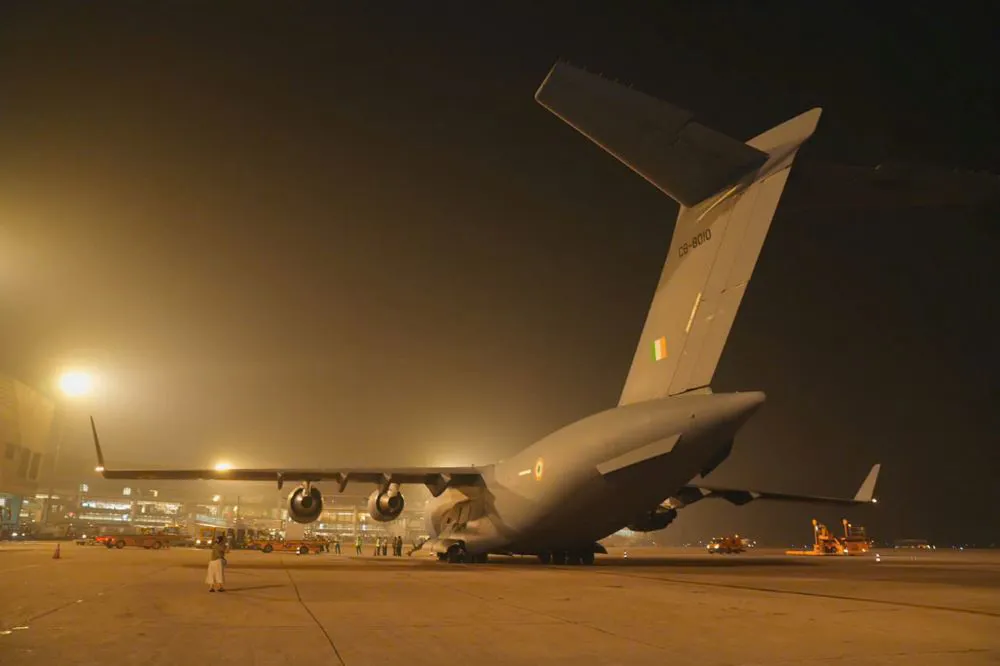
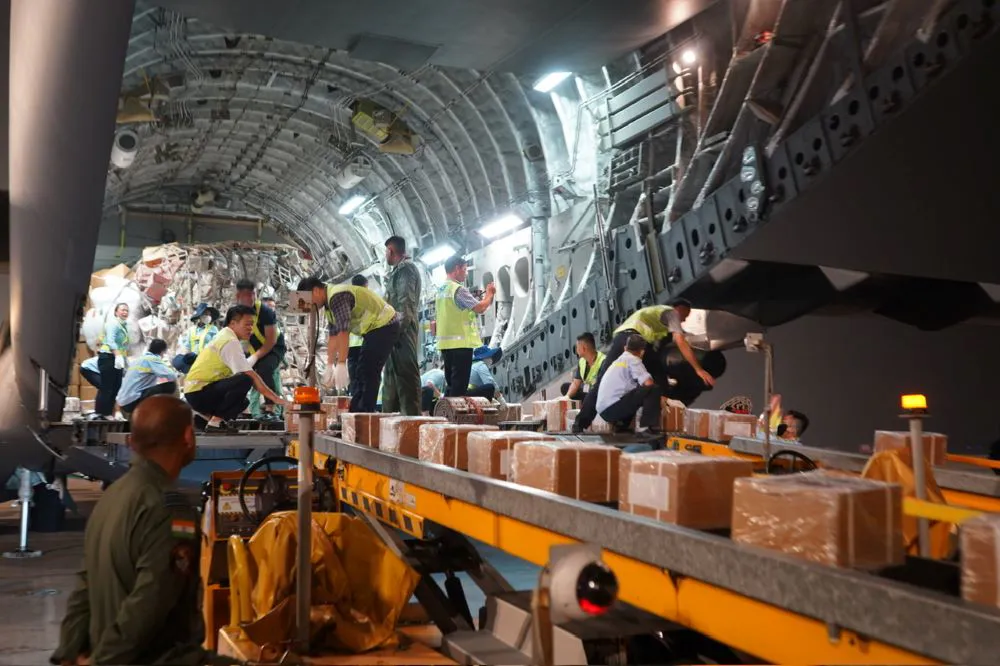
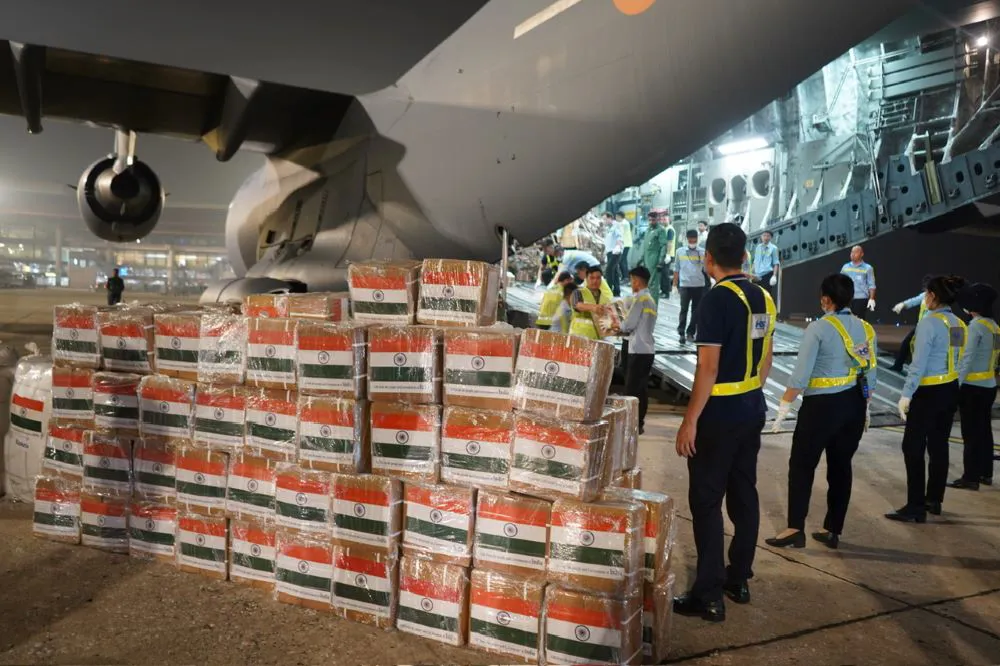
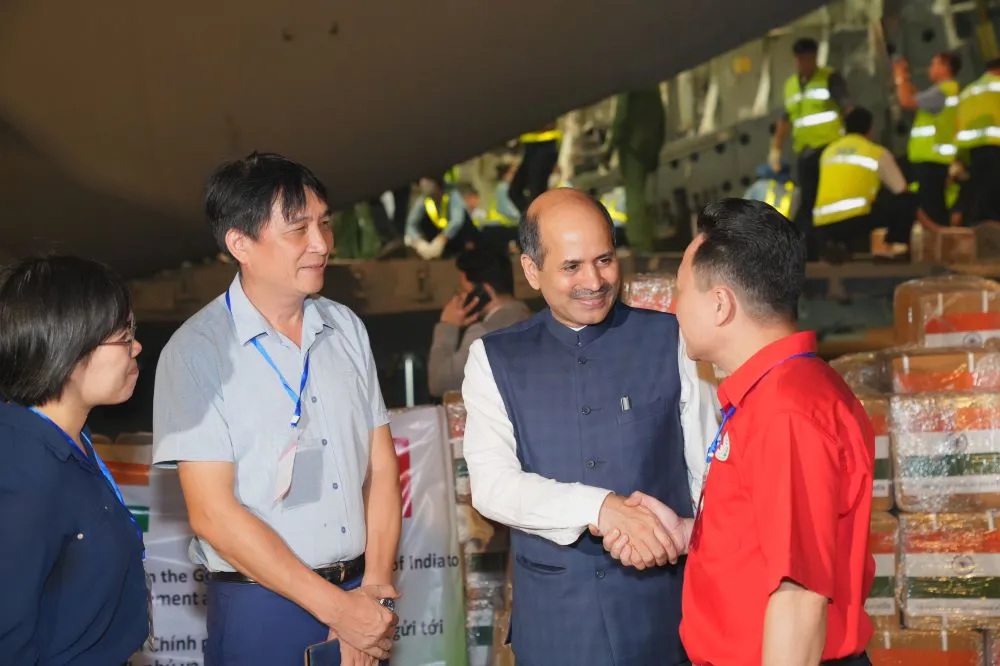
The aircraft carrying 35 tons of humanitarian supplies arrived at Noi bai International Airport, Hanoi on the night of September 15. Photos: Embassy of India in Hanoi
A special Indian aircraft carrying a 35-ton consignment of humanitarian supplies arrived at Noi bai International Airport in Hanoi on the night of September 15. The relief goods, valued at US$1 million, include essential items such as water filters and purifiers, blankets, mosquito nets, kitchen sets, water storage tanks, buckets with taps, and solar lamps, all based on the needs of the affected communities and feedback from local authorities.
The relief supplies are from a 30-ton consignment delivered by Indian military.
Earlier, Indian Prime Minister Narendra Modi expressed his sympathies and solidarity on behalf of the Indian government and people to Vietnamese Prime Minister Pham Minh Chinh. India's External Affairs Minister, Dr. S. Jaishankar, also conveyed his condolences to Vietnam's Deputy Prime Minister and Foreign Minister, Bui Thanh Son, regarding the losses caused by the typhoon.
The gift from the people and Government of India.
The Indian government has emphasized that this humanitarian assistance underscores the deep ties between India and Vietnam, strengthened through their Comprehensive Strategic Partnership. "Operation Sadbhav" (Goodwill) is part of India’s broader commitment to providing Humanitarian Assistance and Disaster Relief (HADR) in the ASEAN region, in alignment with its 'Act East Policy.'
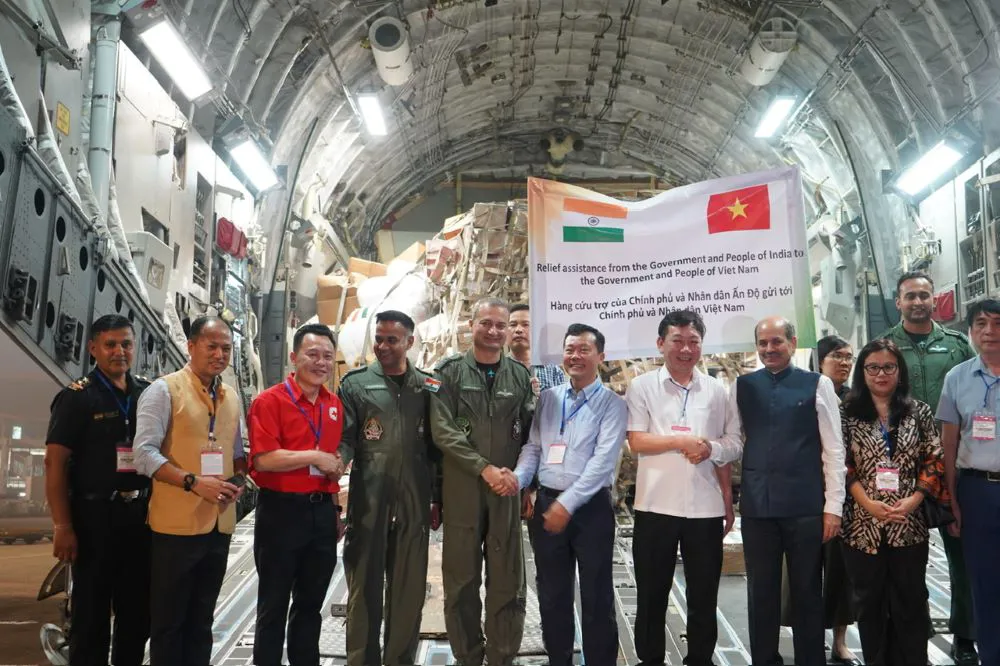
India's Ambassador to Vietnam Sandeep Arya (4th left) and Roshan Lepcha, Counsellor (Political & Information), the Embassy of India in Hanoi, hand over the gifts to Vietnamese representatives.
India's Ambassador to Vietnam Sandeep Arya handed over the relief supplies to the Director General of the Ministry of Agriculture and Rural Development for the National Disaster and Dyke Management Authority and representatives from Tuyen Quang province. The Ambassador also highlighted the strong sense of empathy within the Indian community for those affected by Typhoon Yagi, noting that Indian businesses and community members have independently offered support and contributions to the impacted people and authorities in Vietnam.
India's Ambassador to Vietnam Sandeep Arya and Vietnamese officials at the airport.
The candidates pledge institutional reform, infrastructure upgrades and a stronger focus on science, technology and public services as the capital prepares for the 16th National Assembly term.
As climate risks intensify across Southeast Asia, young people are being called upon to move from awareness to action, harnessing technology, creativity and policy engagement to accelerate environmental solutions.
The three resolutions on education, healthcare reform and cultural development are closely interconnected and mutually reinforcing, all directed toward building a capital that is cultured, civilized, modern and happy.
Developing the state economy and Vietnamese culture forms the twin pillars of a unified development strategy, one strengthening material capacity, the other reinforcing cultural and social resilience.
A central message of the 14th National Party Congress and the 18th Congress of the Hanoi Party Organization (2025-2030) is that people’s happiness must be at the core of development. All policies be grounded in citizens’ legitimate rights and interests, with public satisfaction serving as the ultimate measure of success.
Vietnam has reaffirmed its strong commitment to meeting international standards on tax transparency and information exchange following the European Union's adding Vietnam to its list of non-cooperative tax jurisdictions.
Under the dry winds and red dust of Abyei and Bentiu, mission compounds glow with paper blossoms and steaming banh chung, as each square rice cake carries from Vietnam to Africa a message of solidarity, compassion and enduring cultural identity.