Law seen as key to preserving Vietnam’s cultural identity in global integration
At the 38th LAWASIA Conference in Hanoi, experts across Asia discussed the role of law in safeguarding cultural values, with Vietnam’s 2024 Heritage Law seen as a step toward sustainable development.
THE HANOI TIMES — Law serves as both a shield and bridge to preserve local cultural identity amid globalization, said Nguyen Phuong Hoa, Director of the Department of International Cooperation under the Ministry of Culture, Sports and Tourism.
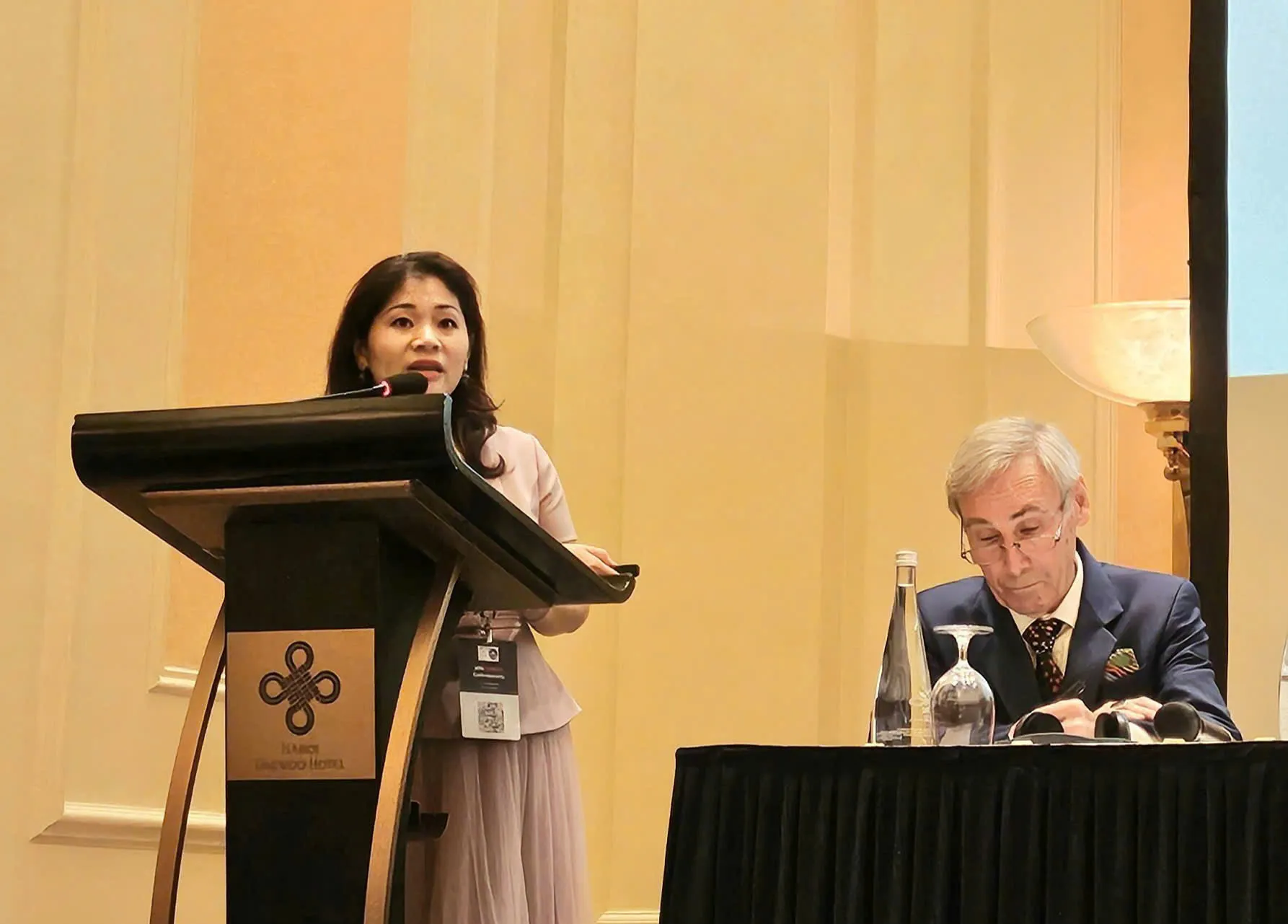
Nguyen Phuong Hoa, Director of the Department of International Cooperation (left), delivers speech at the event. Photos: Anh Kiet/The Hanoi Times
Hoa was speaking at the 38th LAWASIA Conference held in Hanoi this week, where she emphasized that culture is a driver of development and that the rights to access, create, participate in and enjoy cultural life are fundamental to every human being.
"Cultural rights are affirmed as an inseparable pillar in the global human rights system. In Vietnam, the national legal system has clearly recognized and protected cultural rights," said Hoa.
She called culture a sharp tool in the country's strategy and international relations. “As Vietnamese culture touches global hearts, it elevates the nation’s stature. Cultural exchanges help enhance friendship and understanding between Vietnam and other nations.”
However, a number of challenges remain, such as the lack of uniformity in law enforcement, the risk of commercializing traditional culture and conflicts between modern law and traditional customs.
Vietnam legally emphasizes the preservation of local culture through legislation like the Law on Cultural Heritage, which was updated in 2024 to focus on modernizing management, digital transformation and the repatriation of artifacts.
Promoting heritage values in socio-economic development
According to Lawyer Nguyen Van Hoa, Director of ASL Law Firm in Ho Chi Minh City, Vietnam's Law on Cultural Heritage 2024 consists of 95 articles arranged in nine chapters, which regulate management, safeguarding and promotion for the country's cultural heritages.
Hoe said all cultural heritage in the territory of Vietnam, originating in the country or foreign countries, and taking different forms of ownership, will be managed, safeguarded and promoted in line with the law.
"Vietnam’s cultural heritage in foreign countries will be safeguarded in accordance with international law and treaties to which Vietnam is a contracting party," Hoa told The Hanoi Times.
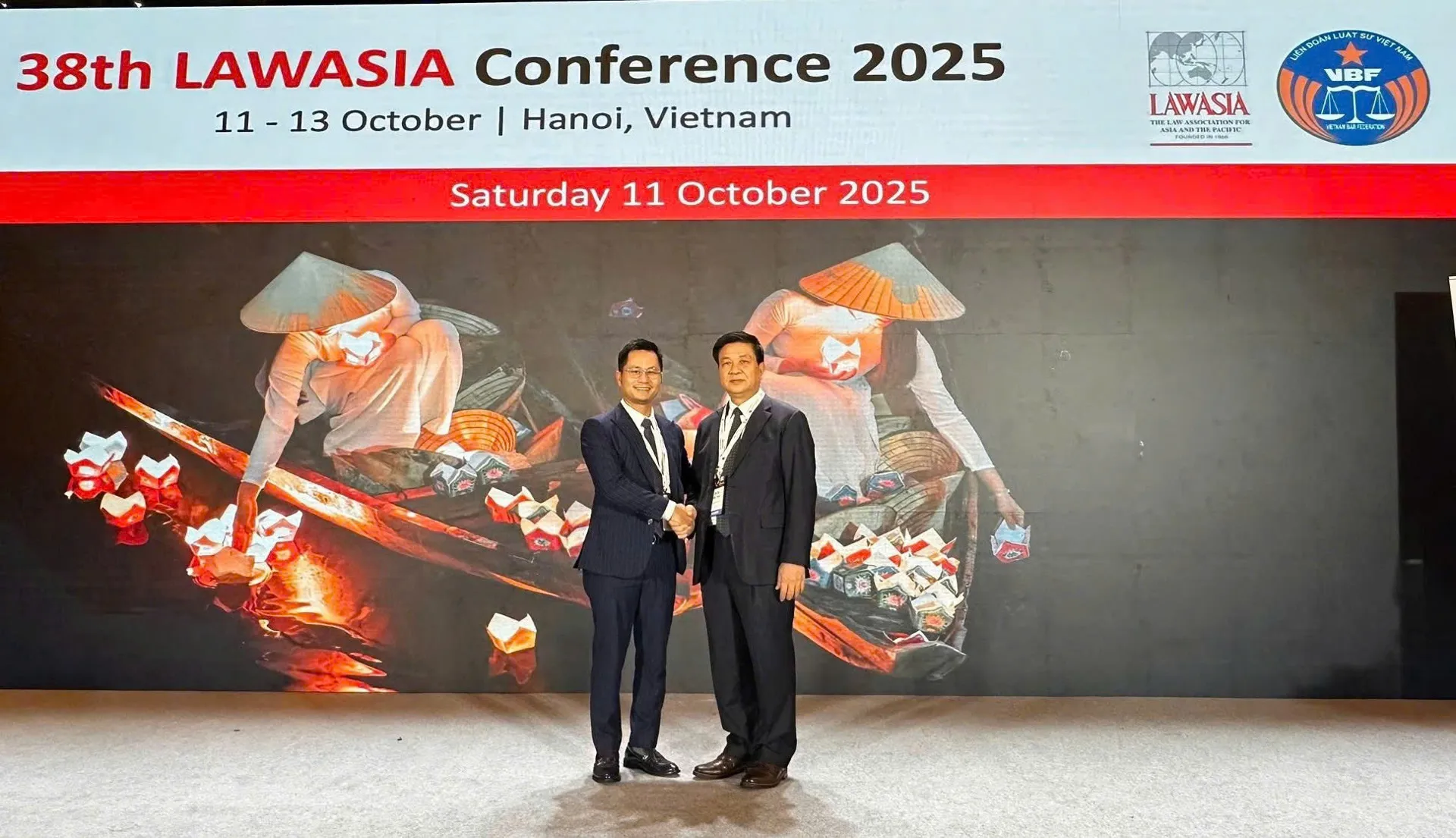
Lawyer Nguyen Van Hoa, Director of ASL Law Firm, and Dr. Do Ngoc Thinh, President of the Vietnam Bar Federation (right) at the conference.
Talking about amendments to Vietnam's Law on Cultural Heritage, Do Ngoc Thinh, President of the Vietnam Bar Federation, highlighted that the amendments aimed at transforming heritage into economic assets to support sustainable development.
“We have clearly undergone a significant shift in mindset, primarily from conserving relics without balancing to promoting their values in socio-economic development,” said Thinh.
He told The Hanoi Times that Vietnam's presence and contribution at regional legal forums such as LAWASIA 2025 is a testament to its strong commitment to protecting and promoting national cultural values, affirming the role of culture in the national development strategy in the context of globalization.
Invaluable insights
With a strong tradition of promoting cross-border engagement, the conference provides invaluable insights into pressing legal and social issues shaping the region today.
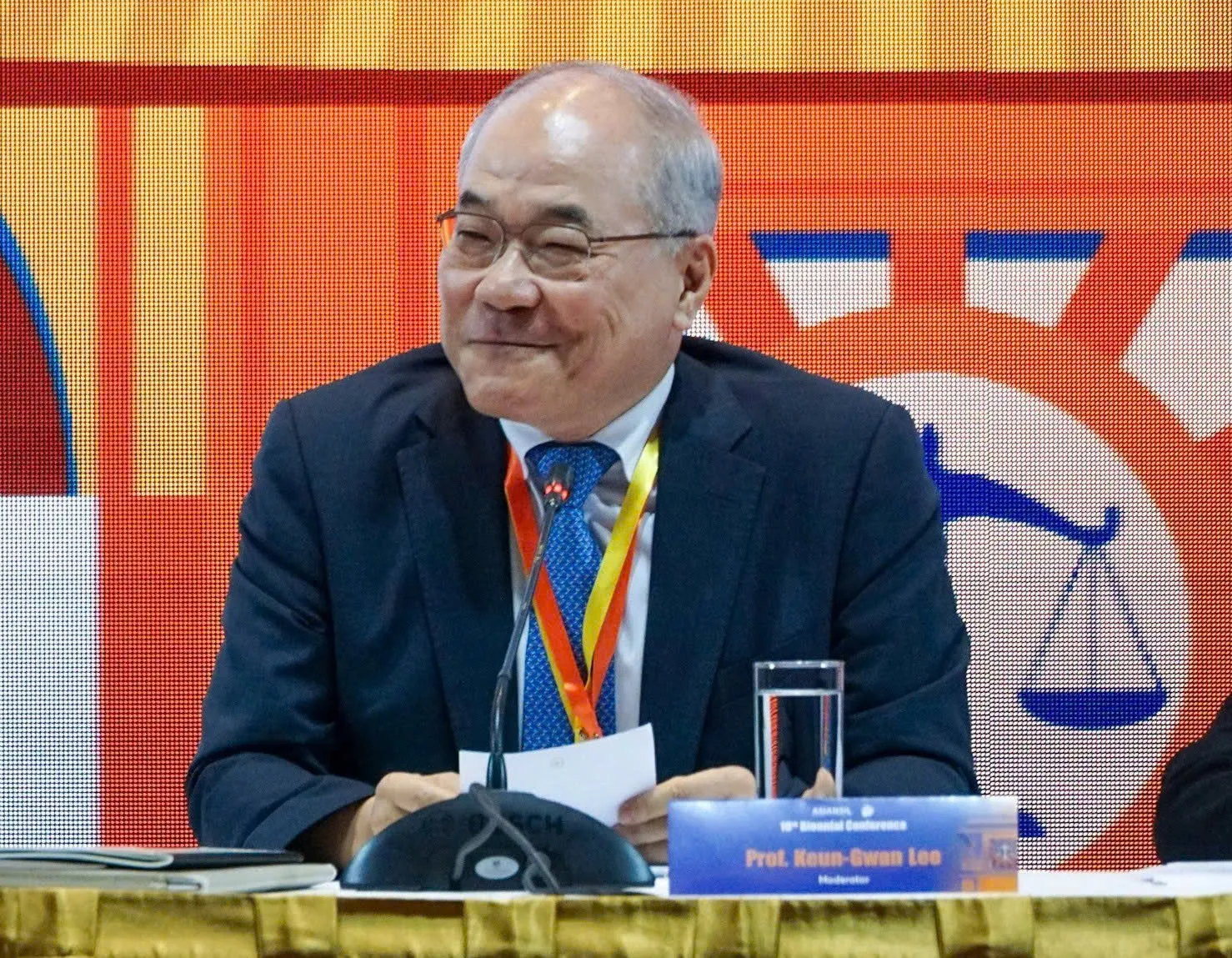
Professor Keun-Gwan Lee, Member of the United Nations International Law Commission.
Professor Keun-Gwan Lee, Member of the United Nations International Law Commission, said that set against the backdrop of Vietnam’s capital, a city that beautifully links ancient heritage with contemporary growth, the 38th LAWASIA Conference provided both intellectual enrichment and memorable cultural experiences.
"Hosting LAWASIA 2025 demonstrates the Vietnam Bar Federation’s active membership and its contribution to enhancing regional legal cooperation, promoting Vietnam as a dynamic, friendly and law-abiding nation," Keun-Gwan Lee told The Hanoi Times.
He stressed that the successful event in Vietnam shows its organizational capacity and academic contributions, as well as its proactive spirit of international integration.
Part of the three-day event, the discussion sessions on October 13 focused on clarifying core issues of contemporary international law from Asian perspectives.
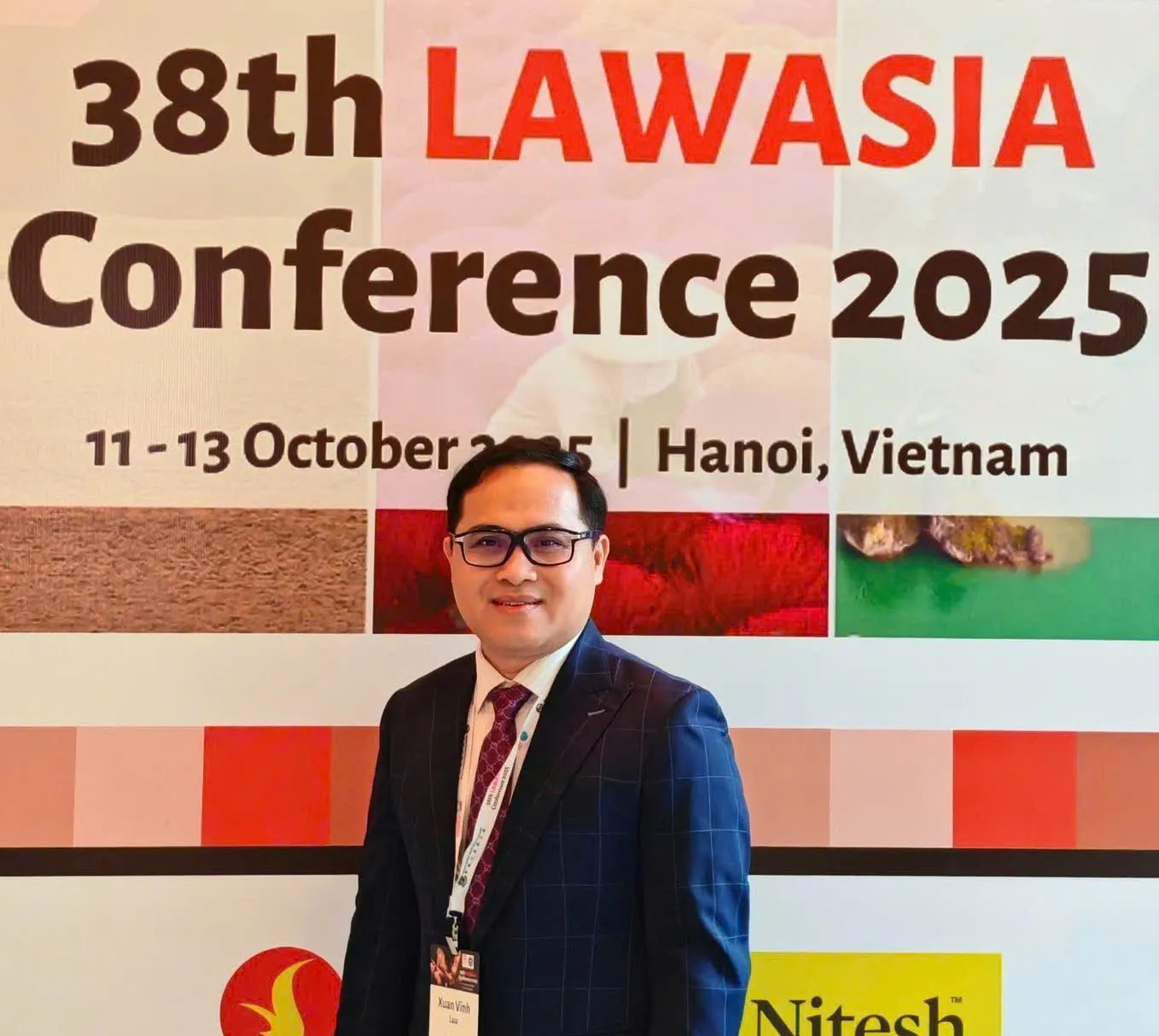
Luu Xuan Vinh, Executive Attorney of Asia Legal Business Law Firm in Hanoi.
Scholars agreed that Asia is asserting its position as an active actor in shaping global law, while emphasizing the need to build an independent "Asian legal thinking."
"This reflects the historical, political and cultural characteristics of the region, contributing towards a fair and sustainable international legal order," said Luu Xuan Vinh, Executive Attorney of Asia Legal Business Law Firm in Hanoi.
Vinh said that LAWASIA 2025 provides an opportunity to showcase Vietnam’s image and legal system to international peers, while highlighting the country’s judicial reforms, open-door policies and socio-economic development achievements.
At the conference, Nguyen Thi Lan Anh, Vice President of the Asian Society of International Law, said that in the context of a volatile world, Asia is actively contributing ideas and shaping standards to affirm that international law remains the foundation of order, cooperation and fairness.
"Asia is increasingly asserting itself in the evolution and enforcement of international law. Enhancing the role of international law helps uphold its core principles and actively shape the region’s progressive development," said Lan Anh.
She emphasized that it was an honor for Vietnam to co-host the conference, the organization’s most important annual event that connects lawyers and bar associations across the region in pursuit of a shared goal of developing a professional, reputable and community-oriented legal profession.
As the 38th LAWASIA Conference concluded, Vietnam reaffirmed its vision of law as a bridge between heritage and progress. From safeguarding cultural identity to modernizing its legal system, the country continues to position culture at the heart of development and diplomacy. By aligning legal innovation with cultural preservation, Vietnam not only protects its roots but also projects a confident image of a nation that grows through understanding, cooperation and respect for human dignity.