More than trade: A partnership that works
Local experts said that Vietnam and the US have the potential to force a trade partnership rooted in complementarity, equity, and shared prosperity.
THE HANOI TIMES — As President Donald Trump’s tariff policies threaten Vietnam, the US seventh-largest trading partner, Vietnamese economists are examining the dynamics of bilateral trade relations. The Hanoi Times is honored to present insights from Dr. Nguyen Si Dzung, former Deputy Head of the National Assembly’s Office, who analyzes the economies based on their inherent characteristics.
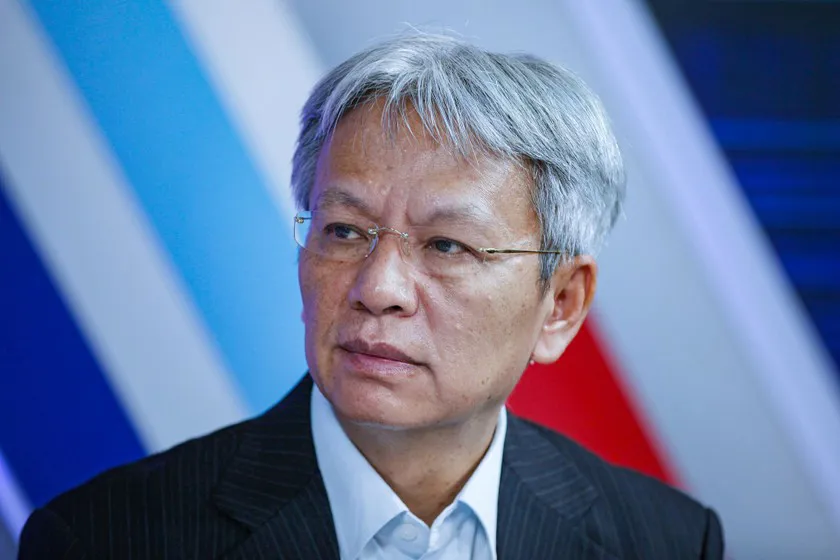
Dr. Nguyen Si Dzung, former Deputy Head of the National Assembly’s Office. Source: Baophapluat
In a recent high-level exchange, Vietnamese Prime Minister Pham Minh Chinh stated with sincerity and clarity: “The Vietnamese and American economies are complementary, not competitive.” This is not mere diplomatic language, it is an accurate, deeply considered assessment of the nature of the economic relationship between our two countries.
Vietnam is a developing economy with abundant, reasonably priced labor and a strong role in global supply chains. The United States, by contrast, is a global leader in science, technology, branding, and intellectual property. These are two economies with fundamentally different positions in the global value chain. That difference does not put us at odds, it makes us natural partners.
Take a closer look at what appears to be Vietnam’s trade surplus with the US. Vietnam indeed exports significant volumes of goods to the American market. But the real value-added retained by Vietnam is surprisingly modest. A pair of sneakers sold for US$150 in the US may generate only $10 in manufacturing revenue in Vietnam. The remaining value, including design, branding, logistics, and retail margins, largely goes to American and multinational companies. Meanwhile, a software product developed in the US, such as Microsoft Office or an iOS app, can be sold millions of times at no marginal cost, multiplying value far beyond what physical goods can provide.
So while Vietnam may be labeled as a “surplus” country in terms of goods, it is clear that the US retains a disproportionately larger share of the profits from this trade, thanks to its technological and intellectual dominance. In reality, we are not competitors in the same segments of the value chain, but rather collaborators contributing different, complementary components.
Vietnam does not seek to maximize low-cost exports. On the contrary, we aim to gradually move up the value chain to innovate, create, and eventually build brands of our own. This is a long and challenging journey for a developing country like Vietnam, one that requires time, resources, and capacity-building. We know it cannot be achieved overnight.
However, with meaningful support and cooperation from the United States, especially in areas such as technology transfer, education, and investment in innovation, this aspiration becomes more attainable. Our goal is not to compete with the United States, but to gain fairer and more sustainable benefits from global economic integration. This is not a threat, it is a shared ambition of any responsible, forward-looking economy.
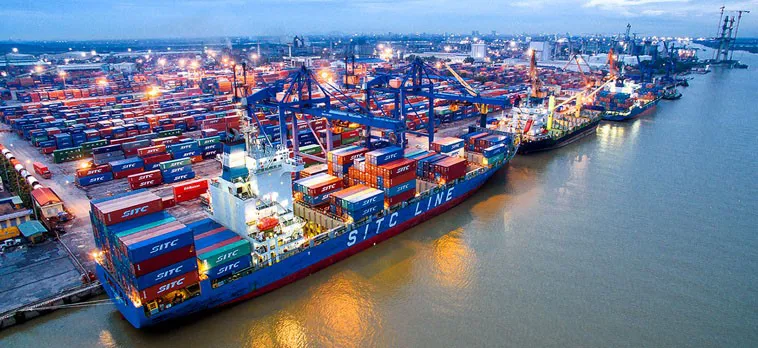
Part of Dinh Vu Port in Vietnam's northern city of Haiphong. Photo: Dinh Vu Port
In this context, the proposal to impose tariffs of up to 46% on some Vietnamese exports appears troubling not only because of its economic consequences, but also because it risks undermining a relationship based on mutual trust and strategic partnership. Moreover, this approach focuses solely on visible goods and overlooks the substantial and growing American exports of services and digital products to Vietnam.
Let us ask: How many Vietnamese consumers own a laptop running Microsoft Windows or use Adobe products legally purchased and licensed from US companies? How many iPhone users in Vietnam subscribe to Apple services or use American cloud platforms like AWS and Google Cloud? How many Vietnamese families are sending their children to study at American universities, paying billions of dollars in tuition and living expenses each year?
These financial flows do not show up in the balance of goods, but they represent real, significant, and sustained economic gains for the United States. A truly accurate view of trade must account for both physical goods and digital services, manufacturing as well as intellectual property.
Some may argue that higher tariffs will push American companies to “re-shore” manufacturing back to the US and create more domestic jobs. But this notion is far from guaranteed. In a high-labor-cost environment, automation, robotics, and AI are far more likely to replace human jobs than foreign workers. American businesses have not yet shifted to full automation simply because it remains more efficient and economical to work with countries like Vietnam, where labor is still affordable.
And even if the factories did return, would American workers truly line up to take these jobs? The current shortage of low-skilled labor, especially immigrant labor, suggests otherwise. This is not a question of patriotism, it is about economic reality and job preference.
Some may also raise concerns about a few bad actors, companies that commit acts of mislabeling or violate intellectual property rules. But we must be careful not to confuse individual misbehavior with national policy. These actions are neither representative of Vietnam’s government nor its business community.
Just as gun violence in the United States does not reflect American government policy, intellectual property theft or mislabeling by a few firms does not reflect Vietnam’s intentions. In fact, such behavior is condemned by both Vietnamese law and Vietnamese society, and prosecuted accordingly.
All of these points must be taken seriously as we engage in trade negotiations. Vietnam does not seek special treatment. We seek fairness. We do not demand concessions, we ask for understanding.
Our economies are different but not in opposition. They are aligned in ways that serve both countries’ long-term interests. Together, we can build a trade relationship based not on fear or imbalance, but on complementarity, equity, and shared prosperity.
We need each other, not just as trading partners, but as strategic allies in an uncertain world. Let’s recognize that truth, and move forward together.