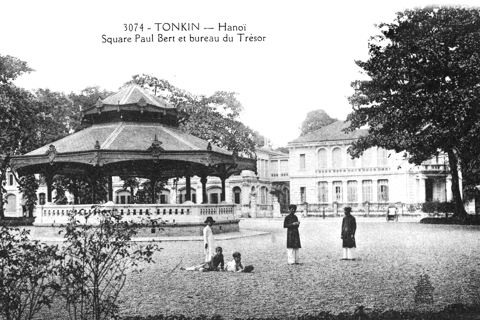
National Archives commemorates historic capital liberation day
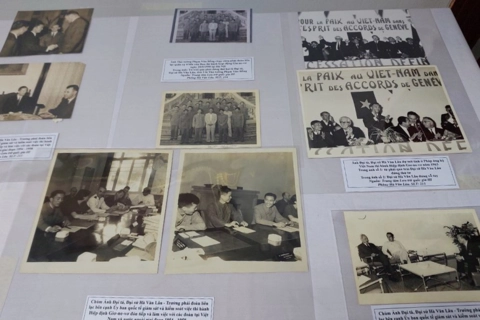
The archives feature original artifacts, providing the public with access to important, realistic, and reliable historical sources related to the takeover of the Capital on October 10, 1954.
Colonel Duong Niet, born in 1934, trembled as he turned the pages of archival documents related to the historic takeover of Hanoi on October 10, 1954. Having fought valiantly in both the resistance wars against France and the US, the most poignant moment of his military career remains the day he and his comrades from the Binh Ca Battalion reclaimed the capital.
This is why he felt an overwhelming wave of emotion when the National Archives Center III (State Records and Archives Department) unveiled the national archival documents on the takeover. The memories flooded back, intertwining past and present, as he revisited that monumental day in history.
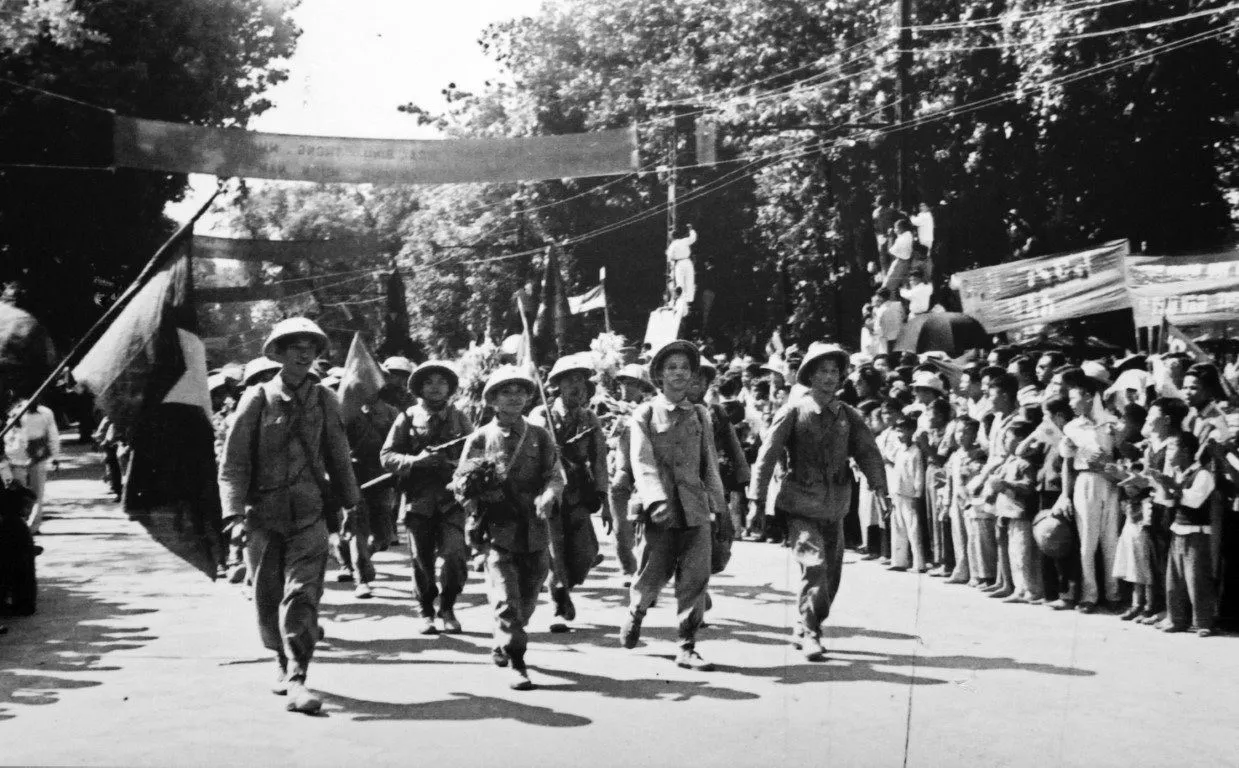
| Vietnamese soldiers took over the capital on October 10, 1954. File Photo |
On September 24, toward the 70th anniversary of the Liberation of the Capital (October 10, 1954-2024), the National Archives Center III organized an introduction of a series of images and original archival documents, recreating the heroic historical moments of the nation and the capital since the signing of the Geneva Accords in 1954.
The documents were selected from the National Assembly, the Prime Minister's Office, the Ministry of Education, the Ministry of Home Affairs, the Ministry of Foreign Affairs, the Ministry of Finance, the Ministry of Health, and the personal archives of photographer Nguyen Ba Khoan, photo collector Dang Tich, Professor Hoang Minh Giam, musician Van Cao, musician Nguyen Duc Toan, musician Huy Du... including many newly declassified and annotated documents.
In preparation for the takeover of Hanoi, the Hanoi Administrative Resistance Committee began laying the groundwork on February 1, 1951. They developed a comprehensive project to reclaim the Capital and submitted it to the Ministry of the Interior for review. This project emphasized Hanoi's critical importance to the nation in every aspect—politically, militarily, economically, culturally, and socially. The document warned that as the movement shifted towards a "General Counter-Offensive" and "General Mobilization," Hanoi would become the enemy’s most fiercely defended stronghold.
With this understanding, the Committee meticulously assessed the situation, studying strategies and tactics to transform Hanoi into a battlefield, united under the powerful slogan: "Liberate the Capital."
Following the signing of the Geneva Accords in August-September 1954, the Government convened numerous meetings to discuss the implementation of the agreement, including the vital task of reclaiming the Capital. On September 12, 1954, the Government Council officially resolved to organize the takeover. They established eight key policies and ten disciplinary measures for soldiers, cadres, and employees entering the city, alongside the formation of the Hanoi Administrative Committee in support of the Military and Political Committee. This marked a decisive step toward reclaiming Hanoi and restoring its place in the heart of the nation.
On the morning of October 10, 1954, the atmosphere was charged with anticipation as army units, led by the City Military Committee and the 308th Division under Major General Vuong Thua Vu, launched a historic operation to liberate Hanoi. The streets buzzed with energy as the troops divided into "large wings", ready to reclaim the capital.
The National Archives Center III preserves a powerful collection of artifacts from that day, including reports detailing the arrival of our troops and government, photos of French soldiers retreating down the capital’s streets, and images of joyful women welcoming the liberating forces. The sacred Flag Salute Ceremony that afternoon remains etched in memory, a poignant symbol of newfound freedom.
A report dated October 24, 1954, reveals that a total of 4,803 cadres and staff participated in the takeover, arriving in three waves from October 2 to October 24. The initial days involved fierce battles with the enemy to secure the bases, but by October 9, the face of Hanoi had transformed, filled with jubilant citizens greeting the resistance troops who had liberated their city.
Colonel Duong Niet emphasized that these archival documents provided invaluable insights into the courage and determination of our army and the people of Hanoi during the liberation. “Thanks to the Party’s guidance and policies, the takeover unfolded peacefully and with great excitement, creating an unforgettable memory for all who witnessed and participated,” he reflected, capturing the profound significance of that moment in history.
| Deputy Director of the State Records and Archives Department Nguyen Thi Nga (standing) speaks at the ceremony introducing archives. Photo: Dinh Trung/The Hanoi Times |

According to Nguyen Thi Nga, Deputy Director of the State Records and Archives Department, the work of collecting, preserving, and introducing documents holds immense significance. It highlights the responsibility and role of the archives agency in publishing and promoting the value of archival materials, allowing the public to access important, realistic, and reliable historical sources related to a pivotal event in the capital's history.
“The archival documents reflect the foresight and early preparation of the Party and Government for the day of the capital's takeover. The Central Committee made timely and precise decisions, providing detailed instructions for each ministry and sector, ensuring that the takeover process proceeded smoothly and created political and social stability in people's lives,” Nga stated.
During the event, several historical witnesses, including Colonel Duong Niet and journalist-photographer Trinh Hai (a founding member of the Vietnam Association of Photographic Artists), shared various documents and images.
Nga affirmed that the National Archives Center III will record the information and documents to enhance the center's collections, aiding in both archiving and exhibition efforts.
These documents and images will be widely introduced to the public at the exhibition titled Hanoi - Memories of the Takeover Days, scheduled to open on October 2 at the Exhibition House, 61 Trang Tien Street, Hanoi.