New guideline on condotel: Positive signal for Vietnam’s hospitality market
Failures of several developers and a lack of legal framework on ownership have considerably slowed investment in the condotel segment.
The Ministry of Natural Resources and Environment has recently issued a new guideline about the land use regime and the certification of non-residential construction works ownership, which is expected to be the positive signal for Vietnam’s hospitality market, Savills Vietnam has said.
Regarding the regime of commercial and service land use which is prescribed in Article 153 of the Land Law: The land use term is specified in Clause 3, Article 126 of the Land Law, that the land lease term for commercial and service purposes (second-home villa, condotel, officetel, etc.) is considered and decided on each investment projects or applications for land rent, but not more than 50 years.
| Su Ngoc Khuong, senior director of investment, Savills Vietnam. Photo countersy: Savills Vietnam |

Commenting on this new guideline, Su Ngoc Khuong, senior director of investment, Savills Vietnam said: “This new guideline brings some positive signals to Vietnam’s real estate market at the start of 2020, especially for hospitality developers and investors. If the guideline is officially implemented, it will be a great support and leverage for the hospitality sector, in the context that the market is deeply affected by Corona disease in the global scale.
Generally speaking, hospitality market investors have two main sources of income: selling second-home villas and condotel and entertainment activities and leisure services in their projects. Currently, as the revenue of hospitality services has dramatically dropped, investors can take advantage of the fact that the buyer is entitled to own the property certificate (popularly known as the red or pink book), to stimulate the needs of buyers, thereby preserving the initial investment.
For individual investors, this is also considered a positive move, as the real estate market in big cities like Hanoi or Ho Chi Minh City is facing numerous issues related to legal problems or limited supply. They will also be more assured in proactively increasing profits by owning a new type of property such as a second home, condotel or officetel.
From supporting the hospitality real estate, the business with strong industry links with over 50 related industries: banking, construction, machine materials, tourism, etc., a part of the Vietnam economy foundation in general will also benefit from that.”
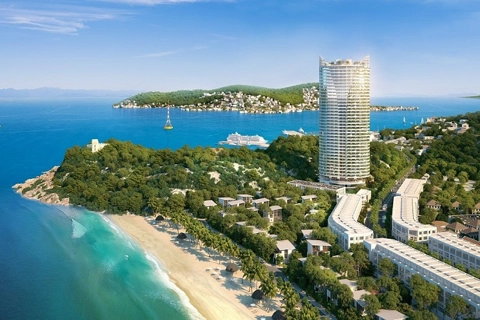
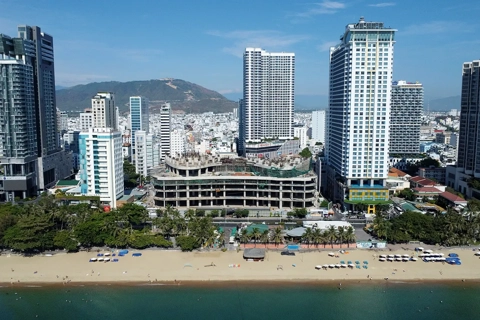
Condotel developments boomed along Vietnamese coasts nearly a decade ago, providing a new real estate segment to meet investors’ taste and rising demand for lodging facilities in Vietnam.
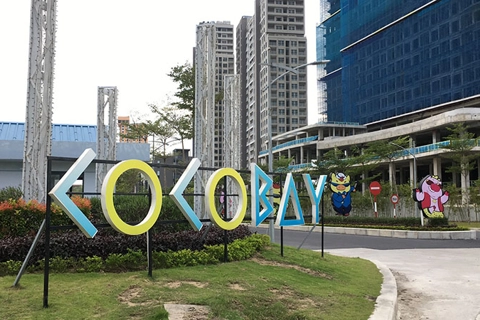
However, failures of several developers, including the latest case of Cocobay in Danang, and a lack of legal framework on ownership have considerably slowed investment in this segment.
| Dang Hung Vo, a former minister of Natural Resources and Environment |
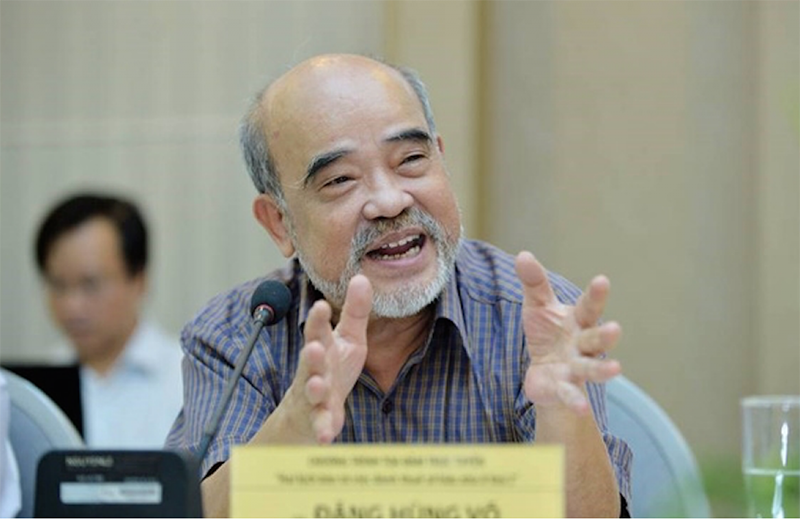
Dang Hung Vo, a former minister of Natural Resources and Environment, told Kinh te and Do thi newspaper that condotel developments mushroomed prior to 2018 given its novel nature. In that period, local governments granted land use rights in the long term, like to residential land, to attract investment. However, the granting was tightened over concerns over the legal aspect.
Some experts said that granting the land use rights to condotel does not play a vital role as the evolution of condotel depends on transparency of developers. Therefore, they call for regulations to ensure legitimate tights of buyers and enforce duties of developers.
“I believe this business should be done in a really transparent way and interests should be divided in such a way that ensures developers’ commitments to interest payments. When policy changes for better transparency, the market will development sustainably,” said Dang Hung Vo.