New mindset in planning expected to fuel Hanoi development
The upcoming planning is expected to address major issues in the process of Hanoi development.
That the Government expected the planning for Hanoi in the 2021-2030 period would be consistent with the construction plan of the city until 2030 and of other provinces/cities in the capital areas demonstrates a new development mindset and is set to fuel the city’s growth in years to come.
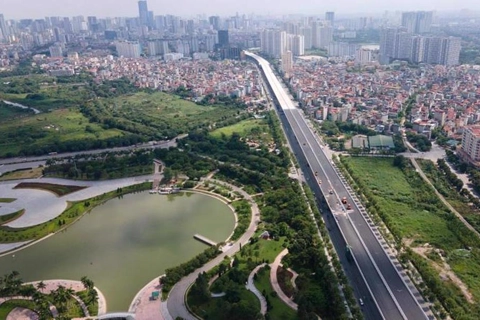
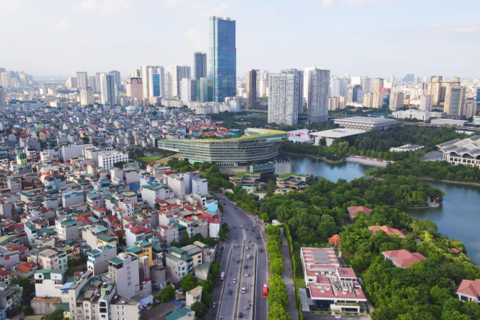
| Hanoi from above. Photo: Trung Nguyen |
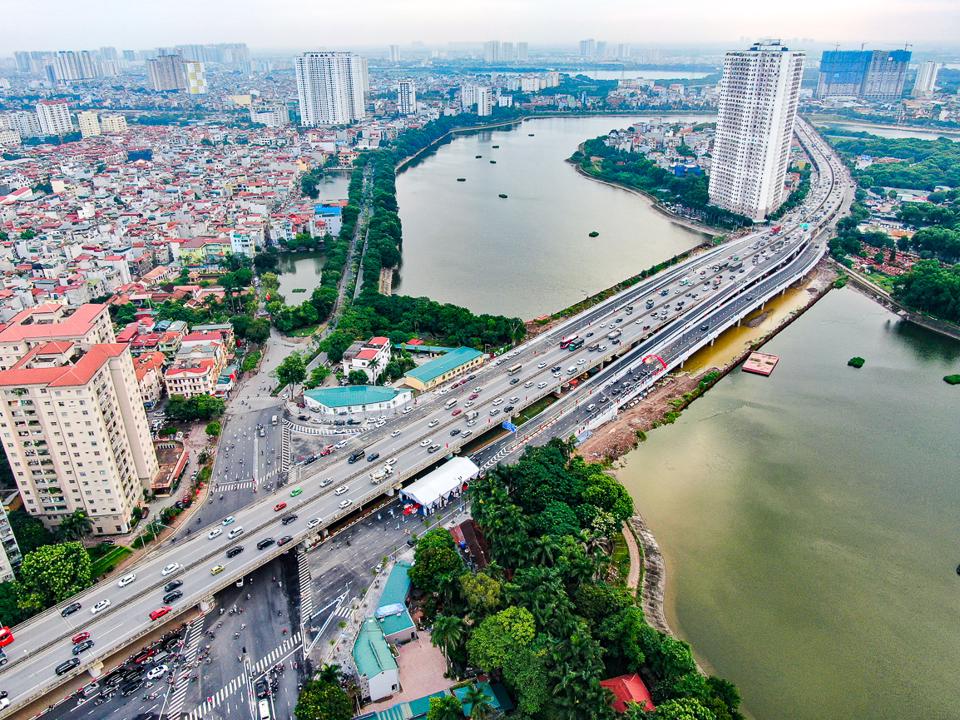
On March 7, Deputy Prime Minister Le Van Thanh signed off a decision to set the objective of drafting the capital’s planning in the 2021-2030 period, with a vision to 2050.
The move marks a new milestone in the Government’s determination for changes in planning, which has long been seen as a complicated task involving various laws, economic sectors, and fields.
Urban planning experts suggested the Government’s new vision on planning is aimed at ensuring Hanoi’s sustainable and rapid development.
In previous times, the planning process in Hanoi was carried out separately by sector or field, such as socio-economy, culture, sports, tourism, healthcare, education, construction, and transportation.
Hanoi is estimated to have around 20 socio-economic plannings and 76 others for different sectors. The lack of consistency and overlapping systems of planning, therefore, have resulted in limited efficiency in state governance and hindered the overall development of Hanoi.
Vice President of the Vietnam Urban Planning and Development Association (VUPDA) Dao Ngoc Nghiem told the Hanoi Times he expected the upcoming planning would clarify the socio-economic objectives, the view for development in association with infrastructure development, and the reorganizations of living spaces.
“These three targets are mentioned in harmonization in one planning rather in three different versions,” he said.
“This demonstrates the vision and status of Hanoi as the leading force for industrialization, modernization, and also the hub of culture, innovation, and science-technological development,” Nghiem continued.
Nghiem also highlighted a new change in this current planning process, which is to revise the overall construction planning and draft a new urban development program at the same time.
“The tasks are a huge challenge, but also an opportunity for the city to seek exclusive policies and mechanism for future development,” Nghiem suggested.
For this planning, the Government expected Hanoi to take most of the existing advantages from strategic infrastructures, such as transportation, tourism, and services.
General Secretary of VUPDA Do Hau said this approach is the right direction, as the focus is for Hanoi to strengthen its connectivity with neighboring cities/provinces.
In recent times, Hanoi is focusing on the construction of Ring road No.2, No.2.5, No.3, upcoming No.4, and bridges crossing Red River.
“One key objective in the planning is to make a plan to carry out these projects,” he said, noting the first task is to complete unfinished ring road projects.
Hau also mentioned the vision of having a second airport for Hanoi beyond 2030 to relieve pressure on the already overloaded Noi Bai airport, and it should also be incorporated into the planning, he said.
“Previous plannings only focused on technical infrastructure and the overall transport network, but this time, the plan is to ensure every district would be connected with the transport network of the city and neighboring cities and provinces,” Hau said.
The planning for Hanoi in the 2021-2030 period, with a vision to 2050 would include the analysis and forecast based on the unique characteristics of Hanoi, the assessment of the current progress of socio-economic development, the use of land resources, a system of urban and rural structure; and the factors required for Hanoi to strengthen linkage with provinces/cities in the capital area.