New schools in Vietnam's ethnic minority areas lift education quality
Building schools aims at improving learning and teaching conditions for children in remote and mountainous areas and affirms that investing in infrastructure for educational institutions in ethnic minority and mountainous areas is an investment in equity in access to education.
THE HANOI TIMES — On a chilly morning in the northern mountain province of Thai Nguyen, Lo Thi Thanh Truc stood among her classmates watching excavators break ground for a new school she had dreamt of for a long time.
For years, many students at Viet Bac High School for Ethnic Minority Students have traveled long distances to class, navigating slippery mountain roads that turn treacherous during the rainy season.
“Sometimes it feels unsafe, especially when the weather is bad. With the new school, we won’t have to travel so far anymore," Truc told Thai Nguyen Newspaper.
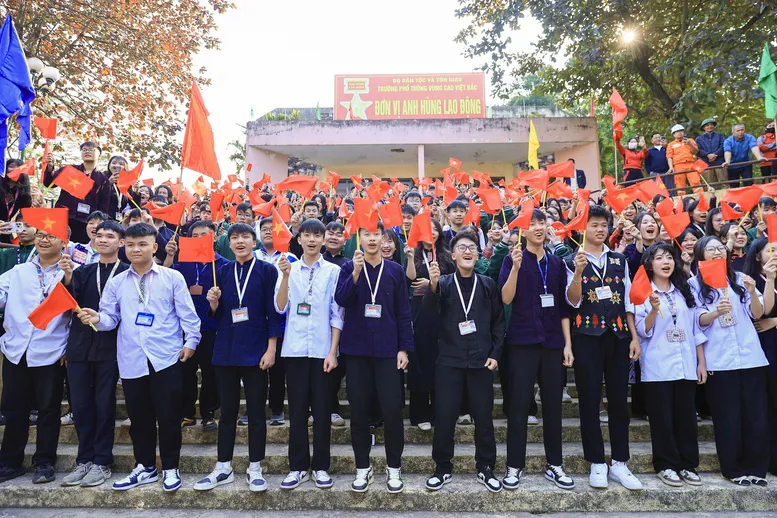
Students Viet Bac High School for Ethnic Minority Students in the northern province of Thai Nguyen joyfully attend the groundbreaking ceremony. Photos: VGP
That simple relief captures the human meaning behind Vietnam’s latest push to invest in education in ethnic minority and mountainous areas, where access to safe and modern learning facilities remains limited.
Last weekend, construction officially began on Viet Bac High School for Ethnic Minority Students in Thai Nguyen, marking one of three new education projects launched nationwide. The program is part of the Government’s broader strategy to improve education quality, narrow development gaps and ensure no child is left behind.
For teachers who have spent years working under challenging conditions, the new campus is a long-awaited opportunity to offer students a safer, more stable and better-equipped learning environment.
“The groundbreaking brought great joy to teachers and students, as well as to parents whose children attend the school,” said Cao Quy Hao, a literature teacher at Viet Bac High School for Ethnic Minority Students.
Viet Bac High School for Ethnic Minority Students is a renowned institution, serving students from numerous ethnic groups and holding the distinction of hosting President Ho Chi Minh three times, in 1960, 1962 and 1964. This highlights its historical significance and trust within ethnic minority communities, as well as underscores its importance and legacy in Vietnamese education for ethnic groups.
Since its establishment, the school has trained nearly 60,000 students from 32 ethnic minority groups in 21 mountainous provinces from the central province of Quang Binh northward. Over the time, the school's training targets have expanded, encompassing two systems of ethnic minority boarding high school and ethnic minority preparatory university program for nearly 30 ethnic minority groups.
Speaking at the ceremony, Prime Minister Pham Minh Chinh said investing in education is investing in development, stressing that people are the most valuable resource and the decisive factor in building strong human capital for national growth and security.
The school projects were launched ahead of the 14th National Party Congress, which will take place on January 19-25, underscoring Vietnam's strategic vision in socio-economic development and national defense and security in ethnic minority and mountainous areas under the principle of leaving no one behind.

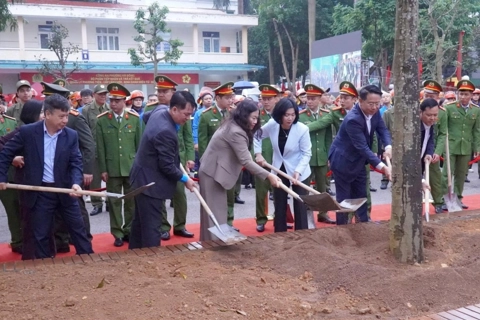
Prime Minister Pham Minh Chinh and other delegates presses the button to start construction on Viet Bac High School for Ethnic Minority Students in the mountain northern province of Thai Nguyen.
Chinh said investing in education is investing in development, as people are the most valuable capital and driving force, laying the foundation for personal development and serving as a decisive factor in building strong human resources for national development and safeguarding.
Chinh called on the Ministry of Education and Training, relevant ministries and local authorities to remove bottlenecks and create favorable conditions for construction, ensuring the projects are completed by September 2026.
He also urged the military and public security forces, local political and mass organizations to join hands in building, repairing and upgrading school facilities so that students can enjoy the best possible learning conditions.
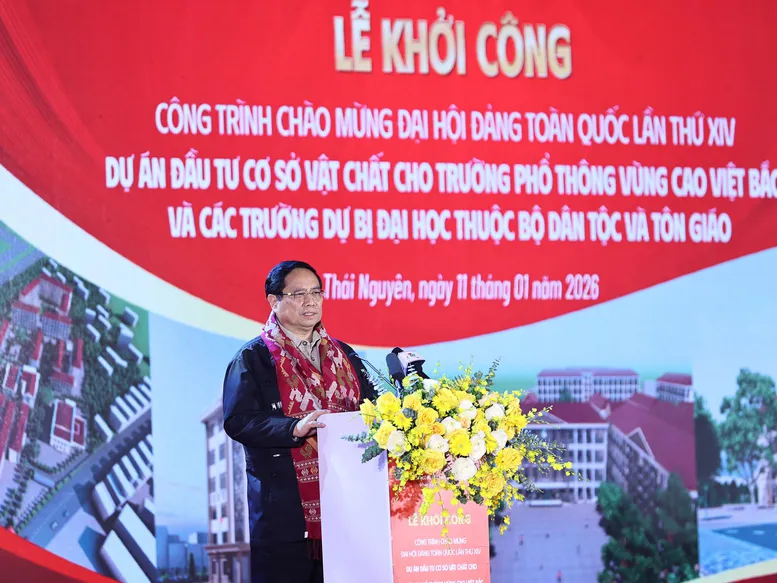
Prime Minister Pham Minh Chinh makes speech at the groundbreaking ceremony.
With coordinated efforts across the political system, Chinh expressed his confidence that children in ethnic minority and mountainous areas will be able to study in safe, humane and compassionate environments, laying solid foundations to contribute to national development in a new era.
On this occasion, the government leader presented 60 gifts as encouragement to ethnic minority students and outstanding pupils of Viet Bac High School for Ethnic Minority Students, and three specialized classrooms serving foreign languages, arts and information technology training to the school.
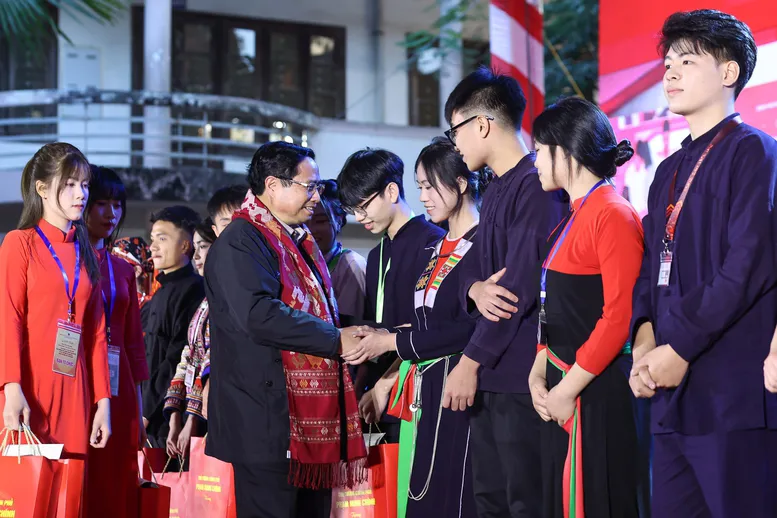
Prime Minister Pham Minh Chinh presents gifts to ethnic minority students and outstanding pupils of Viet Bac High School for Ethnic Minority Students.
Besides Viet Bac High School for Ethnic Minority Students, two university preparatory schools in Ho Chi Minh City and the central province of Thanh Hoa have also started construction.
Prime Minister Chinh said the simultaneous works reflect the strong determination and close coordination in caring for students in mountainous areas, affirming that the Government always have made efforts in turning the education-prioritized policy into concrete action.