Hanoi advances citywide waste sorting in drive for urban cleanliness
The move will make bold step for waste sorting in Vietnam’s capital city, aiming to boost recycling, reduce pollution and instill environmental responsibility.
THE HANOI TIMES — Hanoi is moving forward with citywide waste sorting as part of a broader push to improve urban cleanliness and environmental sustainability, though turning policy into practice remains challenging, according to Pham Van Duc, General Director of the Hanoi Urban Environment Limited Company (URENCO).
He said the main obstacles include incomplete regulations, limited infrastructure and treatment facilities, as well as low public awareness of how to properly classify household waste.
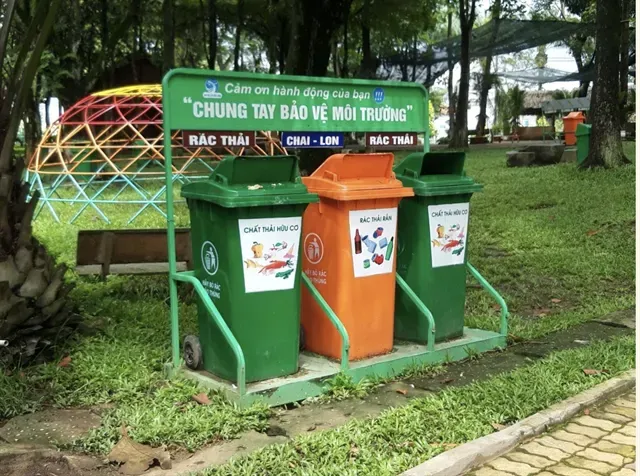
Garbage bins of different colors for different types of waste placed at Hoan Kiem Lake, Hanoi. Photo: Hanoimoi
“One of the main reasons previous waste sorting initiatives failed is that many residents did not recognize their role in protecting the city’s environment and had yet to develop the habit of sorting waste at source,” Duc told The Hanoi Times.
Therefore, households in Hanoi must sort domestic waste into three categories before handing it over to collection units from January 8, which has been issued under Decision 87 of the municipal People's Committee, demonstrating the capital’s most sweeping overhaul of rubbish management over the past ten years.

Nguyen Trong Nhat, Head of the Environmental Management Division under the Hanoi Department of Agriculture and Environment. Photo: Anh Kiet/The Hanoi Times
Under the rule, household waste must be separated at source into recyclable materials, food waste and hazardous waste, for a cleaner environment and better public health.
The first category covers recyclable materials, including paper, plastic, wood, rubber and electrical equipment. Food waste and kitchen scraps form the second category. The third includes bulky items and hazardous household waste such as pesticide containers, paint, used batteries and accumulators.
According to Nguyen Trong Nhat, Head of the Environmental Management Division under the Hanoi Department of Agriculture and Environment, the city has standardized waste containers by color.
Food waste must be placed in green containers designed to prevent leaks and bad smells, while other household waste must go in grey containers. Hazardous waste must be stored separately in corrosion-resistant and waterproof packaging that prevents leakage into the environment.
Recyclables may be handed directly to recycling operators, stored at home for periodic delivery by municipal waste services, or brought to collection points on schedules set by the local authorities.
“Waste collectors will be authorized to reject unsorted rubbish and report violations to the local authorities for penalties. The decision applies to individuals, households and organizations that generate less than 300 kilograms of domestic waste per day,” Nhat talked to The Hanoi Times.
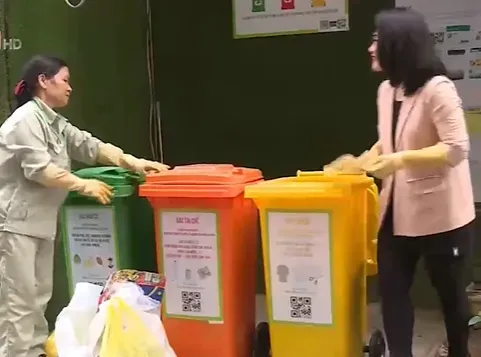
Nguyen Thi Quynh, a teacher living in Hanoi (right), sort domestic waste before handing it over to the collector. Photo: Anh Kiet/The Hanoi Times
Individuals who fail to sort solid waste at source face fines from VND500,000 (US$19) to VND1 million ($38). Organizations violating the rule will be fined from VND1 million ($38) to VND2 million ($76). Waste collection units may refuse to collect unsorted garbage.
The application of specific policy on environmental fees and penalties is an effective solution to enforce waste classification regulations at source, said Nguyen Thi Quynh, a 42-year-old Hanoi teacher, who is deeply committed to environmental protection.
"I always strive to do my best for the environment. In daily activities, I limit the use of non-degradable waste as much as possible, I collect bottles and cans and bring them to collection points every Saturday," Quynh shared with The Hanoi Times.
Hanoi’s waste sorting program faces hurdles after five years
Vietnam's Environmental Protection Law 2020, which regulates the classification of household solid waste, marks a turning point in domestic waste management by demonstrating strategic vision and reinforcing shared environmental responsibility.
Waste sorting reduces the volume of waste sent to landfills and limits leachate generation, thereby lowering environmental risks, including soil contamination and pollution of surface and groundwater.
While pilot projects are underway nationwide, effective enforcement requires clear, practical roadmaps at the local level so that communities, households and individuals can translate technical guidance into workable systems.
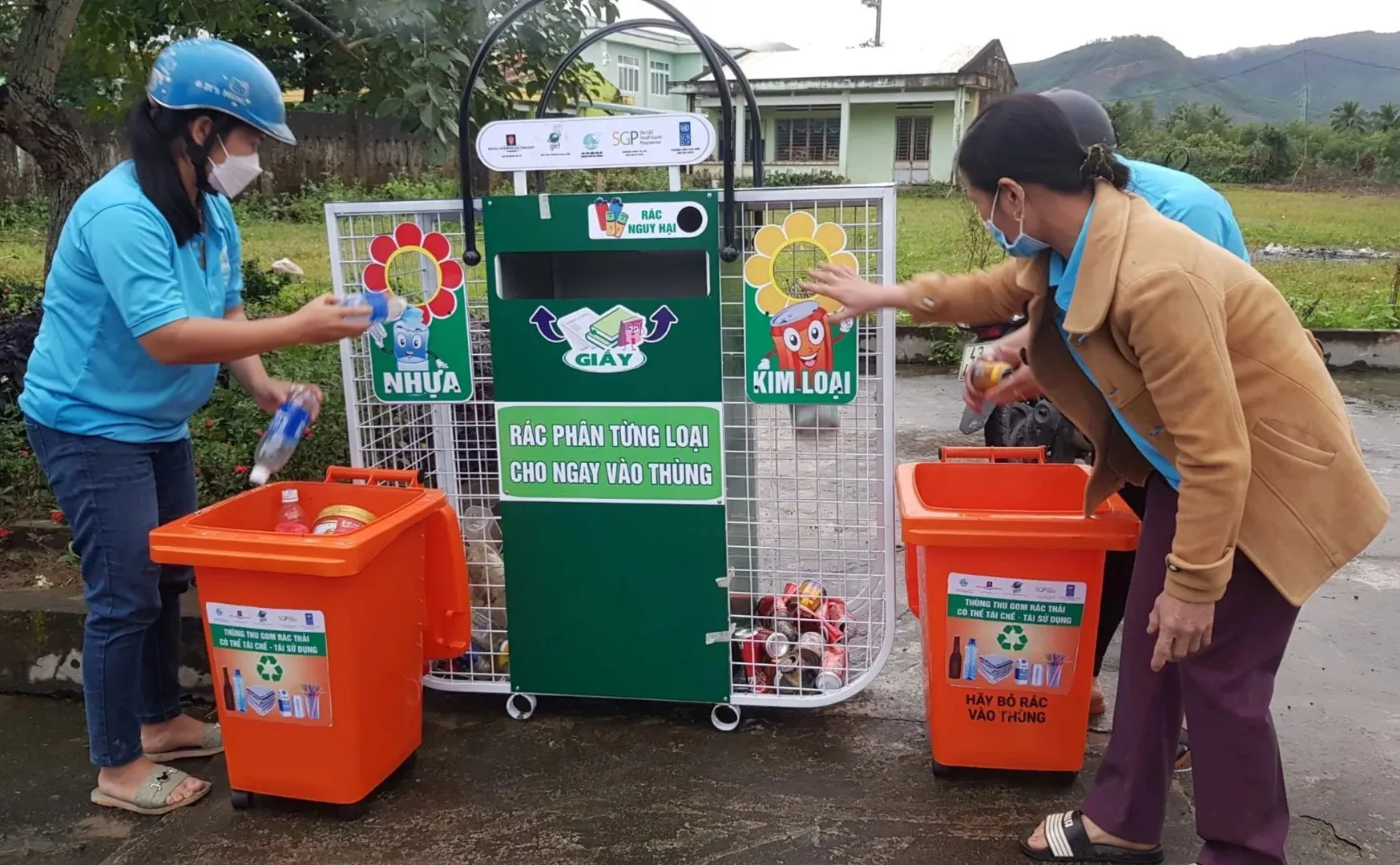
A point sorting solid waste in Hanoi’s outskirt commune of Dong Anh. Photo: Hanoimoi
Hanoi has been piloting a waste sorting program for over five years to facilitate recycling and extend the lifecycle of reusable materials. However, the initiative keeps facing challenges due to the shortage of public awareness and participation.
Some households use up to three trash bins in limited spaces, while others sort their waste but later mix it due to a lack of matching public bins, said Dang Thi Thu Ha, a worker of URENCO.
“Many pilot sites have done little more than distribute trash bags and set up awareness signs. Infrastructure has not kept pace with policy, so many people still see waste sorting as symbolic rather than meaningful,” Ha talked to The Hanoi Times.
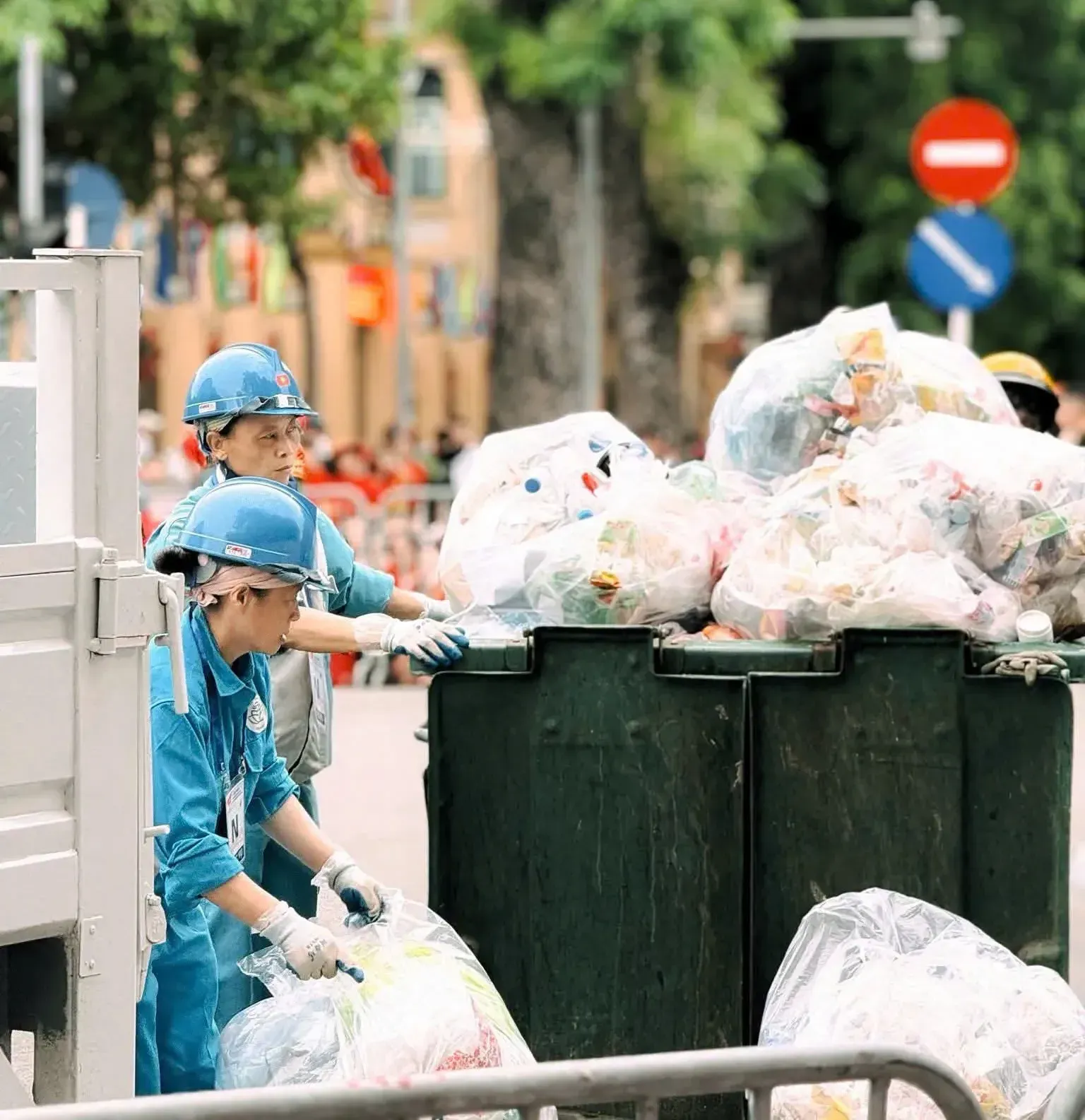
Dang Thi Thu Ha, a worker of the URENCO (first left) and her colleague are collecting waste in Hanoi. Photo: Anh Kiet/The Hanoi Times
“If every person does one simple thing every day: putting waste in the right place and the right bin, the whole city will transform,” Ha said, suggesting that Hanoi’s authorities should keep regular communication to raise people's awareness and that schools in the city should teach students how to sort waste at source so that they can apply it at home.
|
Waste sorting at source brings great benefits The EU has pointed out that waste separation, when done properly, can cut 200 million tons of CO2 released into the environment per year, not to mention a profitable side. For instance, every ton of recycled steel saves 1.1 tons of iron ore, 625kg of coal and 53kg of raw limestone. Experts in the field said that plastic is the most promising material for recycling. A report by the World Bank reveals that recycling 1 ton of plastic saves 3.8 oil barrels. Every year in the world, $80-$120 billion is lost due to plastic packaging not being recycled. Currently, Hanoi generates nearly 1.5 million tons of waste per day, with plastic bags and single-use items accounting for about 60% of that total. If this volume is all recycled, the total value of materials will be equal to $1.6 billion per year. In reality, only 33% of this waste amount is recycled, equivalent to a waste of around $1.1 billion. |