Nordic solutions for Vietnam’s circular economy: Experiences and policy implications
The Nordic solutions treasure the state of the environment while shifting economic models towards a more sustainable way and generating more social welfare.
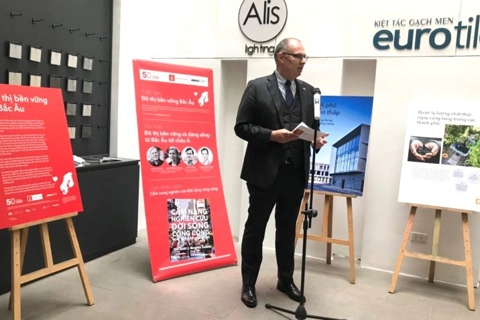
The Nordic Embassies in Vietnam (Denmark, Finland, Norway, and Sweden), in honor of Nordic Day 2023, shared their experiences on green solutions for circular economy and waste management and policy implications for Vietnam at a seminar in Hanoi.
| From left: Vice President of Ho Chi Minh National Academy of Politics, Assoc. Prof. Dr. Duong Trung Y (standing) Danish Ambassador to Vietnam Nicolai Prytz, Swedish Ambassador to Vietnam Ann Måwe, Norwegian Ambassador to Vietnam Hilde Solbakken, and Finnish Ambassador to Vietnam Keijo Norvanto. Photo: Nordic Embassies in Hanoi |
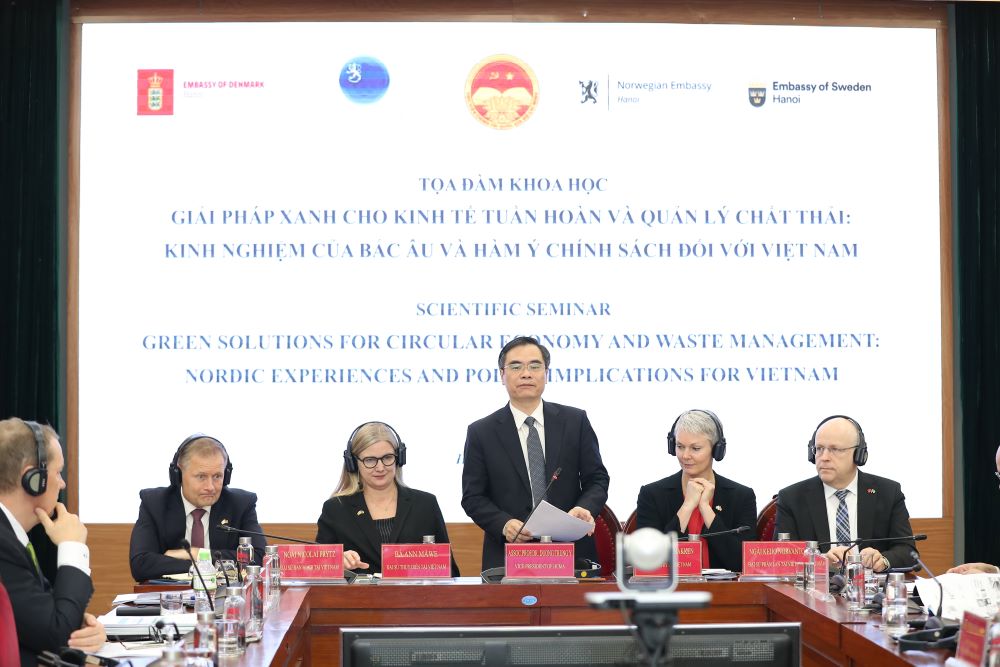
The event, which is held in collaboration with the Ho Chi Minh National Academy of Politics, aims to provide insight into Nordic policies, initiatives, and innovation in green transition, which can be relevant and applicable to Vietnam in eliminating waste and pollution, circulating products, and regenerating nature.
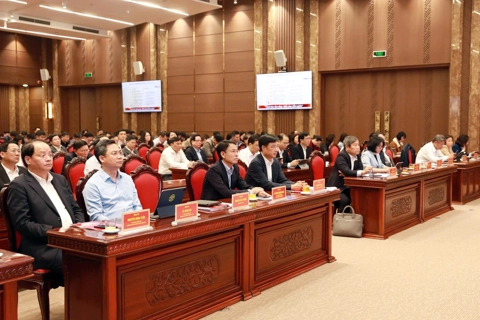
Organized for the 5th time, the event today [March 25] is attended by policymakers from central and local government agencies; representatives from chambers of commerce; business leaders, startups, innovators; research, mass and non-governmental organizations, and youth-led movements.
The Nordic region is known for its commitment to the environment and circularity, and this seminar highlights how the region is leading the way in green innovation. The seminar also provides opportunities for key Vietnamese actors and stakeholders to learn from the Nordic model, driving growth and contributing to the achievement of Agenda 2030, the Paris Agreement, and a full and green recovery from the Covid-19 pandemic.
Ahead of the event, Ambassador of Sweden to Vietnam Ann Måwe emphasizes that circularity and sustainability are at the heart of Nordic societies. She went on to say: “We want to share our experiences and lessons learned on how we have been able to shift our economic model towards a more sustainable one, in a way that still fosters economic growth and innovation.
It is about creating a win-win situation for both the economy and the environment.”
Similarly, Ambassador of Finland to Vietnam Keijo Norvanto, states that for the Nordic countries, circular economy is an efficient tool for achieving sustainable development, combatting climate change, saving natural resources, and improving the state of the environment, all while generating jobs, economic growth and contributing to welfare. “I am happy that the Nordic Days 2023 received the attention of Vietnamese policymakers, businesses, researchers, and the wider audience,” he noted.
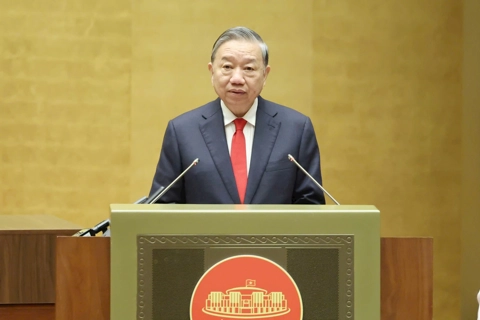
Vice President of Ho Chi Minh National Academy of Politics, Assoc. Prof. Dr. Duong Trung Y recognized the importance of these efforts and the need for international cooperation, stated that as Vietnam is committed to transitioning to a low-carbon and greener economy post-Covid 19, this is indeed the right time to mainstream circular economy to efficiently manage resources, curb emissions and waste, as well as restore the environment.
“Studying international experiences including Nordic ones would provide Vietnam with more suggestions to build appropriate policies to grow a strong economy and improve people’s well-being,” he emphasized.
The Nordic region has implemented several policies and initiatives to promote sustainable development. Denmark has implemented a green transition strategy, which focuses on reducing greenhouse gas emissions by 70% in 2030 compared to 1990 levels and towards net zero by 2050 at the latest. Finland was the first country in the world to activate a National Roadmap to a Circular Economy (2016–2025), which aims to reduce waste generation and promote the reuse of materials. Norway now launches the Green Industrial Initiative to accelerate the transition, create jobs, increase exports, and cut greenhouse gas emissions. Meanwhile, Sweden has set ambitious goals for sustainability, including becoming the world’s first fossil-free welfare nation by 2045.
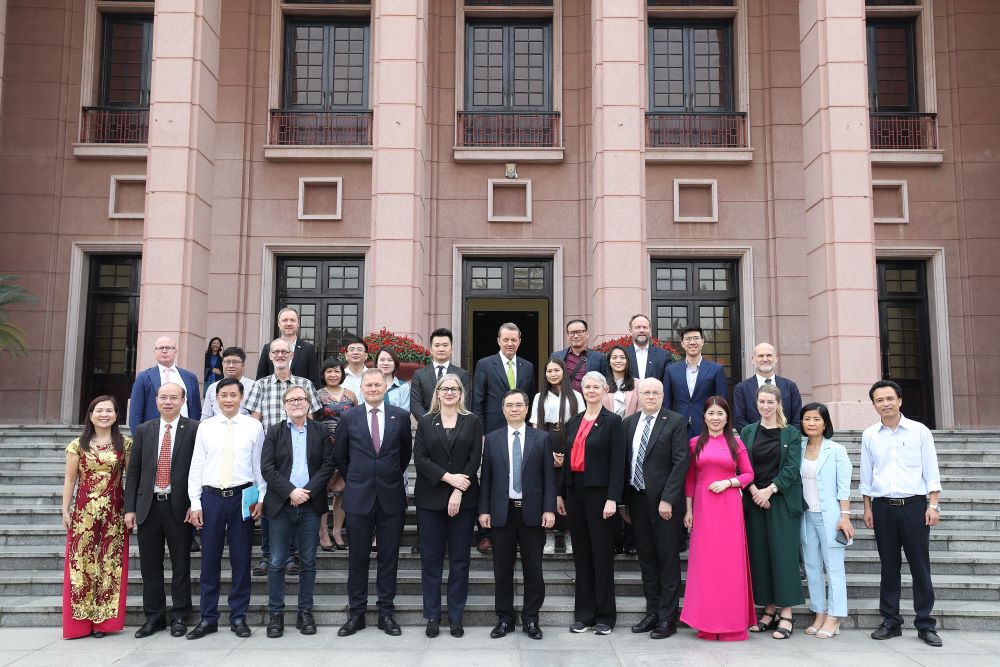
| Some of the attendees of the annual event held in Hanoi on Mar 25. Photo: Nordic Embassies in Hanoi |
Vietnam has high climate ambitions. Through the commitment made by Prime Minister Pham Minh Chinh to reach net-zero emissions by 2050 at the COP26 Climate Summit in Glasgow in November 2021, reaffirmed in the country’s updated Nationally Determined Commitments (NDCs) at COP27 2022, and following the agreement with the G7++ on a Just Energy Transition Partnership in December 2022, Vietnam is in a position to take important steps forward for a green transition. In addition, the Vietnam Green Growth Strategy 2030 with a vision to 2045 aims to achieve a green and sustainable economy by promoting green technologies, improving energy efficiency, and reducing greenhouse gas emissions.
The strategy also focuses on waste management and reducing plastic pollution. With modern technologies and innovations, Vietnam can become a regional leader in sustainable development.
Representatives from several Nordic institutions and companies, including RE:SOURCE and Electrolux (Sweden), the Finnish Innovation Fund Sitra, Valmet (Finland), SINTEF, TOMRA (Norway), and Gehl Architects (Denmark), among others join the seminar to discuss their circular business models and commitments which increase recycling, reduce waste and carbon emissions in their operations.
They also emphasize efforts to enhance skills, financing, technology adoption, and a conducive regulatory environment which will be key in making the most of the green transition and unlocking the full potential of Vietnam’s future.
Nordic countries and principals in Vietnam
The Nordic countries consist of Denmark, Finland, Norway, Sweden, and Iceland as well as The Faroe Islands, Greenland and Åland, constitutes one of the oldest and most diverse forms of regional political collaboration. It is not by chance that a region with only 27 million people, which would not even make it into the top 50 countries ranked by population, is one of the most integrated regions with shared values and common development goals.
As a result, the Nordic countries generally score highly on international rankings and indexes, such as Innovation, Happiness, Human Development, Citizens’ Welfare, Governance, Transparency, Equality, Social Progress Index, Inclusive Development Index, Sustainability
Index and more.
All four Nordic countries with Embassies in Hanoi were among the first European countries that established diplomatic ties with Vietnam (Sweden: 1969, Denmark and Norway: 1971, Finland: 1973). Over the years, the Nordic countries have remained Vietnam’s trusted friends and partners even during hard times and continue going alongside Vietnam in its effort to strengthen economic growth and promote equality, environmental protection, and inclusiveness as the foundations for prosperity and sustainable development.