Note verbale 'warfare' debated at East Sea conference in Hanoi
Experts believe that smaller countries can collectively and peacefully address disputes through note verbales.
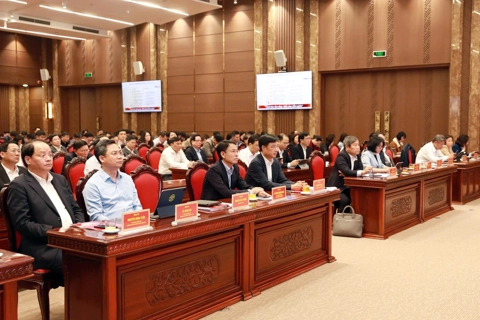
Participants paid much heed to the note verbale 'warfare' debated at an international conference on the South China Sea (called East Sea by Vietnam) held in Hanoi earlier this week as new developments in this highly disputed sea catch global attention.
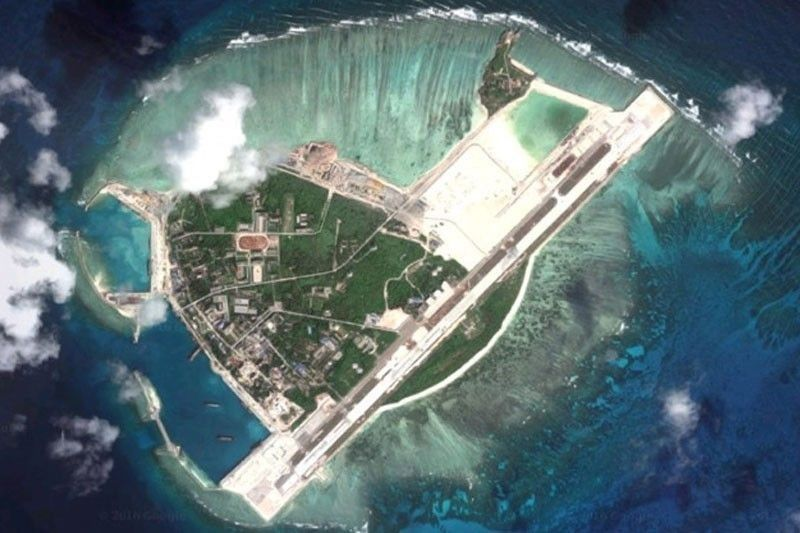
Militarization is part of reasons triggering note verbale 'battle' in the South China Sea. Photo: Google Earth |
Discussions have featured different approaches of officials and experts who included the German Ambassador to Vietnam Guido Hildner, experts from University of the Philippines, the Ministry of Foreign Affairs of Indonesia, the UK Foreign, Commonwealth and Development Office, the French Ministry of Europe and Foreign Affairs, George C. Marshall European Center for Security Studies, Wuhan University, and the Vietnam Society of International Law.
Speakers discussed the significance of “the note verbale debate” to the trajectory of events in the South China Sea, its implications to the Code of Conduct of Parties in the South China Sea (COC) negotiations and the prospect of cooperation in the South China Sea.
Debate kicked off with EU Rear Admiral Jurgen Ehle’s speech on EU interests in the South China Sea in terms of stability and trade routes, threats to cause precedents to be replicated in other seas.
Ehle said the EU won’t allow any to undermine international law, saying that the EU is in the process of developing an Indo-Pacific policy, incorporating member states’ policy.
Prof Jay Batongbacal at University of the Philippines affirmed the notes verbales show common grounds aligned with the United Nations Convention on the Law of the Sea (UNCLOS). The countries must unify based on such grounds and together face the most powerful claimant.
Dr. Damos Agusman from the Indonesian Ministry of Foreign Affairs said the note verbale chain is an exercise of lawfare. He highlighted positions of each by mostly using legal terms with less political consideration involved.
Meanwhile, Mr. Andrew Murdoch at the UK Foreign, Commonwealth and Development Office said that note verbale is not intervention nor dispute politicization given their content and legal effects, arguing that the content should use legal points and carefully framed. To make the lawfare effect, it’s necessary to respond to China’s claims, practice peaceful settlement, and bring clarity to other claims.
Commander Jonathan G. Odom at George C. Marshall European Center for Security Studies, the US, believed that notes verbales have pros like peaceful, official and transparent practice and cons namely further complication and not narrowing claimants’ differences. The notes will restrictively impact on the COC but show smaller countries can collectively and peacefully address disputes.
Ms. Nguyen Thanh Ha from the Vietnam Society of International Law said the 2016 PCA ruling and new notes verbales show increasing shared agreements and consolidate UNCLOS regimes in the South China Sea.
Meanwhile, Prof Lei Xiaolu from Wuhan University said the UK and France have own straight baselines while opposing China using the same in South China Sea. He pointed out negative impacts of the notes including increasing interference from non-coastal states; overstressing disputes and reducing political will for functional cooperation.
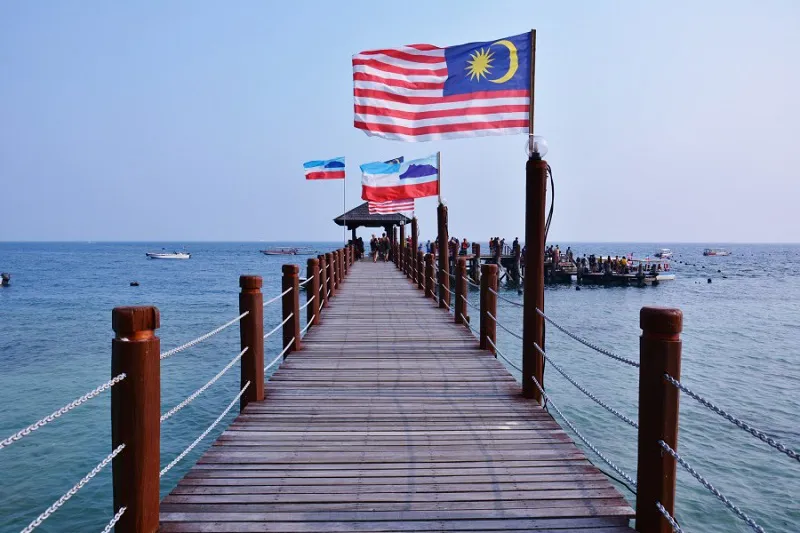
| Malaysia, one of claimants in the South China Sea, is the first country filing a note verbale protesting China's claims to the United Nations. Photo: iStock |
Reality
Notes verbales, unsigned formal diplomatic communication filed by other states to the United Nations to protest China’s maritime claims in the South China Sea show that they challenge the legal basis of China’s claims on the basis of an Arbitral Tribunal Award established under UNCLOS Annex VII.
According to Emeritus Professor Carl Thayer, a veteran Southeast Asia expert, in the case of the UN Commission on the Limits of the Continental Shelf (CLCS), a note verbale sets out a state’s official legal position on claims for an extended continental shelf. If a state fails to respond to a claim, this could be taken as evidence that the state acquiesced.
In other words, China must submit a counter claim to demonstrate that the issue in question is in dispute. Under the CLCS’ Rules of Procedure, the Commission cannot proceed if there is a dispute between two or more states.
Over the past years, there have been more than 20 diplomatic notes and statement clarifying legal stances of both regional and extra-regional countries with regards to various aspects of the South China Sea.
These newly clarified positions would not only have far reaching legal implications but also affect future activities and cooperation in the South China Sea.
So far, a number of countries have involved in the “Notes Verbales lawfare” including Malaysia, the Philippines, Vietnam, Indonesia, the US, and Australia.
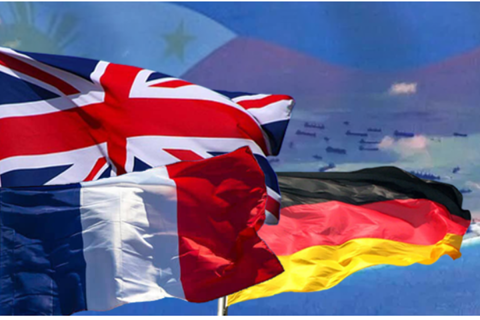
In addition, other countries namely France, Germany, and the UK, commonly known as EU Three or E3, also filed a joint note verbale to the United Nations to reject China’s sweeping claims over the South China Sea, heating up the lawfare.
Of the countries involved, Malaysia plays an important role as it is the first country rejecting the legal basis of China's claims. In December 2019, it made a submission for an extended continental shelf in the northern part of the South China Sea to the United Nations.
If the CLCS ruled in favor of Malaysia, this would be a huge blow to China’s legal position not to say China’s prestige, Prof. Thayer said.