Old apartments transformed into 40-story towers attracting investors
The move is expected to break the long-standing deadlock in the city’s redevelopment efforts for aging residential buildings.
The Hanoi Times — The Hanoi People's Committee has approved a plan to redevelop the old Thanh Cong apartment complex into a 40-story tower in a bid to draw investor interest and speed up the city's renovation process.
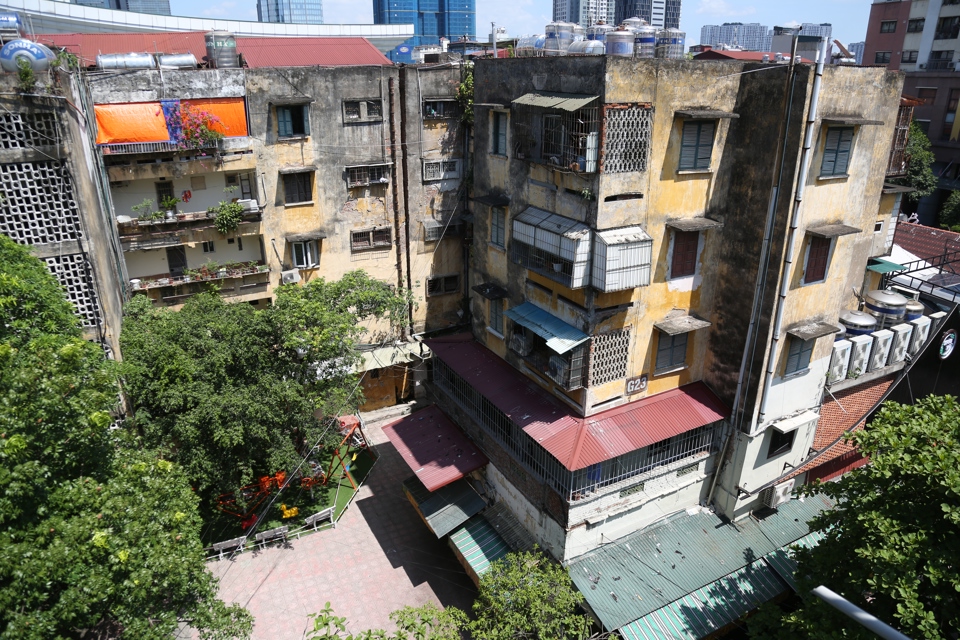
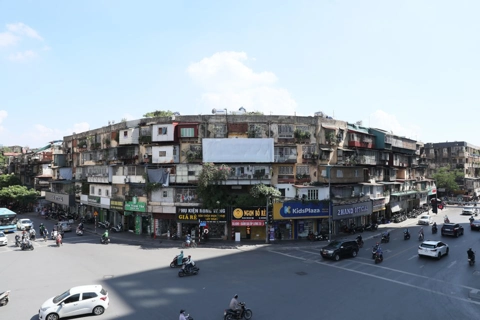
Thanh Cong apartment building in Ba Dinh District, Hanoi. Photo: Hai Linh/The Hanoi Times
The decision follows Ba Dinh authorities' approval for the redevelopment of three old apartment complexes: Thanh Cong, Giang Vo, and Ngoc Khanh.
Addressing long-standing bottlenecks
Hanoi currently has 1,579 old apartment buildings built between 1960 and 1994. For many years, there have been discussions about repairing and rehabilitating these old buildings. The 1998 Capital Construction Master Plan, which aimed to improve people's quality of life and create a modern, civilized urban environment, was the first to highlight the need for repair.
But progress has been slow. To date, only 19 projects have been completed, while 14 are still under development. In 2021-2025, the city plans to renovate 10 old apartment complexes, including three in Ba Dinh District. However, none have started due to height restrictions that cap downtown buildings at 18 to 24 stories.
According to Mac Dinh Minh, Deputy Director of Hanoi's Department of Construction, the city has classified nearly 340 old apartment buildings requiring immediate relocation due to structural hazards. Despite being in prime locations, the redevelopment of these buildings has failed to attract investors, mainly due to height restrictions that hinder profitability.
Nguyen Ba Nguyen, Deputy Director of Hanoi's Department of Planning and Architecture, said now that high-rise buildings are no longer banned in renovation projects, they must comply with regulations on population control and infrastructure improvement.
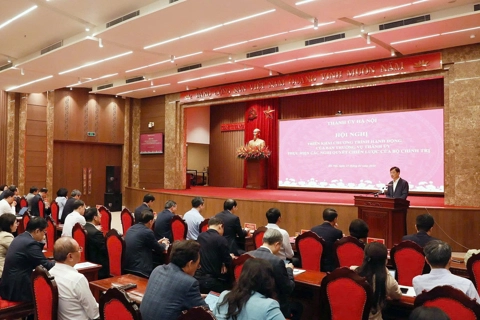
In response, at a recent meeting to review the detailed plans for the redevelopment of the Thanh Cong, Giang Vo, and Ngoc Khanh residential complexes, Deputy Chairman of the Hanoi People's Committee Duong Duc Tuan stressed the need for innovation and breakthroughs.
The renovation of the Thanh Cong complex will include more green spaces, underground areas, and integrate renovated technical infrastructure into landscaped zones. The central core of the area will feature high-rise development with a maximum building height of 40 stories. This is in line with the Capital Law and follows the transit-oriented development (TOD) model. The land that is freed up will be used to build larger commercial buildings or become a service land reserve.
The Giang Vo condominium and surrounding areas will accommodate high-rise developments along Giang Vo and Kim Ma Streets. Experts believe this approach will help remove regulatory bottlenecks and speed up long-stalled renovation efforts.
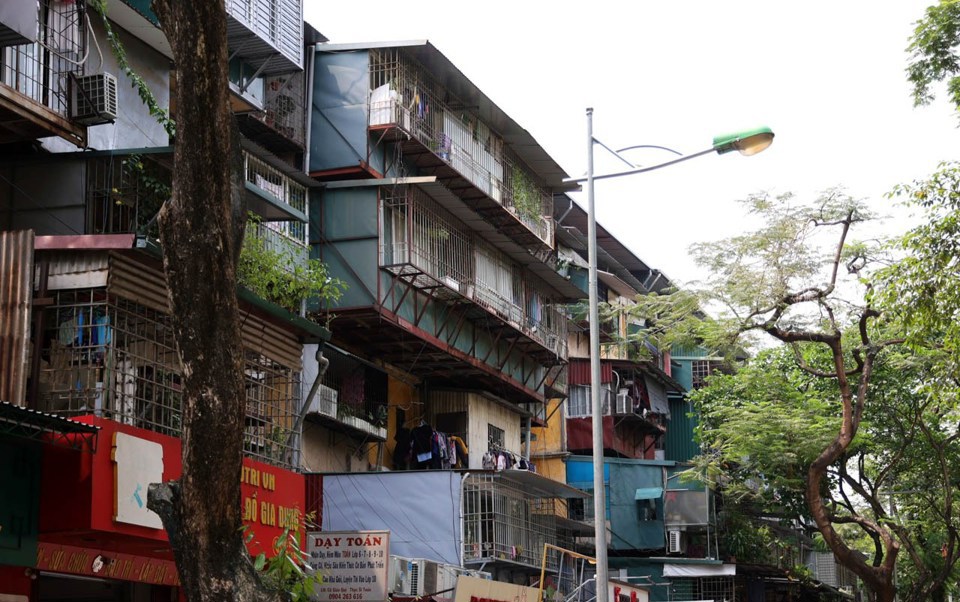
An old apartment building in Cau Giay District. Photo: Pham Hung/The Hanoi Times
Avoid overloading existing infrastructure systems
Architect Tran Huy Anh, a member of the Hanoi Architects Association, said that raising the building height to 40 stories is a reasonable approach when redeveloping old apartment complexes in Thanh Cong as it helps break the long-standing deadlock in the city's efforts to rehabilitate aging residential buildings.
"Hanoi's leaders, together with relevant departments, planning consultants, experts and scientists, have carefully evaluated these groundbreaking proposals. Population control and infrastructure capacity requirements must be met in tandem with high-rise development," Anh added.
Do Ha Thanh, Head of the Urban and Infrastructure Economy Department of the Ba Dinh District People's Committee, said that while the maximum building height for redeveloped residential complexes is set at 40 stories, planning must ensure that zoning regulations are not broken, that population density does not increase, and that downtown infrastructure is not overburdened.
“The additional height will accommodate commercial and service facilities. These areas can cater to the expanded housing needs of relocated residents who want to buy larger units. Once the revised plans are approved and developers see the potential for profitability, they will be more willing to invest in the redevelopment of old apartment buildings,” Thanh noted.
Under the proposed plan, the Thanh Cong complex, which currently consists of 68 buildings ranging from two to five stories, will be consolidated into 24 new buildings, some of which will reach up to 40 stories. The Giang Vo complex, which currently consists of 23 buildings of similar height (excluding four that have already been renovated), will be reduced to 11 buildings. Meanwhile, the Ngoc Khanh complex, which originally consisted of 36 buildings, will be lowered to only nine.
To address infrastructure challenges, experts suggest that Hanoi should maximize the use of underground urban space.
Dr. Dao Ngoc Nghiem, Vice Chairman of the Vietnam Urban Planning and Development Association, said that both the Land Law and the Capital Law call for the use of underground space. However, detailed guidelines are needed to determine the extent of its development. While Hanoi has approved a master plan for underground space that extends to 2030, with a vision to 2050, it remains a concept that currently governs depths of 15 meters.
"The city has long been aware of the need to renovate old residential buildings, but implementation has been slow. In addition to efforts to accelerate redevelopment, Hanoi must also focus on utilizing underground space and aligning with transit-oriented development (TOD) principles. A firm commitment to these strategies is essential to ensure both speed and quality of implementation," Nghiem said.
Ba Dinh District authorities are required to finalize and submit their redevelopment plans for approval by March 31, 2025, with the plan for the Ngoc Khanh complex to follow in May 2025. Once approved, these plans will serve as an important basis for attracting investors and will be made available to local residents.