Party chief visits ASEAN headquarters: Milestone in Vietnam’s regional relations
Vietnam’s ASEAN membership shapes the country’s global engagement and it remains committed to ASEAN’s 2045 vision of solidarity, self-reliance, and strategic autonomy.
The Hanoi Times — General Secretary of the Communist Party of Vietnam (CPV) To Lam on March 10 visited the ASEAN headquarters in Jakarta, Indonesia, becoming the first CPV leader to visit the regional bloc’s headquarters.
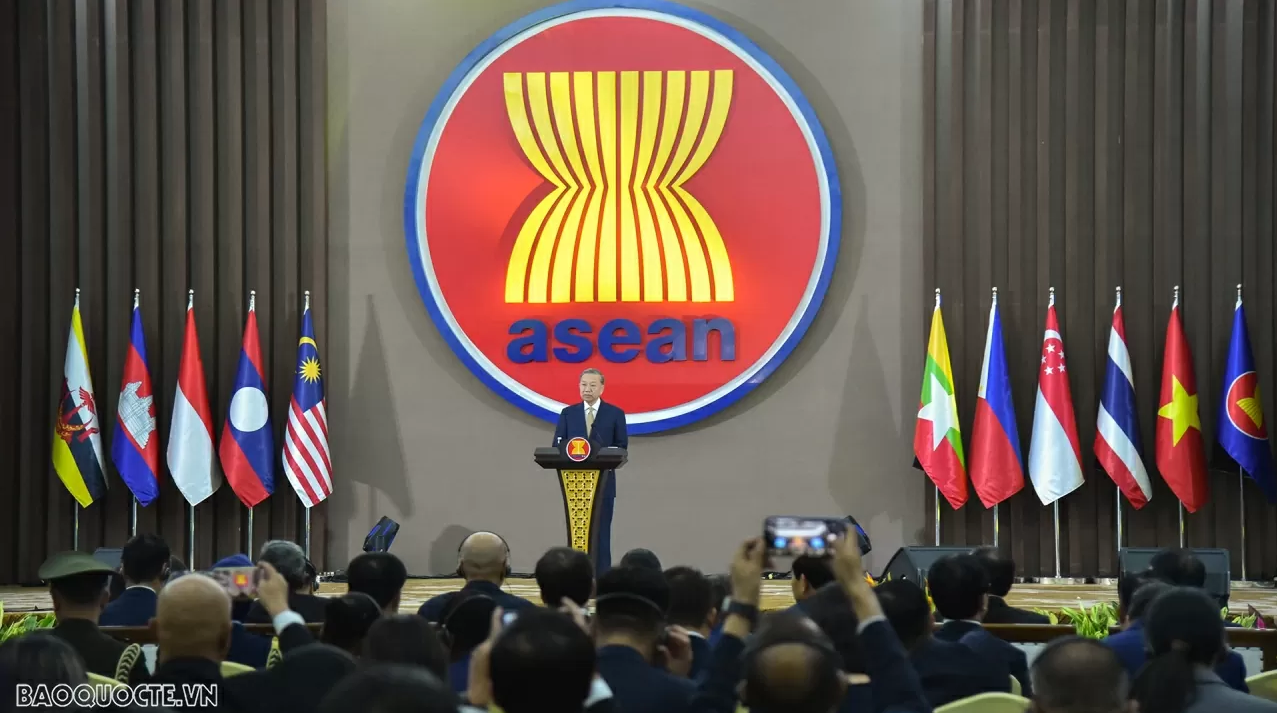
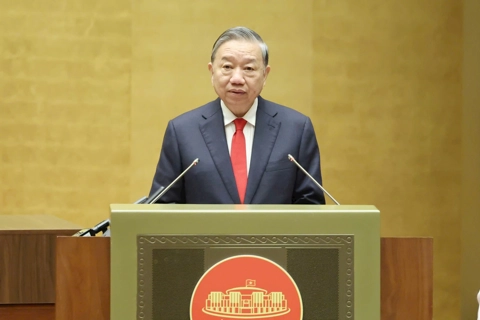
General Secretary of the Communist Party of Vietnam (CPV) To Lam speaks at ASEAN headquarters in Jakarta, Indonesia on March 10. Photos: Tuan Anh/Baoquocte
This visit marks a significant milestone in Vietnam’s engagement with ASEAN.
General Secretary To Lam, accompanied by his spouse and a high-ranking Vietnamese delegation, was warmly received by ASEAN Secretary-General Kao Kim Hourn and his spouse, alongside ASEAN Secretariat leaders, ambassadors, and heads of delegations from ASEAN member states.
During the visit, General Secretary To Lam reaffirmed Vietnam’s strong commitment to ASEAN’s growth and highlighted the country’s active contributions over the past 30 years to the bloc’s shared objectives.
He expressed pride in ASEAN’s achievements on the global stage, and pledged Vietnam’s continued support for the ASEAN Community’s development.
Echoing ASEAN Secretary-General Kao Kim Hourn’s strategic vision, the general secretary stressed the importance of maintaining ASEAN’s unity and cohesion to meet the challenges of an increasingly complex global landscape.
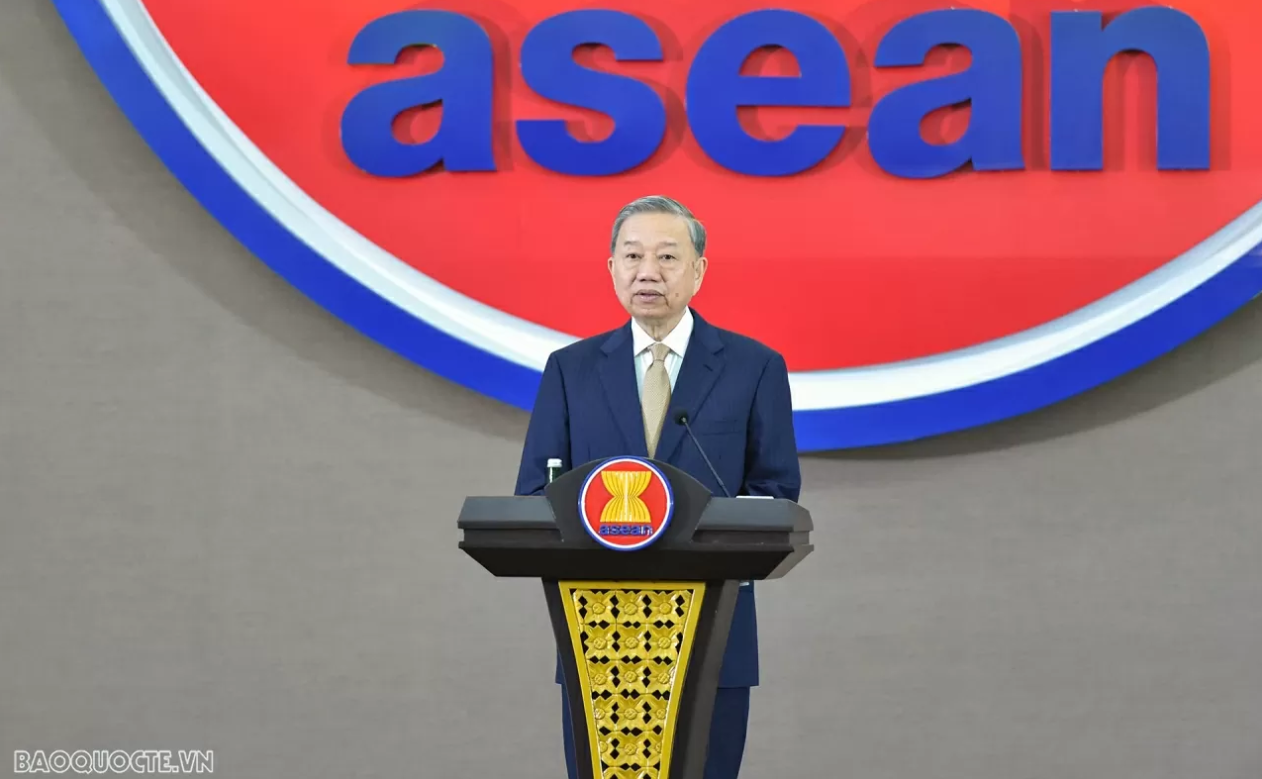
General Secretary To Lam at the ceremony to celebrate 30 years of Vietnam's ASEAN membership.
He said that regional solidarity was essential to overcome difficulties and advance ASEAN’s collective goals. He also highlighted the need for enhanced bilateral cooperation among member states to bolster ASEAN’s overall strength.
Recognizing the critical role of the ASEAN Secretariat and the Committee of Permanent Representatives (CPR), he urged them to work closely with member states to implement the ASEAN Vision 2025 and advance the ASEAN Community Vision 2045 and related strategic plans.
ASEAN Secretary-General Kao Kim Hourn described the visit as a historic milestone, underscoring ASEAN’s significant role in Vietnam’s foreign policy. He noted that 2025 marks both the 30th anniversary of Vietnam’s ASEAN membership and the 10th anniversary of the ASEAN Community.
Kao Kim Hourn praised Vietnam’s important contributions to ASEAN and expressed hope that the country would continue to play a leadership role within the regional organization.
During the visit, General Secretary To Lam and his spouse attended a ceremony commemorating Vietnam’s 30 years of membership in ASEAN. He delivered a keynote policy speech highlighting ASEAN’s achievements over its more than 60-year history.
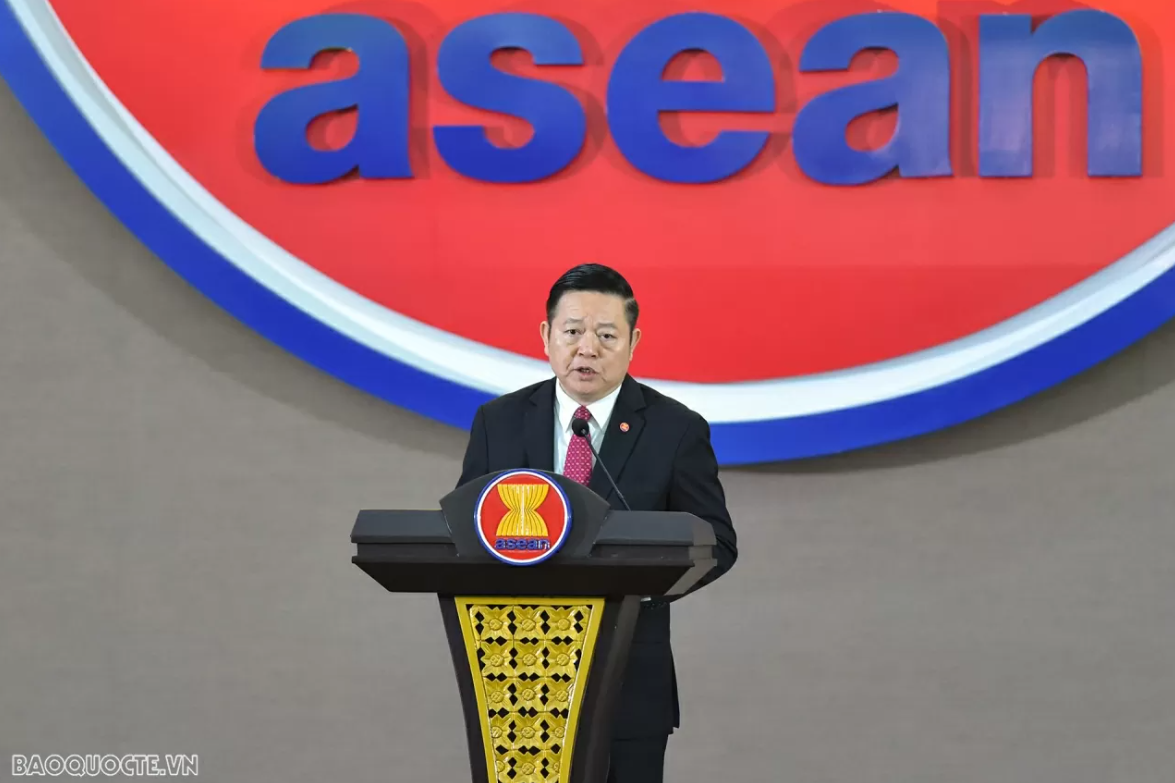
ASEAN Secretary-General Kao Kim Hourn speaks at the ceremony on March 10.
ASEAN’s milestones
In his speech, To Lam acknowledged the evolving global landscape, shaped by multipolarity, technological advances, and emerging non-traditional security challenges.
He outlined key strategic directions to enhance ASEAN’s role in the regional architecture and ensure its sustained development.
He called for stronger regional integration, internal solidarity, strategic autonomy, and economic resilience with important strategies: Developing creative solutions to regional challenges, Strengthening ASEAN’s unique identity, Enhancing the effectiveness of norm-setting mechanisms, and Improving the ASEAN Secretariat’s efficiency and specialized agencies’ performance.
Reflecting on nearly 60 years of ASEAN history provides valuable lessons in self-reliance, resilience, and strategic autonomy. The speech highlights three pivotal moments in ASEAN’s development:
It’s efforts to overcome late 1990s financial crisis. ASEAN recognized the importance of economic interdependence and accelerated regional economic integration. This led to the strengthening of the ASEAN Free Trade Area and the expansion of trade and investment flows.
ASEAN is now a key hub in global trade networks, representing 30% of the world’s population and 32% of global GDP.
The ASEAN Community, established in 2015, marked a major milestone in regional integration across political-security, economic, and socio-cultural pillars. Today, ASEAN is a unified bloc of 10 nations, the world’s fifth largest economy, and a key force in regional and global cooperation, fostering peace, development, and a new world order.
Another example of the bloc’s unity is its response to the Covid-19 pandemic. ASEAN mobilized its collective strength to maintain regional stability and cooperation. The bloc emerged as a bright spot, with a projected economic growth of 4.7% by 2025.
The regional nations continue to develop new frameworks to strengthen competitiveness and lead emerging trends.
ASEAN is poised to become the world’s fourth largest economy by 2030, with over 800 million consumers and a thriving digital economy projected to reach US$1 trillion. It is e emerging as a hub for technology, innovation, and economic growth.

General Secretary To Lam, ASEAN Secretary-General Kao Kim Hourn, and their spouses at the event.
General Secretary To Lam said that to move forward, ASEAN must ensure five key pillars: Strategic autonomy and flexibility. It needs to strengthen adaptability and internal solidarity to maintain an independent, balanced voice amid global competition through deeper consensus and cooperation.
The second one is economic resilience. The bloc is expected to become a global manufacturing hub by fostering innovation, digital transformation, green growth, and high-quality human resource development. The next one is upholding ASEAN identity and values with efforts to enhance cultural connectivity and people-to-people exchanges while preserving ASEAN’s core principles of consensus, harmony, and sustainable development.
Another key pillar is norm setting and governance through strengthening ASEAN’s role in shaping regional norms, fostering dialogue, and maintaining stability by leading inclusive, cooperative frameworks.
The final pillar is addressing internal challenges. As such, the member states need to work together to support Myanmar’s stability and facilitate Timor-Leste’s full ASEAN membership.
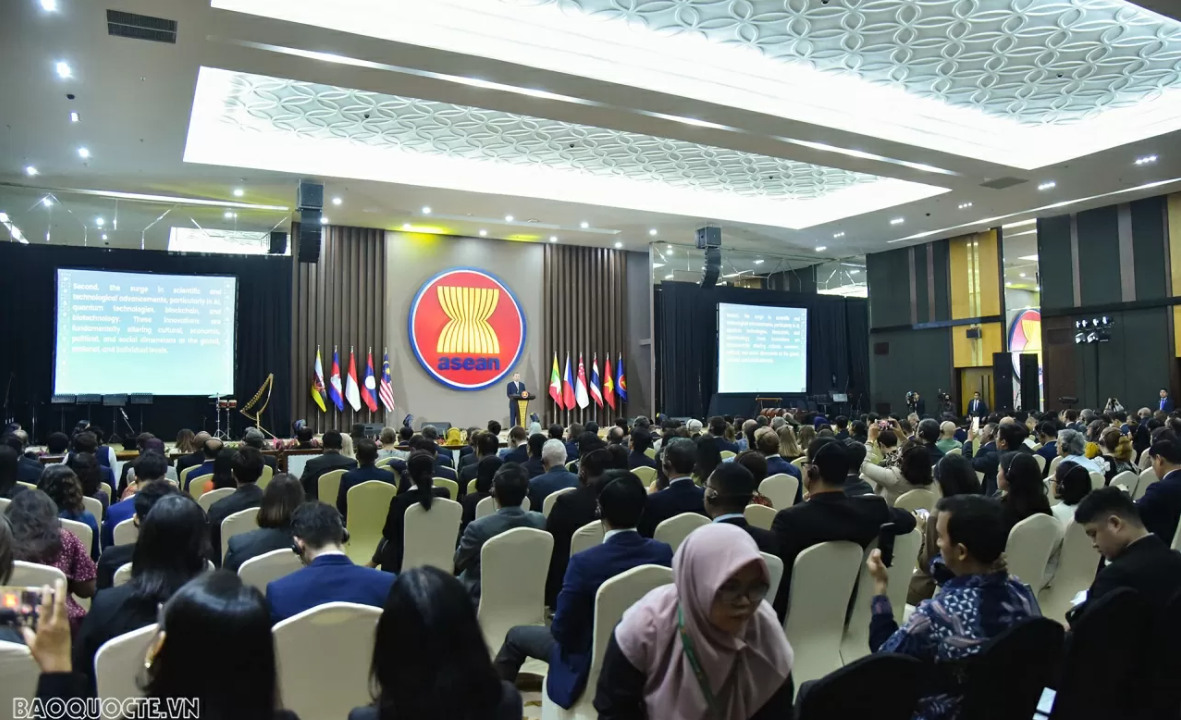
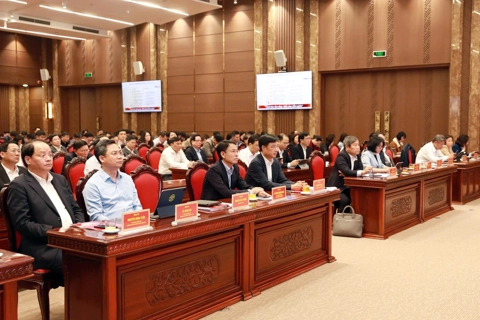
Overview of the ceremony.
ASEAN important in Vietnam’s diplomacy
Talking about the role of ASEAN in Vietnam’s foreign policy, To Lam said since joining ASEAN in 1995, Vietnam has prioritized strengthening regional ties and building a united and resilient ASEAN Community, reinforcing its role as a key member and committed to promoting peace, stability, and prosperity in the region.
Vietnam is committed to playing an active role in ASEAN, fostering innovation, collaboration, and sustainability while upholding international law for lasting peace and prosperity.
The country will continue working with ASEAN to realize its vision for 2045 to promote solidarity, self-reliance, and strategic autonomy. ASEAN’s success story extends beyond the region, serving as a global model for integration, cooperation, and sustainable development, shaping a shared vision for peace and prosperity.
To Lam highlighted Vietnam’s membership in ASEAN. He said Vietnam’s integration journey began with ASEAN, which paved the way for global engagement. Once isolated, it now has diplomatic ties with 194 countries, membership in more than 70 organizations, and free trade agreements with more than 60 economies, ranking among the world’s top 40 economies and top 20 in trade and investment.
With strategic partnerships in 35 countries, Vietnam fosters regional stability and growth. It contributes to key international mechanisms, including the UN and ASEAN-led forums, and has chaired ASEAN three times.
The country targets 8% growth in 2025 and aims to become a modern industrialized nation by 2030 and a high-income country by 2045, prioritizing innovation, sustainability, and digital transformation.
The general secretary affirmed that Vietnam adheres to an independent, peaceful foreign policy, maintaining strategic autonomy while deepening global integration. It follows a “Four No’s” defense policy and firmly supports the UN Charter, international law, and peaceful settlement of disputes.