People-to-people diplomacy builds trust and partnerships for Vietnam
Amid growing global uncertainty, people-to-people diplomacy has emerged as a strategic asset in Vietnam’s foreign relations. In 2025, this pillar reinforced trust, mobilized international resources and strengthened social foundations for diplomacy, working in close alignment with Party and State diplomacy to support national development.
THE HANOI TIMES — People-to-people diplomacy in 2025 continued to play a crucial role as a pillar of Vietnam’s foreign policy. It provided practical support for Party diplomacy and State diplomacy, contributing to a peaceful, stable and favorable international environment for national development.
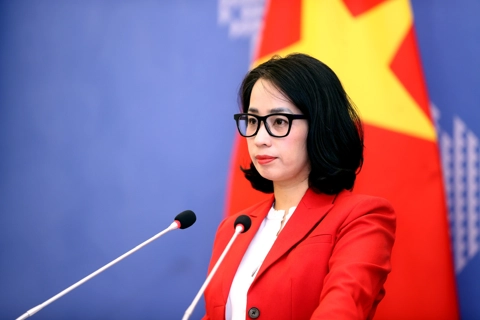
Deputy Minister of Foreign Affairs Ngo Le Van spoke with The Hanoi Times about the effectiveness of people-to-people diplomacy in 2025 and its mission in 2026.
How do you remark on the role of people-to-people diplomacy within Vietnam’s overall foreign affairs landscape in 2025?
In 2025, people-to-people diplomacy remained a core pillar of Vietnam’s external relations. It closely supported Party diplomacy and State diplomacy while helping maintain a peaceful and stable international environment for development.
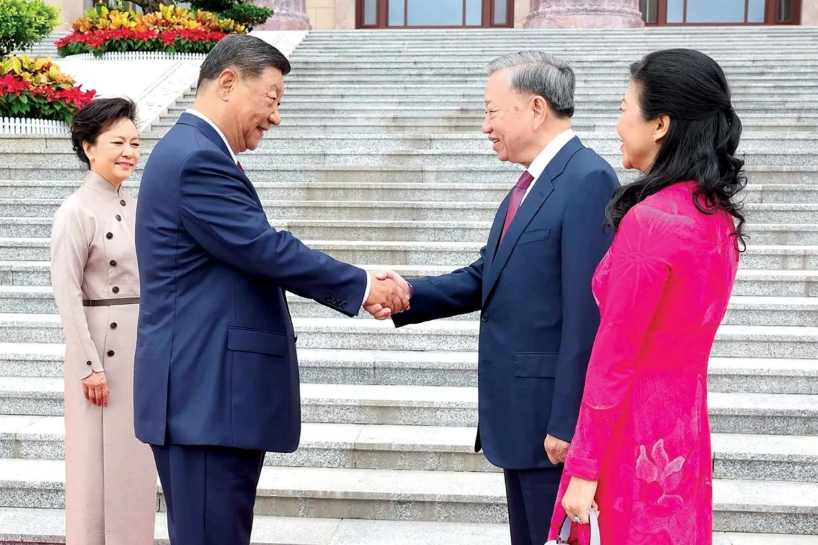
Chinese President and General Secretary Xi Jinping and his wife welcomed Vietnamese President and General Secretary To Lam and his wife in Beijing on August 19, 2025. Photos courtesy of Ministry of Foreign Affairs
Through an extensive network of international partners and friends, people-to-people organizations expanded exchanges, cooperation and outreach in both scale and depth. These activities strengthened mutual understanding and trust between the Vietnamese people and people around the world.
People-to-people diplomacy effectively leveraged soft power to project the image of a peaceful, responsible and actively integrated Vietnam. It helped build a positive social foundation for bilateral and multilateral relations, especially with neighboring countries and key partners.
Closely coordinated with Party and State diplomacy, people-to-people diplomacy also proved effective in mobilizing international resources. In the second half of the year, as Vietnam faced severe natural disasters, many international partners and foreign non-governmental organizations worked with Vietnamese organizations to support disaster relief efforts across multiple localities.
In the context of a volatile regional and global situation, how has people-to-people diplomacy adapted and transformed?
A major highlight over the past year was the shift from traditional friendship exchanges toward activities with stronger political and strategic significance. Examples include the “Red journey for youth research and study” program and the campaign “65 years of Vietnam-Cuba solidarity” to support the Cuban people.
Amid complex global developments and intensifying strategic competition, people-to-people diplomacy renewed its thinking and operating methods. It strengthened coordination with Party and State diplomacy, improved forecasting and policy responsiveness and communicated clear messages about a peaceful, reliable and responsible Vietnam.
People-to-people diplomacy has moved beyond a supporting role to become a strategic pillar of a modern and comprehensive diplomatic framework. It now directly contributes to building social foundations, consolidating trust and expanding Vietnam’s space for international cooperation.
What positive results have emerged from cooperation with foreign non-governmental organizations in areas such as poverty reduction, education, health and climate change?
Cooperation with foreign non-governmental organizations plays an important role in people-to-people diplomacy. It strengthens friendship, promotes sustainable development, spreads humanitarian values and deepens Vietnam’s engagement with the international community.
Nearly 400 foreign NGOs are now operating regularly in Vietnam. During the 2020-2024 period, international aids reached nearly US$1.14 billion while international projects covered 34 provinces and cities and focused on healthcare, socio-economic development, social issues, education and training, environmental protection, organizational capacity building and judicial support.
These results highlight the meaningful contributions of foreign NGOs in sharing knowledge, technology and governance experience. They also reflect the goodwill and respect that the international community holds for Vietnam and its people.
Beyond financial assistance, foreign NGOs brought international experience, innovative approaches and strong humanitarian values that supported community development across the country.
As Vietnam prepares for the 14th National Party Congress and an era of national rise, what should be done to further strengthen people-to-people diplomacy?
As Vietnam moves toward the 14th National Party Congress and a new stage of development, the country needs to elevate people-to-people diplomacy in thinking, substance and implementation. This will allow it to fully play its pioneering role and fulfill its key and regular mission within foreign affairs and international integration.

Deputy Minister of Foreign Affairs Ngo Le Van.
First, Vietnam must deepen awareness of the role of people-to-people diplomacy within a modern diplomatic framework and align related activities with strategic priorities for development, integration and national defense.
At the same time, agencies and organizations need stronger coordination mechanisms, while personnel engaged in people-to-people diplomacy must improve capacity in a lean, professional and modern manner.
Vietnam should also mobilize intellectuals, businesses, young people and overseas Vietnamese more effectively. Active participation in regional and international forums will help further promote the image of a peaceful, dynamic and trustworthy Vietnam.
At the beginning of 2026, how do you expect cooperation between Vietnam and international partners to evolve?
Vietnam always values and sincerely appreciates the strong support from international friends, partners and foreign organizations, including foreign NGOs, for the country’s development and the well-being of its people. We deeply cherish the goodwill, close ties and long-standing affection shown toward Vietnam.
As Vietnam enters a new development stage, the country encourages cooperation in new areas aligned with national priorities. These include the green economy, circular economy, climate change adaptation, community-level digital transformation, sustainable agriculture, social security systems, local capacity building and innovation promotion.
Alongside the foreign NGO community, Vietnam seeks cooperation with development agencies, international organizations, financial institutions and domestic and foreign enterprises to create multi-stakeholder cooperation models. These models will expand access to resources, technology and governance experience.
I hope foreign NGOs will continue to accompany Vietnam in priority areas, share knowledge and technology, connect Vietnam with global expert networks and support deeper participation in international initiatives.
The Government of Vietnam remains committed to listening, accompanying and creating the most favorable conditions for foreign non-governmental organizations to contribute effectively to national development.
Thanks for your time!