PM urges housing support plan for disaster affected communities in central Vietnam
Central Vietnam needs to overcome the consequences of natural disasters, restore production and stabilize people's lives as soon as possible in the wake of severe typhoons and floods.
THE HANOI TIMES — Prime Minister Pham Minh Chinh said along with government support, localities must mobilize reserve resources to support residents in rebuilding and repairing houses in the central region of Vietnam.
Speaking at a meeting which is connected online with disaster-affected localities in Hanoi on November 13, the government leader urged the Ministry of Finance to propose a housing support plan for people impacted by recent typhoons and floods.

Prime Minister Pham Minh Chinh delivers speech at the meeting which is connected online with disaster-affected localities. Photos: VGP
Chinh asked the relevant parties to restructure residential areas to avoid dangerous locations and ensure that people do not live too close to the coast.
He also tasked local authorities and key forces to keep supporting affected locals with shelter, necessities, healthcare, electricity, clean water, transportation and telecommunications infrastructure and education.
Meanwhile, efforts are required to help businesses quickly stabilize their operations.

An overview of the meeting.
In late October and early November, central localities from Ha Tinh to Dak Lak were continuously battered by typhoons, particularly the prolonged historic floods in cities of Hue and Danang following Typhoon Fengshen and Typhoon Kalmaegi.
This wave of natural disasters was extremely severe, with estimated losses exceeding VND40 trillion (US$1.52 billion), reducing GDP by 0.2 percentage point.
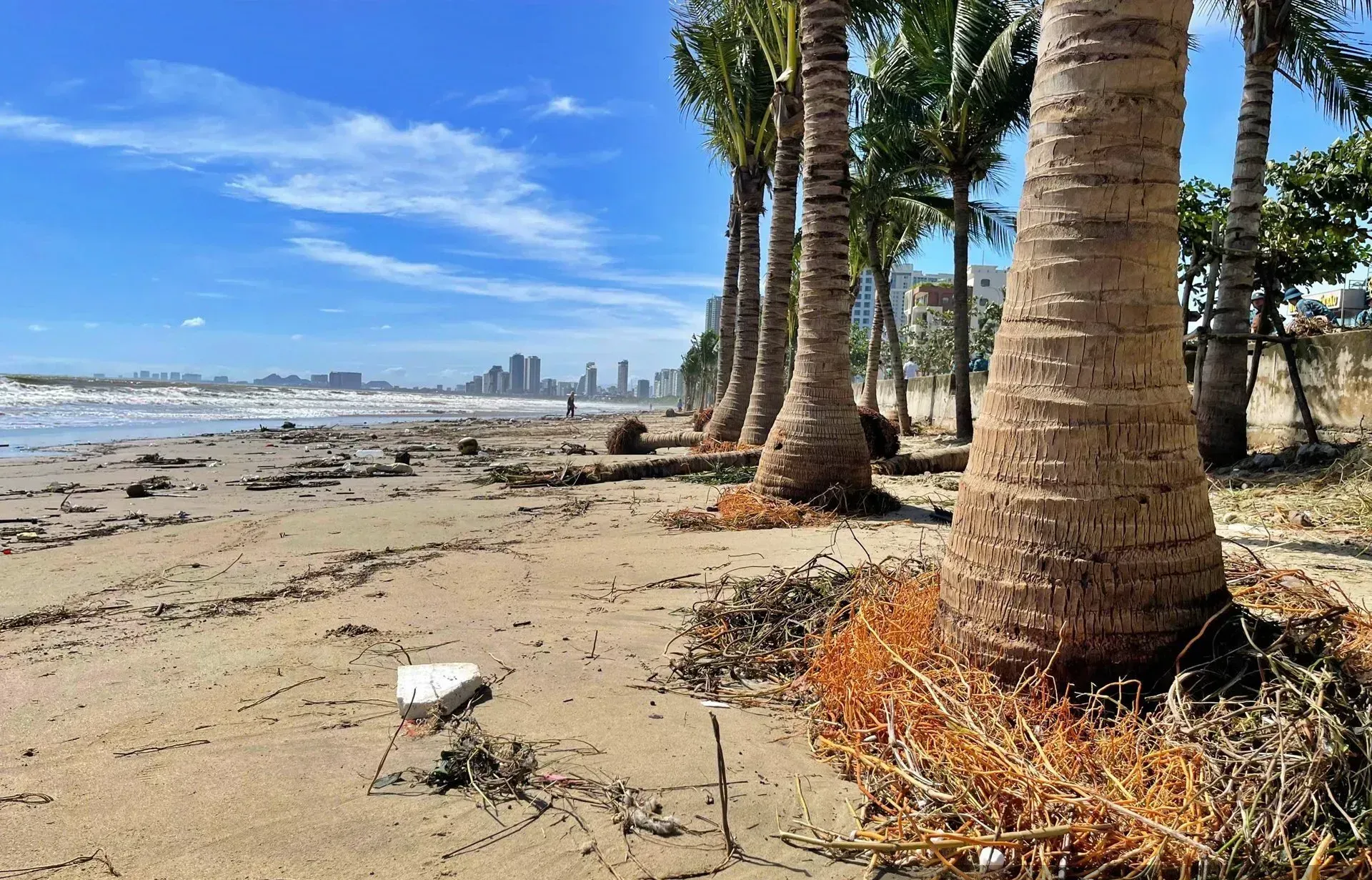
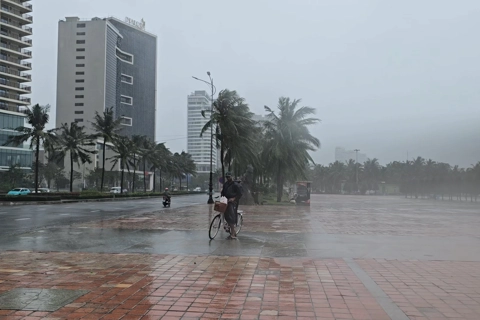
Son Tra Peninsula in Danang city in the wake of Typhoon Kalmaegi. Photo: baodanang.vn