“Positive list” undermines effectiveness of Vietnam’s Law on Enterprise
The rights of doing business have mainly been in the area of “what”, while “how” and “how much”, among others, still have much to be discussed, said an expert.
Since the first version of the Law on Enterprise that came into effect in 1991, freedom of doing business in Vietnam has partly been achieved and continuously increased by implementing the principle of “negative list”. However, some industries still apply the “positive list” principle to control, undermining the effectiveness of the law.
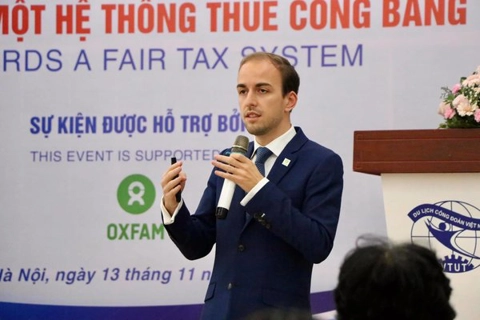
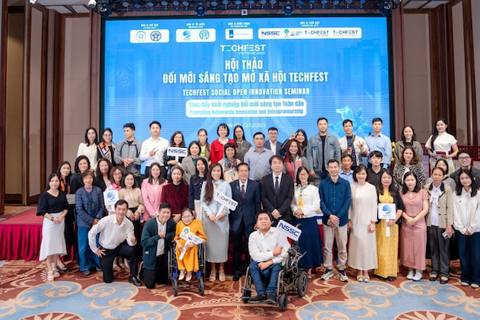
| Overview of the workshop. Source: Ngoc Thuy. |

Positive list is still a common in industries such as legal services, financial services, banking and some other services, in turn significantly restricting freedom of doing business, said Nguyen Dinh Cung, former director of the Central Institute for Economic Management (CIEM).
“The rights of doing business freely are still restricted by a number of unreasonable and inappropriate plans,” Cung said at a conference discussing 20 years of implementing Vietnam’s Law on Enterprises on November 18.
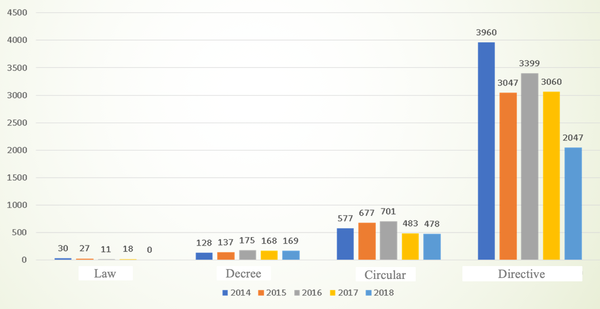
The legal risks in business activities are numerous, diverse and unpredictable. Source: CIEM. |
Cung added the rights of doing business have mainly been in the area of “what”, while “how” and “how much”, among others, still have much to be discussed.
The Law on Enterprise was amended twice in 2005 and 2014, while the latest revision has been submitted to the National Assembly for discussion.
Regarding compliance cost reduction, Cung said there have been significant reductions, but costs are still high. Moreover, “the reduction of compliance costs have been mainly due to ad hoc reforms, and there have had no systematic and appropriate procedure.”
Cung stated there have also been improvements in terms of increasing safety and reduction of business risks in the current version of the law compared to the past. But his observations from conducting field trips, reviewing methods of drafting and enforcing laws, “show that doing business is still unsafe, the risk of policies, laws and enforcement is still high and complicated.”
“Businesses lack reliable tools to protect their interests,” said Cung.
More autonomy required for SOEs
Cung pointed to another issue that the law is loosening the management and control of state-owned enterprises (SOEs), while no governance framework for SOEs has been established.
“SOE governance has not tended to adhere to good governance practices, and even parted far away from them,” asserted Cung.
Sharing the same view, Pham Duc Trung, head of the CIEM’s Corporate Development and Reform Department, said Vietnam has not fully complied with any of OECD’s 39 principles of SOEs corporate governance principles.
| Participation of state agencies in SOEs governance. |
.png)
The deficiencies include the unclear and inconsistent objective of state ownership; the overlapping functions of state ownership and state management; SOEs not fully operating under the market mechanism; signs SOEs’ preferential access to resources in practice; the interests of minority shareholders at SOEs not guaranteed; the rights of related parties not ensured (water, electricity, among others); weak law enforcement on disclosure.
Trung said that the main issue is the inadequate autonomy and self-responsibility in practice, so “it is difficult for SOEs to apply modern corporate governance standards.”
“SOEs still must obtain permission from state agencies on important issues of governance,” said Trung.
For the new revised version of the Law on Enterprise, Trung stressed it is essential to enhance human resources of ownership representative agency. Specifically, boards of members should have ultimate rights and responsibilities to “decide”, not the outside agencies.
Additionally, there should be an improving monitoring system, criteria for evaluating performance, risks and classifying SOEs type; preventing, detecting violations of law, corruption.
Trung added SOEs should be required to disclose information according to international standards, an issue he considered “difficult but necessary.”
Lawyer Nguyen Quang Hung from the law firm NHQuang & Partners urged the government to ensure stability of business law when making amendments to the Law on Enterprise.
“Legal stability is often specified in international investment agreements. In order to attract investment and ensure international commitments on investment, the host country often has to pledge not to affect foreign investors when changing laws,” said Hung.
“To ensure the stability of the Law, the Law on Enterprises needs to build some core principles. If these principles are well established and stable for a long time, it will make related provisions consistent, such as provisions of the Law on Securities, the Law on Investment, among others,” stated Hung.